Tag: Career Advice

  • Top 10 Tips for Starting Out on LinkedIn and Attracting Well-Paying Employers

    Top 10 Tips for Starting Out on LinkedIn and Attracting Well-Paying Employers

    It’s absolutely not compulsory to have a LinkedIn account and why would you want to join this boring community of fake professionals with big titles?

    This is the thought you might currently have and the reason you’re still hesitating about joining LinkedIn, but you noticed that when you applied to some jobs this year, they asked for your LinkedIn profile link.

    So, here’s the question. Will you continue to be biased about LinkedIn, or will you turn it to your advantage and land a well-paid job?

    While you’re still meditating on that, let’s quickly draw a draft on why you should get started on LinkedIn.

    Understanding the Importance of LinkedIn for Career Growth

    One of the many reasons people join LinkedIn is because LinkedIn is the platform where you find jobs but sadly many people drop out of the game when they don’t get the job.

    What was wrong? What did they get wrong or were the people who said they got a job just lying?

    Our answer: They did not understand what LinkedIn is about and all they need do is go in there and learn the workings of it.

    This is similar to how people are experiencing great career growth on Fiverr and Upwork and others can’t seem to get past just creating a gig with no success.

    So how is LinkedIn important and what are you yet to understand?

    LinkedIn is a platform you want to hold tight on your professional journey. It is not just a social media platform but a tool for connecting to several other professionals who share the same interests as you.

    The relationships you form on LinkedIn go beyond just sending connection requests, you have to reach out to those people with a message, engage their posts, make valuable content and participate in discussions to make your presence known.

    You don’t just create an account, apply for jobs and wait for a miracle to happen. On LinkedIn, there is a demand for you to show the practical workings of what experiences you’ve been through.

    Career Development Opportunities on LinkedIn

    Apart from connecting on LinkedIn, there are several resources for career development, from courses to articles from industry. So, it is your chance to grow your skills and everything will reflect on your profile.

    On LinkedIn, people who you’ve worked with can also endorse your skills and recommend you for opportunities, thereby, increasing your credibility whenever an employer comes across your profile.

    Many employers use LinkedIn as a primary recruitment platform where they post jobs and search for qualified candidates. In this case, optimizing your profile with relevant keywords will help you get found among the sea of people who are also vying for your role of interest.

    Why LinkedIn?

    Making your LinkedIn profile developed will help you:

    Get seen by recruiters

    Connect with industry professionals, alumni, and thought leaders and have a rich network.

    Gain access to valuable resources, articles, webinars, online courses, free learning resources shared by other professionals, job postings, company insights and you get to apply for many jobs with one click.

    Build a personal brand.

    The 10 Easy Steps for Getting Started on LinkedIn

    You finally decided to take that step and own the process. Congrats. Now how do you start this tough journey of becoming visible and managing your career growth with the help of LinkedIn.

    Here are the top 10 tips to help you get started on LinkedIn and make the most of its benefits:

    1. Complete Your Profile
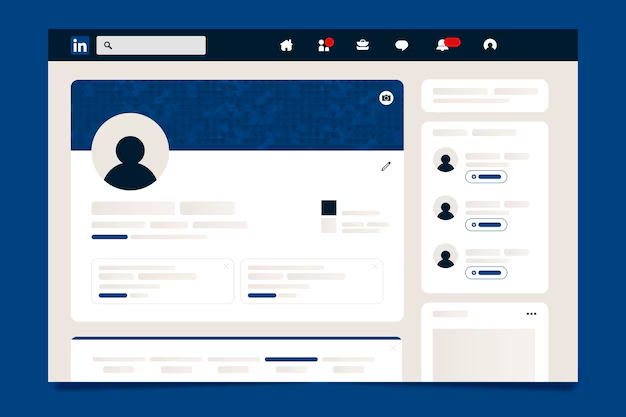
    If you’ve not created an account yet, visit www.linkedin.com to do that. Do the necessary verifications, admire the dashboard and start working on completing your profile.

    This is a very important step because this ensures that you make a good impression on potential employers. Here are a few tips to help you complete your profile:

    • Use a professional profile picture: A high-quality profile picture helps you look like you know what you’re doing. One thing you don’t want to look like on LinkedIn is “clueless”.

    LinkedIn says your profile picture should be at least 400 x 400 pixels and at most 4320 x 7680 pixels. File size of 8 mb at the most and the format should be PNG, JPG and GIF.

    • Write a compelling headline: Your headline should clearly state your profession, industry, or job title.

    Your headline should be a brief summary of what you do (emphasis on brief). Don’t write an article in your headline.

    • Optimize your summary: If you are familiar with the term SEO and how it makes works that use the right keywords visible then you should be working on that for your LinkedIn profile.

    Go to search and type in the title of your role or job title, go through the first 10 and check what made them come up in the top 10.

    What did they write on their profile that makes them seen by the recruiter? What if the recruiter doesn’t want to move past that first page?

    Take note of these.

    Also, write about yourself and your experience in the summary and don’t forget your keywords here. Add in your experience and educational background.

    • Update the experiences and education section: Take it as you filling in your CV or Resume with all the details of when you started a job and finished it or when you started school and graduated.

    2. Join Relevant Groups

    Another advantage of being on LinkedIn is the connection and news you get from the groups. Search for groups relevant to your industry and there you can ask questions, answer questions, connect with others in your industry, stay informed about industry trends, and establish yourself as a thought leader.

    3. Connect with Others

    Connecting with others on LinkedIn is the start of a great series of opportunities. You just never know where your career might start growing from.

    Here are a few tips to help you get started:

    • Find people to connect with: Use the search bar to find people to connect with, such as colleagues, industry leaders, or potential employers.
    • Personalize your connection requests: Personalize your connection requests by mentioning how you know the person or why you want to connect with them and request that they connect with you.
    • Engage with others’ content: Engage with others’ content by commenting, liking, or sharing their posts.

    4. Share Valuable Content

    Don’t just be on LinkedIn, share something.

    There’s this popular question of, “what do I post?” That is one of the things that discourage many people from taking the wiles of LinkedIn.

    But we have them narrowed down in this post. Here are a few ideas on what kind of content you can share on LinkedIn:

    • Share industry news and trends: Share industry news and trends to demonstrate your knowledge and expertise.
    • Share your story: Behind the scenes, stories of your experience, what people can relate to and learn from.
    • Share your own content: Share your own content, such as blog posts, articles, or videos, to showcase your skills and expertise.
    • Use relevant hashtags: Use relevant hashtags to make your content more discoverable.
    • Source images for your post: Your images should make people want to open your post and read more. You can design a simple image on Canva or source of any interesting stock image on the net or use a professional image of yourself.

    5. Using the LinkedIn’s Job Search Feature

    The LinkedIn job search feature you can find job openings, you just need to filter by location, industry, and experience level, and apply directly through the platform.

    6. Let LinkedIn’s Messaging Feature Work for You

    Use personalized messages to connect with others, and build relationships. With the right keywords you can make your messages more discoverable.

    Also, don’t forget to follow up with others to build relationships and establish your professional network.

    7. Get Recommendations

    Recommendations are a way to establish credibility on LinkedIn. They represent several people vouching for your professionalism and experience to potential employers on LinkedIn.

    How do you go about this?

    • Request for recommendations: Ask for recommendations from colleagues, managers, or clients.
    • Provide value: Provide value to others, and they will be more likely to recommend you.
    • Showcase your recommendations: Showcase your recommendations on your profile to establish credibility and attract well-paying employers.

    8. Utilize LinkedIn’s Learning Platform

    With LinkedIn learning you can upskill, reskill, and enhance your career prospects.

    • Find relevant courses: Find relevant courses that match your skills and experience.
    • Take online courses: Take online courses to upskill, reskill, and enhance your career prospects.
    • Earn certificates: Earn certificates to demonstrate your knowledge and expertise. these certificates can be showcase on your profile.

    9. Attend LinkedIn Events

    On LinkedIn, you can randomly enter a live video or audio webinar that is all about your field and could help you find your feet. Through these events, you can connect with others, build relationships, and attract well-paying employers.

    Here are a few steps to harnessing events on LinkedIn:

    • Find relevant events: Find relevant events that match your industry or profession.
    • Attend events: Attend events to connect with others, build relationships, and establish your professional network.
    • Follow up: Follow up with others to build relationships and establish your professional network.

    10. Monitor Your Online Presence

    LinkedIn has its inbuilt metric system (analytic tool) which helps you track who has engaged with your posts or has viewed your page. Monitoring these metrics helps you establish a strong professional brand and this way you are well on your way to building your career prospects. Here are a few tips to help you get started:

    Other Platforms that offer you a professional profile and career opportunities

    Though LinkedIn is the more popular one, there are other platforms where you can showcase your professional experience, connect with other professionals and get job opportunities.

    Here are some alternatives to consider:

    Anutio

    Anutio is a career development platform offering several resources to make you ALL YOU CAN BE in your career journey.

    Anutio offers a range of tools and resources to help individuals have a professional profile, bridge the gap in their resume, capture their achievements, participate in career competitions, land 1:1 expert mentorship sessions and build or join professional groups.

    On the Anutio Career Mapping tool you can upload your Resume to get predictions on how well that resume might do for a job by showing you the missing skills you should add to your resume as well as similar job roles to apply to.

    Anutio can help you take control of your career.

    AngelList:

    If you’re interested in the startup ecosystem, this platform is for you. AngelList helps connects professionals and job seekers with startup companies and job opportunities.

    This platform is more popular for people in tech. AngelList is a marketplace for startups to raise capital and hire talent. Startups get to showcase their ideas to potential investors and job seekers.

    Xing

    Xing is a professional networking platform that is popular in Europe. It allows you to connect with others, share content, and find job opportunities.

    Xing is a professional networking platform similar to LinkedIn, but it is particularly popular in German-speaking countries such as Germany, Austria, and Switzerland. Xing focuses on connecting professionals and building career development, networking, and job opportunities within these regions. 

    Here, you can work on your profile and connect to people. You can also send connection requests and views the job board for well-paid jobs. You can also access events, learning resources and industry trends on Xing.

    As you job search, make the most of platforms that could connect you the best clients you’ve ever met.

    They help you become visible, you also gain a vast network, easily find opportunities and your brand becomes more solid with an active audience which could include your potential client.

    Do more in your career journey by visiting www.anutio.com or download our app on play store or App Store.

    What should you do when you log in to Anutio for the first time?

    Upload your resume

    Capture achievements

    Watch our space for events that build your career prospects to become tangible.

  • A simple guide to career mapping and how to best do it with Anutio.

    A simple guide to career mapping and how to best do it with Anutio.

    The plan for choosing the right career path isn’t always a straight one. It’s more like a winding road with unexpected turns, detours, and maybe even a few potholes. 

    You might start with a clear destination, but life happens, interests change, and new opportunities arise. That’s where career mapping comes in.

    What exactly is career mapping? 

    Think of it as your personalized GPS for career navigation. It’s a strategic process that helps you assess your current position, set clear goals, and chart a course toward your desired professional future. It’s about taking control of your career journey and making intentional choices that align with your aspirations.

    Why is career mapping so important? 

    Well, consider these eye-opening statistics:

    • A staggering 70% of employees report feeling disengaged at work, highlighting the need for career development opportunities.
    • Only 30% of employees within their organizations clearly understand their career path, emphasizing the importance of career mapping.
    • A whopping 87% of millennials consider professional development opportunities a critical factor when choosing a job, demonstrating the increasing demand for career growth among this generation.

    These numbers paint a clear picture: people crave purpose, direction, and growth in their careers. Career mapping provides the framework to achieve just that.

    Now, let us introduce you to your trusty co-pilot on this journey: Anutio

    Anutio is an innovative career mapping platform that empowers you to take charge of your professional destiny. 

    Imagine having a clear roadmap that guides you towards a fulfilling and successful career. That’s the power of career mapping with Anutio.

    But before you create your career map, you need to find out where you are currently in your career. 

    Understanding Your Current Career Position

    Photo by Startup Stock Photos: https://www.pexels.com/photo/man-wearing-black-and-white-stripe-shirt-looking-at-white-printer-papers-on-the-wall-212286/

    Before you set sail on your career mapping journey, it’s crucial to understand your starting point. This involves a bit of self-reflection to assess where you currently stand in your professional life.  Let’s break it down:

    Assessing Your Skills, Interests, and Values

    Think of this as taking inventory of your career assets. What skills have you acquired through education, work experience, or even hobbies? What activities do you genuinely enjoy and find fulfilling? What values are non-negotiable in your professional life?

    Here are some resources to help you with this assessment:

    • Skills Assessment: Take online skills assessments or personality tests like the Myers-Briggs Type Indicator (MBTI) or StrengthsFinder to identify your core strengths and areas for development.
    • Interests Exploration: Explore different career paths and industries to see what sparks your curiosity. Websites like O*Net Online offer valuable information on various occupations.
    • Values Clarification: Reflect on what truly matters to you in a career. Consider factors like work-life balance, company culture, and social impact.

    Identifying Your Strengths and Weaknesses

    Nobody’s perfect, and that’s okay! Recognizing your strengths and weaknesses is key to effective career planning. 

    Your strengths are the skills and qualities that set you apart and can be leveraged in your career. Your weaknesses are areas where you might need additional training or support.

    Here’s how to approach this:

    • Honest Self-Reflection: Be honest with yourself about your abilities and limitations. Ask for feedback from trusted colleagues, mentors, or friends.
    • SWOT Analysis: Conduct a personal SWOT analysis to identify your Strengths, Weaknesses, Opportunities, and Threats. This can help you visualize your current career standing and potential areas for growth.
    • Focus on Development: Don’t dwell on your weaknesses. Instead, focus on developing your strengths and acquiring new skills to address any gaps.

    Setting Career Goals

    Now that you have a better understanding of yourself, it’s time to set some career goals. These goals should be aligned with your skills, interests, and values, and should be SMART: Specific, Measurable, Achievable, Relevant, and Time-Bound.

    Here are some tips for setting effective career goals:

    • Dream Big, Start Small: It’s okay to have ambitious long-term goals, but break them down into smaller, achievable milestones.
    • Prioritize: Focus on the goals that are most important to you and will have the biggest impact on your career.
    • Be Flexible: Your goals may change over time as your interests and circumstances evolve. Be open to adjusting your course as needed.

    By taking the time to understand your current position, you’ll be well-equipped to navigate the road ahead and create a career map that leads to your dream destination.

    Exploring Career Options

    Another important step to career mapping to note is to explore different career options. To map out your career, you need a clear target which is the end goal, an actual career to land on.

    You start by:

    Researching different career paths

    Researching different career paths can feel like navigating a maze, but it doesn’t have to be overwhelming. There are so many resources available to help you discover new and exciting fields. 

    While Anutio doesn’t provide detailed information on specific career paths, it can suggest potential options based on your resume scan results on the career mapping tool. This can be a great starting point for your research, giving you ideas of fields you might not have considered otherwise. This is because this helps you discover careers that match your interests, skills, and values.

    Anutio can also help you find and connect with mentors in various fields. These mentors can provide valuable insights into different career paths, sharing their experiences and knowledge to help you make informed decisions.

    Conducting informational interviews

    Another great way to explore career paths is by conducting informational interviews. This is where you reach out to people who are already working in fields that interest you and ask them about their experiences. 

    You can learn so much from their insights, such as the day-to-day realities of the job, the skills and qualifications that are most important, and the challenges and rewards of the career path.

    Creating Your Career Map

    Showcasing the creation of a career map
    Photo by Ronaldo Guiraldelli : https://www.pexels.com/photo/ruler-pen-and-compass-on-map-21771959/

    Now that you have a clear understanding of your current position and have explored potential career paths, it’s time to create your career map. This is where you’ll outline the steps you need to take to reach your desired destination. 

    Developing a Timeline for Your Career Goals

    A timeline provides a visual representation of your career goals and the timeframes for achieving them. It helps you stay on track and ensures that you’re making progress towards your aspirations. Here’s how to develop a timeline:

    1. Set SMART Goals: Make sure your goals are Specific, Measurable, Achievable, Relevant, and Time-Bound. For example, instead of “get a better job,” a SMART goal would be “obtain a project management certification within the next six months.”
    2. Break Down Goals into Milestones: Divide your long-term goals into smaller, more manageable milestones. This makes them less daunting and allows you to celebrate your progress along the way.
    3. Assign Target Dates: Set realistic deadlines for each milestone and goal. This creates a sense of urgency and helps you prioritize your actions.
    4. Visualize Your Timeline: Use a tool like a Gantt chart, spreadsheet, or even a simple calendar to plot your milestones and deadlines. This will give you a clear overview of your career trajectory.

    Identifying the Steps You Need to Take to Reach Your Goals

    Once you have a timeline in place, it’s time to identify the specific actions you need to take to achieve your goals. This might include:

    • Acquiring New Skills: Identify the skills that are essential for your desired career path and find ways to develop them. This could involve taking courses, attending workshops, or finding a mentor.
    • Gaining Experience: Look for opportunities to gain relevant experience, such as internships, volunteer work, or side projects. This will help you build your resume and demonstrate your capabilities to potential employers.
    • Networking: Create strong connections with people in your desired field. Engage in industry events, join professional organizations, and leverage LinkedIn to connect with relevant individuals. 
    • Updating Your Resume and LinkedIn Profile: Ensure your resume and LinkedIn profile are current and showcase your relevant skills and experience. This step is crucial to attract potential employers and highlight your qualifications.

    Using Anutio to Track Your Progress and Make Adjustments

    Anutio can be a valuable tool for tracking your progress and making adjustments to your career map. Here’s how you can use it:

    • Set Goals and Milestones: Use Anutio to set your SMART goals and milestones. The platform allows you to track your progress and visualize your timeline.
    • Capture Your Achievements: As you complete courses, gain new skills, or achieve milestones, record them in Anutio. This will help you see how far you’ve come and stay motivated.
    • Access Job Boards: Anutio provides access to job boards where you can search for opportunities that align with your career goals.
    • Connect with Mentors: Anutio can help you find and connect with mentors in your desired field. Mentors can provide guidance, support, and valuable insights.
    • Stay on Track: Regularly review your career map and progress in Anutio. Make adjustments as needed based on your changing interests, goals, or circumstances.

    By following these steps and utilizing Anutio’s features, you can create a dynamic career map that will guide you toward a fulfilling and successful professional future. 

    A career map is not set in stone. It’s a living document that should evolve as you grow and your aspirations change.

    Implementing Your Career Map

    You’ve finished creating your career map. Now it’s time to put it into action! This is where the real work begins. We are making the right motions towards your dream career.

    Taking action on your career goals

    Remember those SMART goals you set? It’s time to start ticking them off. This could involve:

    • Taking a course to upskill
    • Gaining experience through an internship
    • Updating your resume and LinkedIn profile. 

    Whatever it is, take that first step and keep moving forward. Small steps can lead to big results.

    Networking and building relationships

    Networking is not just about collecting business cards. It’s about building genuine relationships with people in your field. Attend industry events, join online forums, and connect with people on LinkedIn. You never know who might offer you a helping hand, valuable advice, or even your dream job opportunity.

    Continuing to use Anutio to stay on track

    Anutio is your trusty companion on this journey. Use it to:

    • Track your progress
    • Celebrate your achievements
    • Set reminders for your goals
    • Explore new career possibilities. 

    Think of it as your personal career coach, always there to guide and support you.

    Career mapping is an ongoing process. Your goals may change, new opportunities may arise, and that’s okay! Stay flexible, keep learning, and don’t be afraid to adjust your course. With Anutio by your side, you’ll be well-equipped to navigate the ever-changing career landscape and achieve your professional dreams.

    Conclusion

    Career mapping is your personalized roadmap to professional success. It’s about knowing where you are, where you want to go, and how to get there. 

    It all starts with understanding your skills, interests, and values. From there, you can explore different career paths, set clear goals, and create a timeline to track your progress.

    Anutio is your trusty companion throughout this journey, offering guidance, support, and valuable resources. It’s like having a personal career coach in your corner, cheering you on and helping you stay on track.

    Don’t let your career happen by chance. Take control and start mapping your future today. With Anutio and a little effort, you can turn your professional dreams into reality.

    Want to dive deeper? Here is another additional resource for career development:

    • Occupational Outlook Handbook: Explore hundreds of different occupations and get detailed information on job duties, education requirements, salary ranges, and job outlook.

    Keep journeying, and never stop learning and growing. Anutio will also help you to be well-equipped to navigate any challenge and achieve lasting success.

  • Embracing the Journey: My Career Path So Far

    Embracing the Journey: My Career Path So Far

    Embracing the Journey: My Career Path So Far

    Hey everyone,

    I wanted to take a moment to reflect on my career journey and share some insights that I’ve gained along the way. It’s been a winding road, full of unexpected turns and valuable lessons.

    When I graduated from college, I had a clear vision of where I wanted to go. I landed my first job as a junior analyst at a startup, eager to dive into the world of data and analytics. Those early days were a whirlwind of learning new skills, late nights, and building connections with some amazing colleagues.

    After a couple of years, I felt the itch to explore new challenges. I transitioned to a larger company, taking on a role that combined my love for data with project management. It was here that I learned the importance of balancing technical skills with interpersonal ones. Leading a team for the first time was both exhilarating and daunting, but it taught me so much about communication, empathy, and leadership.

    Understanding the job search process with Anutio
    pexels-olly-941555

    Recently, I decided to take a bold step and pursue a passion project that had been simmering in the back of my mind: launching my own consulting firm. The transition from employee to entrepreneur has been the most challenging yet rewarding experience of my career. Every day presents a new set of challenges, but it also offers unparalleled freedom and satisfaction.

    Throughout this journey, a few key lessons have stood out:

    1. Embrace Change: Career paths are rarely linear. Embrace the twists and turns—they often lead to the most rewarding opportunities.
    2. Continuous Learning: Stay curious and never stop learning. Whether it’s picking up a new technical skill or improving soft skills, growth is a continuous process.
    3. Build Your Network: Surround yourself with supportive mentors, colleagues, and friends. Networking isn’t just about finding job opportunities; it’s about building a community that supports and challenges you.
    4. Follow Your Passion: It’s cliché, but true. Pursuing what you’re passionate about brings a level of motivation and joy that’s hard to find otherwise.

    I’m excited about what the future holds and eager to continue this journey of growth and discovery. To anyone out there navigating their own career path, remember to stay true to yourself and enjoy the ride.

  • 7 Common Cover Letter Mistakes and How to Avoid Them

    7 Common Cover Letter Mistakes and How to Avoid Them

    Your cover letter can make or break your chances of landing your dream job. Yet, many people make common mistakes that prevent them from standing out among other applicants. In this article, we will explore the top 10 common cover letter mistakes and provide expert tips on how to avoid them.

    From generic greetings to excessive length, we’ll delve into the errors that hiring managers see all too often. We will also guide you on crafting a compelling opening paragraph and effectively highlight your relevant skills and experiences.

    Mistakes in your cover letter can give employers a negative impression of your attention to detail and communication skills. By understanding and avoiding these pitfalls, you can greatly increase your chances of getting noticed and securing an interview.

    Whether you’re a recent graduate seeking your first job or an experienced professional looking for a career change, this article is for you. Don’t let simple mistakes cost you the opportunity of a lifetime. Stay tuned for our actionable tips on creating an attention-grabbing cover letter that will help you stand out from the competition.

    The importance of a cover letter

    A cover letter is an essential part of the job application process. It serves as your introduction to the hiring manager and allows you to showcase your skills, experiences, and qualifications that make you a perfect fit for the role. A well-crafted cover letter can set you apart from other candidates and make a lasting impression.

    The 7 common mistakes to avoid in a cover letter

    Mistake #1: Generic and Impersonal Salutation

    One of the biggest mistakes you can make in a cover letter is using a generic salutation such as “To Whom It May Concern” or “Dear Hiring Manager.” This shows a lack of effort and research on your part. Take the time to find out the name of the person you are addressing and use it in your salutation. If you can’t find the name, address the letter to the specific department or use a generic but professional greeting like “Dear [Company Name] Hiring Team.”

    Mistake #2: Focusing on what the company can do for you instead of what you can do for the company

    Another common cover letter mistake is using a generic salutation, such as “To Whom It May Concern” or “Dear Hiring Manager.” Hiring managers receive numerous applications, and using a generic salutation shows a lack of effort and personalization. To make a strong impression, take the time to research and find the name of the person responsible for hiring. Addressing the cover letter directly to them shows that you have done your homework and are genuinely interested in the position.

    Additionally, make sure to spell the recipient’s name correctly. Misspelling the name can convey carelessness and may reduce your chances of getting shortlisted. If you can’t find the name of the hiring manager, consider using a more general yet professional salutation, such as “Dear [Company Name] Recruiter.”

    Mistake #3: Repetition of information from your resume

    While it’s essential to showcase your skills and qualifications, it’s equally important to demonstrate how your expertise aligns with the company’s goals and mission.

    To avoid this mistake, thoroughly research the company and understand its values, products, and services. Tailor your cover letter to show how your experiences and abilities can directly benefit the organization. By highlighting the value you can bring to the company, you will capture the attention of hiring managers and increase your chances of being invited for an interview.

    Mistake #4: Lack of customization for each job application

    Your cover letter should complement your resume, not repeat it. Many job seekers make the mistake of duplicating the information already mentioned in their resume, making their cover letter redundant and boring to read. Instead, use your cover letter as an opportunity to expand on a few key accomplishments or experiences that are directly relevant to the job you’re applying for.

    Focus on providing additional context, highlighting specific achievements, or explaining how certain skills have contributed to your past success. This will help the hiring manager gain a deeper understanding of your qualifications and make your cover letter stand out from the rest.

    Mistake #5: Poor grammar and spelling errors

    Sending out the same cover letter for every job application is a grave mistake that many job seekers make. Employers can easily spot a generic cover letter, and it shows a lack of interest and effort on your part. Instead, take the time to customize your cover letter for each job application.

    Start by carefully reading the job description and identifying the key requirements and skills the employer is looking for. Then, tailor your cover letter to address these specific points. Show how your qualifications and experiences align with the job requirements and provide examples of relevant accomplishments. By demonstrating your understanding of the position and showcasing your suitability, you will greatly increase your chances of making it to the interview stage.

    Mistake #6: Overusing cliches and buzzwords

    Nothing screams unprofessionalism more than a cover letter filled with grammar and spelling mistakes. Hiring managers expect job applicants to have strong communication skills, and a cover letter riddled with errors can leave a negative impression.

    To avoid this mistake, proofread your cover letter multiple times and use grammar and spell-check tools. It’s also helpful to ask a friend or family member to review your cover letter for any mistakes you may have missed. Taking the time to ensure your cover letter is error-free shows your attention to detail and commitment to delivering high-quality work.

    Mistake #7: Not addressing potential red flags or gaps in your resume

    Using cliches and buzzwords in your cover letter can make it sound generic and uninspiring. Phrases like “team player,” “detail-oriented,” and “results-driven” have been overused and may not resonate with hiring managers. Instead, focus on using specific and concrete language to describe your skills and experiences.

    Highlight your accomplishments, mention specific projects you’ve worked on, and quantify your achievements whenever possible. By providing tangible examples and avoiding generic phrases, you will create a cover letter that stands out and captures the attention of recruiters.


    How to Avoid AI-Generated Cover Letter Mistakes

    How to Avoid AI-Generated Cover Letter Mistakes
    Photo by Anna Shvets: https://www.pexels.com/photo/woman-with-modern-prosthesis-of-hand-writing-in-notebook-5614155/


    Artificial intelligence (AI) is becoming more and more popular as a tool for writing cover letters. Many job seekers use AI cover letter generators to save time and effort and to create personalized and professional cover letters that match the job description. 

    However, not all AI-generated cover letters are flawless. Some common mistakes that can occur when using AI to write cover letters are:

    • Using generic or irrelevant phrases that do not showcase your unique skills and achievements.
    • Copying and pasting text from other sources without proper paraphrasing.
    • Failing to proofread and edit the cover letter for grammar, spelling, punctuation, and formatting errors.
    • Missing important information or details that the employer is looking for.
    • Writing a cover letter that is too long, too short, or too vague.

    To avoid these mistakes, you should always use AI as a guide, not a replacement, for your own writing. AI can help you generate ideas, structure, and content for your cover letter, but you should still customize it to fit your specific situation and goals. You should also review and revise the cover letter before sending it, and make sure it is clear, concise, and compelling.

    One way to use AI effectively to write your cover letter is to use Anutio, a smart cover letter assistant that helps you create tailored and optimized cover letters for any job. Anutio analyzes the job description and your resume and provides you with suggestions on what to include, how to phrase it, and how to format it.

    Anutio also checks your cover letter for ATS compatibility, ensuring that it gets past the automated screening systems and reaches the human recruiter. With Anutio, you can write a cover letter that stands out from the crowd and showcases your value to the employer.

    How to write an effective cover letter and avoid these mistakes

    If you have any gaps in your employment history or other potential red flags, it’s essential to address them in your cover letter. Leaving these issues unexplained can raise doubts in the mind of the hiring manager and may hinder your chances of getting an interview.

    Be honest and straightforward about any employment gaps or career transitions. Use your cover letter to explain the reasons for these gaps and highlight any relevant skills or experiences you gained during that time. By addressing potential concerns proactively, you demonstrate your transparency and ability to overcome challenges.