Tag: Career Advice

  • How to Stay Relevant in the Age of AI: Skills You Should Be Learning Now

    How to Stay Relevant in the Age of AI: Skills You Should Be Learning Now

    You know how it feels when something new disrupts everything, like when smartphones changed how we live? Well, artificial intelligence (AI) is doing the same thing to work, careers, and how people create value. Some people worry that AI will replace them, but the secret isn’t fighting AI, it’s learning to work with it.

    If you pick the right skills now, AI won’t push you aside, it’ll push you forward.

    In this article, we’ll walk you through the key skills you should focus on now to stay relevant in the AI era, especially the ones AI still struggles to master. You’ll also see how to start building them today.

    The New Reality: What AI Can (and Can’t) Do

    Before we talk about which skills to learn, let’s get clear on what AI actually can do and what it can’t. Understanding this makes it easier to choose where to grow.

    What AI Can Do

    AI can:

    • Process and analyze massive amounts of data faster than humans ever could.
    • Identify trends and patterns across huge datasets.
    • Automate repetitive or rule-based tasks like sorting, scheduling, or data entry.
    • Draft emails, code snippets, reports, and even creative content.

    In short, AI excels at speed, scale, and repetition.

    What AI Can’t Do (Well)

    But AI still has serious blind spots. It struggles with:

    • Understanding emotion, nuance, or deep context.
    • Making ethical or moral judgments with genuine wisdom.
    • Producing truly original ideas that break patterns.
    • Navigating messy, ambiguous human problems.
    • Building trust or empathy in social interactions.

    These gaps are your opportunities. The things AI can’t do well, empathy, ethics, creativity are where humans shine.

    According to MIT Sloan Management Review, empathy, judgment, and ethics are among the human capabilities least likely to be automated. Similarly, The Interview Guys emphasize that emotional intelligence remains one of the most irreplaceable skills in the workplace.

    Core Skill Categories to Focus On

    Now that you understand AI’s strengths and weaknesses, let’s explore the skill areas you should be developing to stay relevant. I like to group them into three main categories , because when you see them together, you can plan smarter.

    Human / Soft Skills AI Struggles With

    These are your “superpowers”, the human traits AI can’t copy:

    • Emotional Intelligence & Empathy: sensing how people feel and responding with understanding.
    • Leadership & Influence: inspiring others and guiding teams through uncertainty.
    • Critical Thinking & Ethical Judgment: making sound decisions and spotting bias.
    • Communication & Storytelling: turning complex ideas into clear, engaging messages.
    • Adaptability & Resilience: staying flexible and learning quickly through change.

    As The Interview Guys point out, once AI handles routine work, human-centered skills like empathy, storytelling, and leadership become more valuable than ever. Likewise, Six Seconds warns that companies focusing only on technical upskilling risk losing the emotional depth that fuels innovation and creativity.

    Technical & AI-Adjunct Skills

    Now, let’s talk about the tech side, the practical skills that help you collaborate with AI instead of compete against it. You don’t need to be a coder or data scientist to understand how AI works, but you do need to be comfortable using it to make your work faster and smarter.

    1. Data Literacy & Analytical Thinking

    Learning how to read, interpret, and question data is now a basic life skill. When you can understand what data is saying and what it’s not saying, you make better decisions.
    According to the World Economic Forum, data literacy and analytical thinking are among the top future-ready skills, especially as AI tools become part of everyday work.

    2. Prompt Engineering & AI Collaboration

    Tools like ChatGPT, Midjourney, and Gemini are only as smart as the questions you ask them. Prompt engineering means knowing how to structure your input so the AI gives you exactly what you need.
    Resources such as Harvard Business Review explain that professionals who master prompt design can boost productivity and creativity without learning to code.

    3. Basic Programming & Automation

    Even a little bit of coding, like understanding Python, SQL, or basic automation tools,bcan help you stand out. These skills let you automate routine tasks, analyze information faster, and speak the same “language” as the tech shaping your industry.
    If you’re new to this, free resources like Coursera’s “AI for Everyone” course are a great place to start.

    4. Understanding AI Bias & Ethics

    AI can reflect human bias and sometimes even amplify it. Learning how to spot and question biased outputs makes you a responsible, trusted professional.
    A report from Brookings Institution explains that ethical AI use isn’t just a tech issue, it’s a leadership and cultural responsibility.

    Meta Skills for the Future

    Meta skills are the “skills that grow all other skills.” They’re what help you adapt as the world keeps changing.

    • Learning How to Learn: The ability to absorb new information quickly, unlearn outdated habits, and apply what you’ve learned in different contexts.
    • Curiosity & Creativity: Staying open-minded and exploring “why” behind things, that’s how innovation starts.
    • Adaptability: Rolling with new tech, new rules, and even new industries.
    • Interdisciplinary Thinking: Connecting ideas from different fields, like mixing psychology with tech or design with data, makes your work harder to automate.

    A study by the University of Oxford found that workers who cultivate these meta-skills are significantly more adaptable during major tech shifts.

    How to Build These Skills Starting Today

    Now that you know what to learn, the next question is how to start, without feeling overwhelmed. The good news? You don’t need to enroll in a four-year degree. You just need to build habits around small, consistent learning.

    1. Use AI as Your Study Buddy

    Treat AI tools like your personal tutor. Use ChatGPT, Gemini, or Claude to summarize books, explain complex ideas, or quiz you on topics. Think of AI as a sparring partner for your brain.

    2. Apply What You Learn in Real Projects

    It’s not enough to just collect certificates. Try applying new skills in real life, whether that’s automating a report, writing a short story using AI prompts, or analyzing your business’s customer data.
    As Vocal Media notes, learning becomes permanent when it’s tied to practice and experimentation.

    3. Join Communities of Learners

    Surround yourself with people who are also evolving. Online communities like LinkedIn Learning Groups or tech meetups can keep you inspired and accountable.

    4. Follow Trusted Resources

    Keep up with AI news, ethics, and skill trends through reputable sources such as MIT Technology Review and Future of Work Hub.

    Common Pitfalls to Avoid

    Now that you know what works, here’s what not to do if you want to stay relevant.

    1. Over-focusing on Tools

    AI tools change fast. What matters more is learning how to think critically and adapt. LinkedIn Learning found that professionals who develop flexible thinking outperform those who only chase new apps or certifications.

    2. Ignoring Ethics and Bias

    When you rely on AI without understanding its blind spots, you risk spreading misinformation or biased results.

    3. Thinking AI Will “Figure It All Out”

    AI is a partner, not a boss. It can’t dream, imagine, or lead a vision, that’s your job. People who treat AI as a collaborator, not a replacement, tend to innovate faster and feel more confident at work.

    The Human Advantage in an AI World

    AI doesn’t replace humans; it replaces tasks. The real value now lies in combining your creativity, empathy, and judgment with AI’s efficiency.

    Learning to adapt, staying curious, and investing in emotional and technical skills will keep you relevant in any field. Whether you’re a student, creative, or professional, your ability to learn fast and think deeply is what makes you irreplaceable.

    As Forbes puts it, “AI will not replace you, but someone who uses AI better might.”

    So start small. Pick one new skill this week, maybe data literacy, communication, or even prompt design and apply it using an AI tool you already have access to. You’ll be surprised how quickly progress compounds when you move with intention.

    Stay Future-Ready with Anutio

    Ready to build a skill roadmap that keeps you relevant and employablenin the age of AI?
    Explore how Anutio’s AI Career Tools can help you:

    • Discover the top in-demand skills for your career path.
    • Match with training programs or mentors that align with your goals.
    • Track your growth and showcase your evolving skillset to employers.

    With Anutio, you don’t just prepare for the future of work, you co-create it.

    Start your AI-powered career roadmap today.

  • Top AI Career Development Tools to Shape Your Future in 2025

    Top AI Career Development Tools to Shape Your Future in 2025

    Finding the right job, updating your resume, and figuring out your next career move can feel like a full-time job. But what if AI could help you with that? Not as some futuristic tool, but right now, acting as your career assistant. From suggesting which roles to aim for to helping you write a resume that actually gets seen.

    Artificial Intelligence isn’t just about robots and automation anymore. It’s showing up in career planning, job applications, interviews, and personal branding, making it easier to move from “Where do I start?” to “I got the job!” faster.

    Whether you’re a student trying to figure out your path, a professional looking for growth, or a company hoping to find the right talent, AI career tools are now your best friend. From AI resume builders that optimise your CV for Applicant Tracking Systems (ATS) to AI learning platforms that suggest courses tailored to your goals, these tools are designed to help you grow smarter, not harder.

    What Makes an AI Career Tool “Top”

    With so many “AI-powered” career tools out there, it’s easy to get lost in the hype. So how do you tell which ones are actually worth your time?

    1. Accuracy and Adaptiveness

    A great AI tool should learn from you. For example, Coursera’s personalised learning paths adapt as you complete courses, suggesting new skills that align with your goals. The best tools evolve as you grow, like a career coach that never stops learning.

    2. Ease of Use

    If you spend more time trying to figure out how a tool works than using it, it’s not worth it. Platforms like Teal and Rezi make things simple: drag, drop, and done. That’s what good UX (user experience) should feel like.

    3. Real Data, Not Just Buzzwords

    Some tools claim to use AI but are basically glorified templates. Look for software that explains how it analyses data, like how Jobscan compares your resume to real job descriptions or how Eightfold.ai predicts your ideal career match based on millions of career paths.

    4. Integration and Compatibility

    Your AI tools should work well with each other. Your resume builder, job matcher, and learning platform should ideally connect or at least export data easily. Many of today’s top career platforms now integrate with LinkedIn or Google Workspace, saving you hours of manual work.

    5. Trust and Privacy

    Since you’ll be sharing personal data, it’s important to check the platform’s privacy policies. Stick with tools that clearly state how your information is stored and used. LinkedIn’s AI career tools and Google’s AI interview prep are great examples of transparent and trusted systems.

    AI Resume & Application Optimisation Tools

    Let’s start with one of the biggest struggles everyone faces: writing the perfect resume.

    You know that moment when you stare at your screen, wondering what to write to sound “professional” but still like you? Yeah, we’ve all been there.
    Recruiters spend just a few seconds scanning resumes before deciding if they’re interested. That’s where AI resume builders come in; they help you create a resume that not only looks great but also passes the ATS (Applicant Tracking System) filters most companies use.

    Here are some of the most effective tools making this process easier in 2025

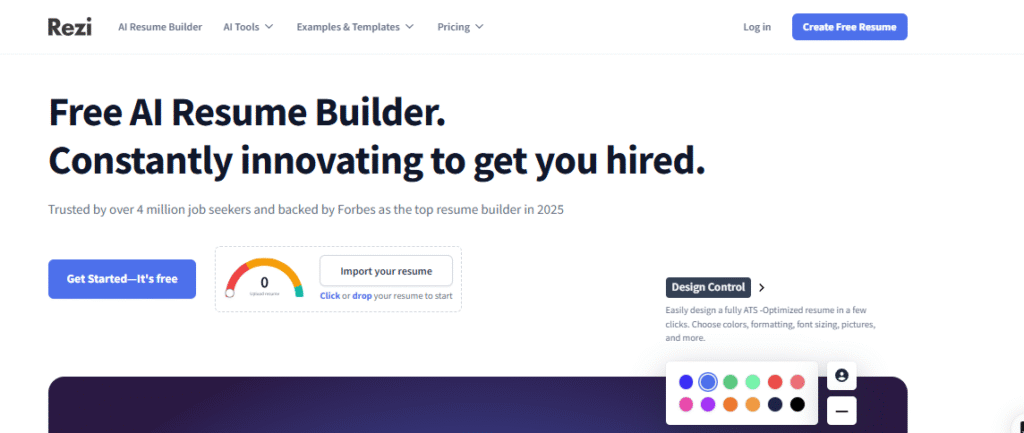
    1. Rezi: ATS-Optimised Resumes Made Easy

    Rezi is one of the most popular AI resume builders right now, and for good reason. It automatically scans your resume to match the job description, helping you include the right keywords and format it for ATS systems.
    You just paste the job title or upload a job post, and Rezi helps you tailor your content in minutes. No fluff, just clear, measurable improvements.

    You can use Rezi’s score system to track how “job-ready” your resume is. It’s beneficial if you’re applying to multiple roles.

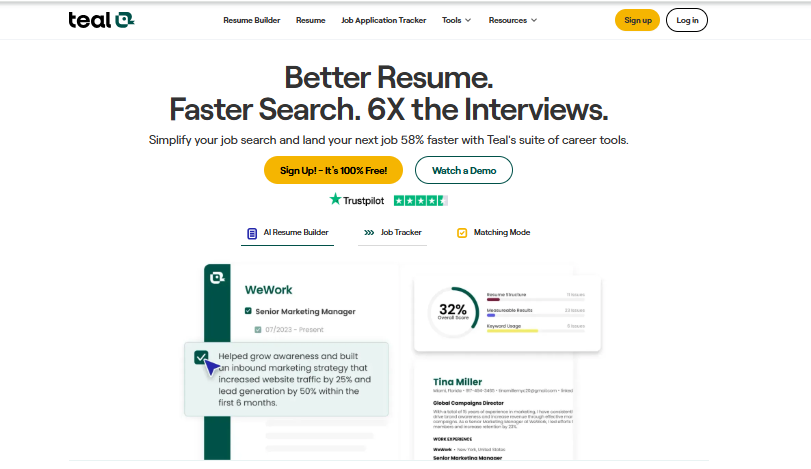
    2. Teal: Your All-in-One Job Search Dashboard

    Teal is like your personal job search assistant. It helps you organise job applications, track progress, and optimise your resume for each job listing.
    What makes it stand out is the browser extension, which allows you to save job listings from LinkedIn, Indeed, or any other online source and then creates a tailored version of your resume for that specific role.

    So, instead of writing one generic CV for everything, Teal makes sure your resume talks directly to the job you’re applying for.

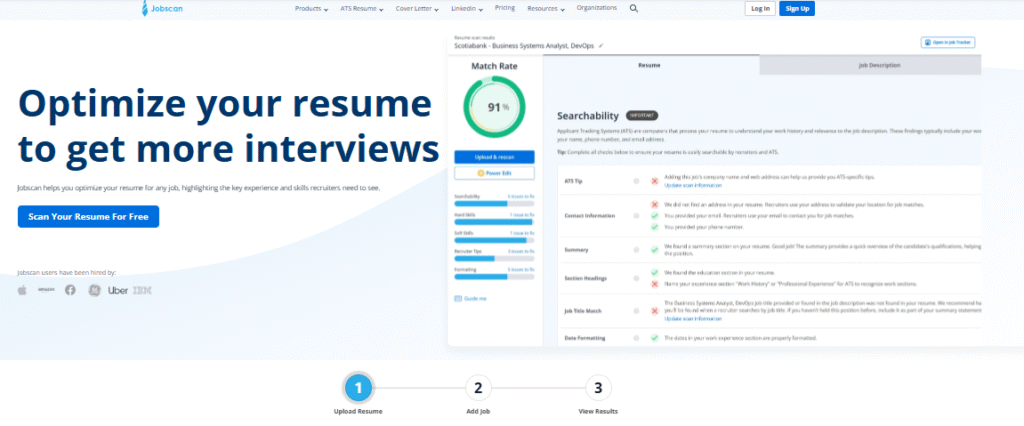
    3. Jobscan: Match Your Resume to the Job Description

    If you’ve ever wondered, “Why am I not getting interviews even after applying to so many jobs?”, Jobscan has the answer.
    It compares your resume against a job description and tells you how well you match, down to the keywords, skills, and phrasing. You’ll get a “match rate” score that shows how to improve instantly.

    It’s like having insider insight into what recruiters are really looking for.

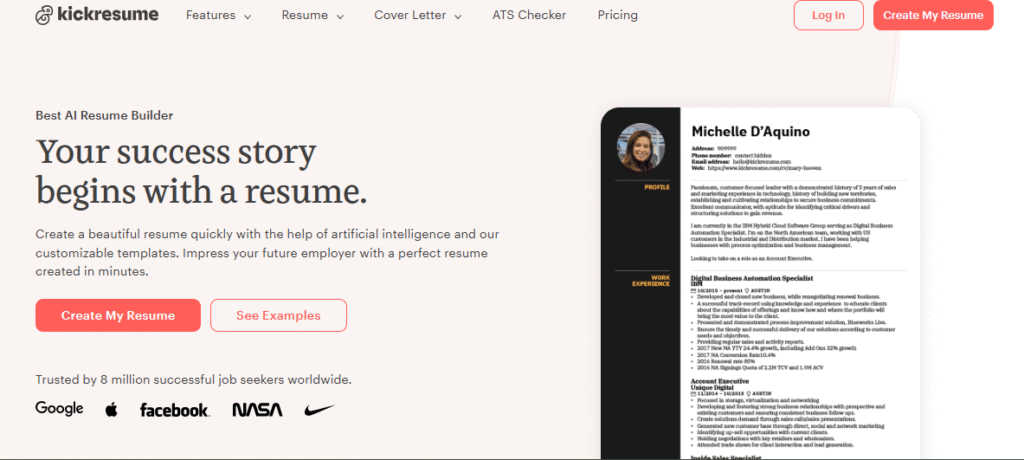
    4. Kickresume

    Kickresume mixes design and AI intelligence perfectly. It’s great for creative professionals who want resumes that stand out visually without losing structure.
    Its AI assistant helps write bullet points, correct grammar, and adjust tone, so your CV reads as confidently as you sound.

    Plus, it comes with a free cover letter generator, which helps you match your tone and job description with ease.

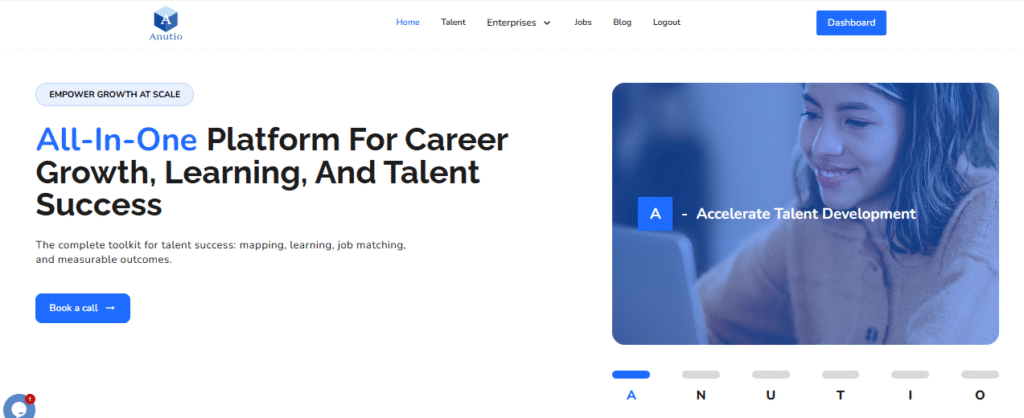
    5. Anutio AI — Smart Career Mapping/Matching and Assistant

    Anutio AI is designed to simplify career growth for students, professionals, and companies. Unlike traditional job portals, Anutio uses AI-driven insights to review your resume and suggest the best career paths to try, as well as show you what is missing in your resume and what to add instead.

    Also, with the information from your resume, Anutio matches you to potential job listings that fit your profile.

    Anutio’s AI-driven job-matching engine connects:

    • Students in Nigeria and Canada to real career development opportunities
    • Professionals looking to transition or relocate
    • Employers seeking verified, ready-to-grow talent

    What makes it unique is that Anutio’s algorithms are trained to understand local skill patterns, education systems, and employer needs, giving users recommendations that actually make sense for where they are.

    Anutio matches you based on potential and context.

    If you’re an international student or an immigrant professional trying to navigate the job market in Canada, Anutio’s local partnerships and career events give you an edge that global AI tools often overlook.

    AI resume tools don’t “write for you”; they coach you. They analyse language patterns, recruiter preferences, and ATS filters to help your resume speak the same language as the job description.
    You’re still in control; the AI just helps you say things more powerfully.

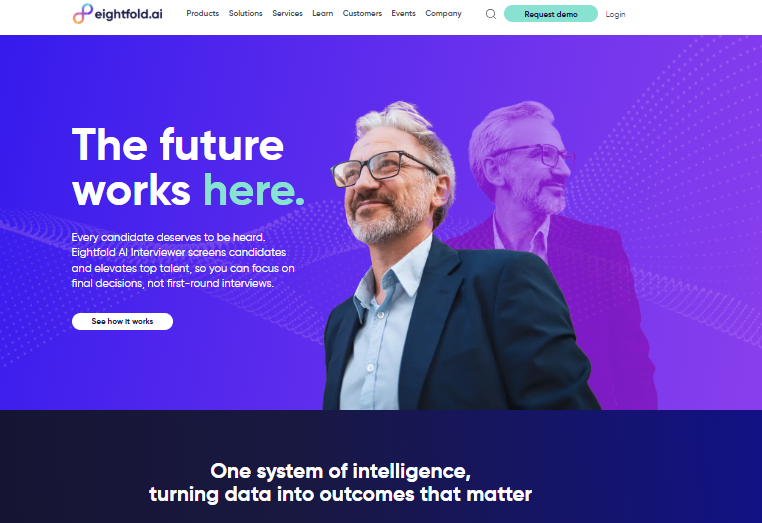
    6. Eightfold.ai: Predicting Your Career Path Before You See It

    Eightfold.ai is one of the most advanced AI talent platforms in the world. It uses deep-learning models trained on billions of career data points to predict which roles align with your experience and which skills you’ll need next.

    So instead of guessing where you “fit,” it helps you see your future roles mapped out. Imagine getting a dashboard that says, “You’re 80% ready for a marketing manager role; learn X and Y to get there.” That’s how smart AI matching can be.

    AI Learning Platforms That Keep You Ahead

    It’s one thing to know where you’re going; it’s another to build the skills that get you there. AI learning platforms personalise the process, ensuring you focus on what truly matters for your field.

    1. Coursera with AI Integration

    Coursera now uses AI to recommend personalised courses, career paths, and even project-based learning. For instance, if you take a data analytics course, Coursera’s AI can suggest “next step” certifications or job-aligned projects.

    2. Udemy AI Learning Hub

    Udemy curates courses with AI-driven recommendations and “learning paths” for career transitions. Whether you’re learning machine learning, marketing automation, or AI ethics, Udemy adjusts to your pace and goals.

    3. LinkedIn Learning

    LinkedIn Learning provides AI-based content suggestions tailored to your skill gaps. The more you engage, the smarter it becomes, connecting you to courses that boost your profile visibility.

    AI Tools for Building Your Professional Brand

    In 2025, your personal brand is your résumé. Whether you’re a student trying to break into tech or a professional pivoting careers, your online presence speaks before you do and AI tools can make sure it speaks the right language.

    1. Personal AI Website Builders

    Tools like Durable and 10Web let you build AI-generated personal websites in minutes. You just describe who you are and what you do, and the AI crafts a professional site that highlights your skills, testimonials, and portfolio.

    2. ChatGPT for Career Storytelling

    ChatGPT is more than a chatbot, it’s a career storytelling companion. You can use it to:

    • Craft personal bios for your résumé or LinkedIn.
    • Generate answers to common interview questions.
    • Draft outreach emails or professional posts.

    3. Canva Magic Write for Portfolio Design

    Canva’s Magic Write feature helps you design personal branding assets like resumes, cover letters, and digital portfolios with built-in AI copy. You can create professional-grade templates for LinkedIn banners, portfolio pages, or pitch decks in minutes.

    The Future of AI in Career Development (2025 & Beyond)

    We’ve explored how AI is transforming every part of career growth, from learning new skills to building your résumé, getting matched with jobs, and polishing your professional brand.
    But what’s next? How will AI reshape the future of work and career development in 2025 and beyond, especially for platforms like Anutio?

    1. AI Mentors and Career Coaches

    Imagine having a mentor who knows your career history, skills, and interests and gives you personalised guidance 24/7. That’s what AI-powered mentors like Replika Pro, CoachVantage AI and Anutio are beginning to offer.

    These digital mentors:

    • Analyse your career goals and learning data.
    • Suggest realistic next steps, like new certifications or soft skills to improve.
    • Offer emotional and motivational support when you hit roadblocks.

    2. Predictive Job Mapping and Skill Forecasting

    AI isn’t just helping us adapt, it’s predicting what’s next.
    Tools like LinkedIn’s Future of Skills and Burning Glass Institute use data to forecast which skills will be most in demand in the next 3–5 years.

    In 2025, expect more platforms to:

    • Predict industry disruptions early.
    • Suggest career pivots before a job market shift happens.
    • Map your current skills against emerging job roles.

    3. AI-Powered Career Communities

    The future of AI career development isn’t just individual, it’s collaborative.
    AI-driven communities like Polywork and Lunchclub are connecting professionals based on shared interests and complementary skills.

    These networks are becoming smarter, using AI to suggest who you should meet, what projects to collaborate on, and how to grow your influence organically.

    4. The Human Edge: Why AI Won’t Replace You

    It’s easy to feel like AI is taking over everything, but really what AI can do is analyse, suggest, and automate, but it can’t dream, empathise, or create like humans do.

    The real winners in the AI-driven future are those who:

    • Learn to work with AI instead of competing with it.
    • Use tools like Anutio, ChatGPT, and Canva to enhance creativity and communication.
    • Build adaptable skills – curiosity, storytelling, empathy, and problem-solving.

    AI doesn’t replace ambition; it amplifies it.
    So as you step into 2025, think of AI not as your competitor but as your career accelerator.

    The AI Career Advantage Starts Now

    AI is no longer a distant future concept; it’s already reshaping how we learn, grow, and work. Whether you’re a student figuring out your path, a professional seeking better opportunities, or a company looking for talent, using the right AI tools can fast-track your success.

    Platforms like Anutio are bridging the gap between technology and opportunity, especially for Africans and immigrants navigating the global workforce.
    The key to starting to experiment is to try out AI tools for learning, resume building, job matching, and personal branding. Find what feels intuitive, and let AI handle the heavy lifting while you focus on what matters most: your growth.

    FAQs

    1. Can AI replace a career counsellor?
    Not really. AI can analyse data and provide recommendations, but career counselling is still human at its core; it involves empathy, emotional support, and intuition. Tools like Anutio or CoachHub work best with human insight, not instead of it.

    2. Free vs. Paid AI Tools: What’s Worth It?
    Free tools like ChatGPT, Teal, or Canva are great for getting started.
    But paid plans unlock personalisation, automation, and integrations, especially if you’re serious about career transitions or portfolio building.
    For instance, Anutio offers AI-powered job matching and career growth recommendations that go beyond what free tools can achieve.

    3. How Safe Is My Data with AI Career Platforms?
    This depends on the platform. Always check privacy policies and data handling practices.
    Reputable services like Gloat, LinkedIn, and Anutio use end-to-end encryption and give you full control over what’s shared.
    If a platform doesn’t clearly explain how your data is used, that’s your red flag.

  • Top Skills That Can Land You a Job Even With Little Experience

    Top Skills That Can Land You a Job Even With Little Experience

    Not having years of experience can make job hunting feel like a slow crawl through wet cement. But here’s the twist: experience isn’t always the golden ticket anymore.

    Thanks to the rise of skills-first hiring, a growing number of companies now prioritise what you can do over what’s written on your CV.

    Major brands like Google, Apple, and IBM have even ditched degree requirements for many roles, focusing instead on what you bring to the table skill-wise. Google’s own career certificates are built for people with zero prior experience who are simply ready to learn.

    This shift is good news if you’re just starting out or pivoting into a new career lane. Employers are open to fresh talent if you can show that you’re adaptable, teachable, and already have some valuable transferable skills.

    Transferable Soft Skills That Employers Love

    You don’t need a long resume to prove you’re capable. Transferable soft skills, the ones you’ve picked up from life, volunteering, group projects, side hustles, or even raising siblings, are golden.

    Let’s break a few of them down:

    1. Communication Skills

    Can you explain your thoughts clearly, speak confidently, or write solid emails? That’s communication. And it’s one of the top-ranked skills in every industry, from customer service to tech.

    How to show it: Think of group work during school, organising events, helping a neighbour troubleshoot a problem, or running a blog/social media page. These are all proof of strong communication

    2. Teamwork & Collaboration

    If you’ve ever worked with people, classmates, teammates, choir groups, or even church committees, you’ve used this skill. Employers want people who can work with others without drama and who get things done as a group.

    Where to showcase it: In interviews or resumes, talk about times you contributed to a team goal or helped resolve a group conflict.

    3. Adaptability

    In today’s unpredictable job market, being able to roll with the punches is a top-tier trait. A McKinsey report found that adaptability, the ability to adjust to new tools, environments, or expectations, is critical for future-ready talent.

    Example: If you had to switch to remote learning, navigate multiple responsibilities at once, or learn new platforms on the fly, congrats, you’re adaptable.

    4. Time Management

    This one’s huge, especially if you’re juggling a side hustle, school, and personal life. Being able to organise your day, meet deadlines, and stay focused shows maturity, even if you don’t have formal work experience yet.

    Mention tools you use to stay organised (like Google Calendar, Trello, or Notion). It’s a great way to connect a soft skill with a practical workflow. Want to upskill in productivity? Google has a free course on productivity tools that looks great on any resume.

    5. Emotional Intelligence

    Can you read the room? Handle feedback without spiralling? Help others feel heard? That’s emotional intelligence, and it’s becoming one of the most desired workplace traits, especially in leadership tracks.


    These skills might seem like “just life stuff,” but they’re exactly what hiring managers are scanning for between the lines of your resume or LinkedIn profile. If you can package them with real examples, you’re already ahead of many applicants.

    Digital & Tech Skills That Set You Apart (Even at Entry-Level)

    Let’s be real: whether you’re applying to work in admin, marketing, fashion, education, or even the nonprofit space, basic tech fluency is non-negotiable.

    And no, you don’t need to be a coding wizard or data scientist. Entry-level tech skills are often low barrier, high impact, and easy to learn online, free or for cheap.

    1. Digital Literacy

    This simply means you know your way around digital tools. Microsoft Word, Excel, Gmail, Google Docs, and Zoom aren’t bonuses — they’re baseline. According to Indeed, digital literacy is one of the top IT skills for beginners, even if you’re not applying to a “tech job.”

    Make sure you know how to manage cloud storage (like Google Drive), format documents professionally, and work within project timelines using tools like Trello or Asana.

    2. Content Tools (Design + Social Media)

    Whether you want to go into marketing, admin, or retail, knowing Canva, CapCut, or basic Instagram scheduling is a plus. Canva, for instance, has tons of free tutorials on its Design School that can help you build graphics or resumes that look professional and polished.

    Show your Canva or design work in a free Notion portfolio or even a Google Drive folder. It’s the digital proof employers love to see.

    3. Email + Workplace Tools

    Ever used Gmail labels, set up a Google Calendar invite, or tracked responses in a Google Sheet? That’s gold.

    Even tools like Slack, Notion, and ClickUp are popping up in entry-level job descriptions, especially for remote teams or startups. And there are YouTube tutorials for literally everything, no excuses.

    Take a 30-minute crash course on Google Workspace Essentials. It shows up on resumes and search filters.

    How to Showcase These Skills Without a Traditional Resume

    No job titles? No problem. What you need is storytelling and strategy, not just a bullet list.

    Here’s how to sell yourself when your experience column is a little… sparse:

    1. Switch to a Skills-Based Resume Format

    This is a game-changer. Unlike traditional resumes that list jobs chronologically, a skills-based (functional) resume focuses on your strengths, not your work history. Tools like Zety’s resume builder or Novoresume help you create stunning templates for this.

    Quick structure:

    • Header: Contact info + headline
    • Summary: What you’re great at + what you’re looking for
    • Skills in Action: Specific examples of where you used those skills
    • Education, certifications, and volunteer work

    2. Optimise Your LinkedIn Profile

    Think of LinkedIn as your 24/7 recruiter. Use keywords that match job descriptions you’re targeting. Add skills (yes, even Canva and teamwork), link to your work, and post short reflections or learnings. Employers do check.

    And yes, even if you’re just starting out, a well-optimised LinkedIn profile can make a huge difference.

    3. Don’t Sleep on Cover Letters

    This is where you tell your story. What drives you? Why do you care? And where your strengths come from. Platforms like Jobscan even offer cover letter templates and tips to help match your writing with job descriptions.

    Pick one or two soft/digital skills and describe a real-life moment where you used them. Don’t say “I’m a team player.” Say “During my final year project, I coordinated with a five-person team to deliver a research paper ahead of deadline using Trello and Google Docs.”

    Where to Learn and Prove These Skills for Free (or Cheap)

    Ready to level up? Good. Because you can learn and even get certified for many of the skills above, no tuition fees, no gatekeeping.

    Here’s where:

    1. Grow with Google (Free Career Certificates)

    Google offers free-to-low-cost programs on data analytics, IT support, UX design, and more. You can access them on Coursera or go through Grow with Google.

    2. LinkedIn Learning

    If you already have a LinkedIn account, start using their Learning platform for short, beginner-friendly courses. The best part? Once completed, these certifications show up directly on your profile.

    3. Coursera, FutureLearn & Alison

    These platforms offer free courses with optional paid certificates. Coursera even partners with institutions like Yale, Google, and IBM.

    Start with these:

    4. Get Micro-Certifications with Credly or Badgr

    Platforms like Credly and Badgr let you display and share verified skill badges on your LinkedIn or resume, which adds credibility and shows initiative.

    You Don’t Need Experience. You Need Proof of Skills.

    Employers want to see what you’re made of and, more importantly, how you’ve already been using the skills they care about.

    You can absolutely land a job without years of experience. What you need is:

    • The right soft and digital skills
    • A strong personal narrative
    • Platforms that help you learn and show what you know

    And remember, you don’t have to fake it. You already have what it takes. You just need to shine a spotlight on it.

  • What Your Resume Pile Says About Your Brand as an Employer

    What Your Resume Pile Says About Your Brand as an Employer

    Most HR teams are hyper-focused on what a candidate’s resume says about them, education, experience, skills, and red flags. But how often do you pause and ask: What does this resume pile say about us?

    Yep, that stack on your desk (or in your inbox) is not just a collection of job seekers. It’s a mirror. It reflects your company’s culture, visibility, clarity and most importantly, your employer brand.

    The kind of talent you attract is often a direct response to the image you’re projecting. It’s the same way high-end brands attract specific types of customers without having to say much. You don’t see Gucci begging for attention. Their brand does the heavy lifting, and so should yours.

    So, what can you really learn by studying those CVs beyond qualifications? Let’s decode it together.

    Volume Doesn’t Always Mean Value

    I’ve heard companies brag about “getting over 1,000 applicants for one role” as though that’s a flex. But hold up, what if that’s not a good thing?

    If your job posting draws a flood of resumes but only a handful are actually qualified, it’s time to look inward. That usually points to a misalignment between your employer brand and your role clarity.

    Take a look at your job descriptions. Are they generic? Full of buzzwords? Vague about expectations or compensation? If yes, you’re probably casting a net so wide it pulls in noise.

    Also, think about where you’re posting. If you’re just dumping the same JD across job boards without tailoring it to platforms like Workable or AngelList, you’re likely attracting the “spray-and-pray” crowd, job seekers who mass-apply to everything and hope for the best.

    But more than that, a bloated applicant pool might signal that people don’t really understand your company. If you’re not clear about what you stand for, anyone and everyone will assume they’re a fit. And guess what? That lack of clarity silently chips away at your credibility.

    If your resume pile is chaotic, so is your brand message.

    Resume Quality Reflects Perceived Company Value

    Let’s say you’re flipping through resumes and half of them are riddled with typos, no cover letters, or generic applications that scream “copy-paste.” It’s easy to blame the talent pool, but what if that says more about how your company is perceived?

    Candidates tend to invest more effort in applying to companies they admire. So if your applicants seem disinterested or sloppy, that could be a reflection of your employer brand’s low perceived value.

    Job seekers today are pretty invested in research. They’re checking your Glassdoor reviews before they even click “Apply.” They’re scrolling your company’s LinkedIn page, stalking employee testimonials, and peeking at your career site design. If those touchpoints feel cold, outdated, or confusing, expect lukewarm resumes.

    Want to attract high-quality candidates? Start by making your employer value proposition (EVP) clear and compelling. Share authentic employee stories. Show off real culture moments. Don’t just say “we’re a fun, inclusive place to work.” Prove it, with videos, quotes, and even behind-the-scenes day-in-the-life content on platforms like Instagram or TikTok.

    The quality of resumes you receive is a direct reflection of the reputation you’ve built or failed to build.

    Repetitive Experience May Show You’re Not Inclusive

    If most of the resumes on your desk look eerily similar, same schools, same job titles, same demographics, you might be unintentionally building an echo chamber. That’s not just a diversity problem; it’s a brand alignment issue.

    A lack of diversity in your applicant pool often stems from where and how you’re recruiting. Are you still relying solely on your internal network, or only advertising roles on one platform? Are you using language that subtly deters women, people with disabilities, or minority groups from applying?

    Even subtle word choices like “competitive,” “dominant,” or “rockstar” can alienate entire groups of capable candidates.

    Your resume pile might be screaming, “This brand isn’t built for someone like me.”

    To course-correct, audit your job descriptions for bias. Use AI tools like Textio or Applied to neutralise wording. Diversify your sourcing channels, not just LinkedIn, but also PowerToFly, Jopwell, or even local community boards.

    And remember: an inclusive employer brand doesn’t just attract diverse candidates, it attracts better ones, because you’re sending a message that innovation, empathy, and openness live here

    Are You Attracting the Right Career Stage?

    Here’s one most employers overlook: Are the resumes you’re getting in the right phase of the career pipeline?

    If you’re hiring for a mid-level marketing role but receiving 80% student resumes or senior-level applicants who clearly want a different path, your brand positioning might be misaligned with your job architecture.

    This mismatch can stem from:

    • Poor job titling (e.g., calling an entry-level role “Marketing Strategist”)
    • No clear salary bands
    • Vague expectations about scope and growth

    Align job titles with both market standards and internal career frameworks to reduce confusion. Pair that with transparency around compensation (like what Buffer and GitLab are doing), and you’ll start filtering in resumes from candidates who actually want the job as it is.

    Also, think about how your brand is showing up for early-career vs senior-level talent. Are you doing campus outreach? Hosting AMAs on Twitter Spaces? Offering mentorships? Those signals shape how people view your company’s growth ladder and whether it includes them.

    Reframe Your Resume Pile Into a Brand Asset

    Let’s end with a mindset shift.

    Your resume pile isn’t just paperwork; it’s qualitative data. It tells you what talent thinks of you, how they found you, and what they expect from you.

    So instead of groaning every time a flood of resumes comes in, do this:

    • Audit every 50 resumes like a UX researcher. What’s the common tone? What sources are they coming from? Are they targeting the right skill level?
    • Check if your career site and job ads reflect your actual work culture. Here’s a great checklist from HubSpot to guide that process.
    • Run an anonymous survey for past applicants. Ask them why they applied, where they found the job, and what your brand looks like from the outside.
    • Add feedback loops. Use tools like Lever or Greenhouse to track trends in candidate experience.

    Think of this as employer branding intelligence. The more you study it, the sharper your hiring and your messaging become.

    Because in the end? The talent you attract is the brand you reflect.

    Your Resume Pile Is Talking – Are You Listening?

    Your resume pile is silently broadcasting truths about your brand to job seekers, your internal team, and even future investors or partners.

    It’s not just a collection of career histories. It’s a reflection of:

    • How clearly you communicate your mission and values
    • How inclusive and growth-oriented does your workplace feel
    • How serious are you about building a high-performance team

    If your resumes are off-target, repetitive, rushed, or misaligned, it’s not just a hiring issue; it’s a branding issue.

    But the good news? You can change that narrative.

    Start by treating your recruitment process as part of your employer brand content strategy. Your job descriptions are micro-ads. Your career page is your brand magazine. Every email to a candidate is a chance to reinforce your voice, your vibe, your values.

    Here’s a simple 3-step brand alignment framework:

    1. Diagnose: Review your last 100 resumes. Spot patterns. What roles bring in the best-fit candidates? Which gets randoms?
    2. Adjust: Rewrite job ads with clarity and purpose. Use tools like Ongig to craft inclusive, modern job descriptions.
    3. Show & Tell: Get social. Share behind-the-scenes content, testimonials, and day-in-the-life posts to give candidates a real feel of your vibe before they apply. This Sprout Social guide on social-first employer branding is gold.

    Also, don’t forget to leverage candidate feedback — even those you don’t hire. Platforms like Survale let you collect data from candidates post-interview so you can continuously refine your brand perception and hiring experience.

    If you’re trying to attract bold, thoughtful, creative, committed people, your brand has to show up that way everywhere, not just on the about page. Your resume pile is a real-time indicator of whether it’s working or not.

    So, take the hint. Listen to the pile. Learn from it. Then evolve.

    Because in this new hiring era?
    Your next best hire is already listening to how you sound before they even hit “apply.”

  • The Hidden Cost of Hiring Without a Skills-Based Lens

    The Hidden Cost of Hiring Without a Skills-Based Lens

    We’ve all seen it: a resume stacked with degrees, job titles, and brand-name companies, and yet, six months into the job, the person still can’t deliver.

    On paper, they were the “ideal” candidate. But when the work began? Crickets.

    That’s the problem with hiring without a skills-based lens. You think you’re playing it safe by focusing on education, job history, or where someone used to work, but you’re actually overlooking the only thing that truly matters: can they do the job?

    Companies across the globe are starting to admit it: the traditional way of hiring is broken. More employers are ditching degree requirements in favour of demonstrable skills. Why? Because the cost of a bad hire isn’t just money, it’s momentum, morale, and missed opportunities.

    And while this shift might seem risky to some, the reality is that skills-based hiring doesn’t lower your standards; it sharpens them.

    What Happens When You Hire Without Focusing on Skills

    When companies focus too heavily on resumes instead of capabilities, they hire people who look great on paper but can’t execute in the real world. This is how performance gaps, inconsistent delivery, and team burnout sneak in.

    The truth is, many job descriptions still read like a wish list written in 2005: “Must have a degree from X,” “Minimum 7 years in Y role,” “Experience with Z software.” But here’s the thing, none of that guarantees ability.

    Here’s a scenario you’ll recognise:
    You hire someone with a top-tier degree and five years of experience at a recognisable brand. But when it’s time to actually lead a project or handle real-time feedback? They freeze. Meanwhile, the junior employee with less “shine” but more hands-on skills is quietly carrying the team.

    This isn’t rare. It’s happening in small businesses, nonprofits, and big companies alike. And it’s costing them.

    Employers who prioritise skills over traditional credentials see faster onboarding, reduced turnover, and higher-quality hires. And yet, many hiring teams still cling to outdated filters like academic pedigree or title inflation — largely because they feel safe, not because they work.

    The message is clear: if you’re not hiring with a skills-based mindset, you’re not just risking a bad hire. You’re setting your entire team up for underperformance.

    The Financial Fallout: Quantifying the Hidden Costs

    Bad hires bleed budgets.

    A bad hire can cost a company its employee’s annual salary. That’s not just salary waste; it includes the cost of onboarding, lost productivity, disrupted team dynamics, and let’s not forget, starting the recruitment cycle all over again.

    When you hire without assessing real skills, you gamble on potential rather than proven ability. That’s how you end up spending more time correcting mistakes than pushing progress.

    A skills-based hiring model avoids this by matching the right person to the actual demands of the role, not the fantasy version written in a vague job description.

    You also lose intangible value:

    • Team morale takes a hit when underperformers drain collaboration.
    • High-performers burn out, covering for someone who shouldn’t have been hired.
    • And your company culture erodes, subtly encouraging mediocrity.

    Every time a mismatched hire slows down output or leaves early, you lose momentum. Over time, that adds up to serious financial and operational drag.

    How Bias Sneaks In Without a Skills-Based Process

    Now let’s shift gears and talk about bias, the silent killer of great hiring.

    When you’re not hiring based on skills, you’re often hiring based on comfort. That’s when bias creeps in. It might look like this:

    • “They went to my alma mater.”
    • “They worked at a top-tier company.”
    • “They just ‘feel’ like a good fit.”

    That “gut feeling” is often code for affinity bias, which is the key reason teams remain homogenous, even in progressive workplaces.

    Bias also shows up in the way job descriptions are written. Overly masculine, jargon-heavy, or vague job ads discourage qualified applicants from underrepresented groups from even applying.

    By contrast, skills-based hiring forces objectivity. Instead of judging someone on their background or communication style alone, you’re evaluating:

    • Can they solve this problem?
    • Can they complete this task?
    • Can they deliver impact in our current environment?

    When you remove skills from the equation, what’s left is opinion, bias, and unconscious preference. That’s no way to build a resilient, high-impact team.

    What a Skills-Based Hiring Process Looks Like

    So, what does skills-based hiring actually look like in practice? It’s not just swapping out resumes for vibes. It’s a structured, bias-resistant approach designed to find people who can do the work. Let’s break it down:

    Step 1: Redefine the Role Around Deliverables

    Start with the work. Ask: What does success look like in this role? Then build a job description that emphasises competencies, outcomes, and responsibilities, not degree checkboxes. Define roles by outputs rather than credentials to attract stronger fits.

    Step 2: Integrate Skills Assessments

    Ditch trick questions and hire based on simulations, project-based tasks, or platforms like Vervoe, TestGorilla, or Codility (for tech roles). These tools let you evaluate candidates in action, no more guessing based on buzzwords.

    Step 3: Use Structured, Standardised Interviews

    Skills-based hiring reduces bias through behavioural questions, rubrics, and scorecards. Structured interviews not only improve the quality of hires but also increase equity in hiring outcomes.

    Step 4: Rethink the Resume

    Use resumes last. Focus first on screening through skills tests or short challenges. Resume-blind hiring helps surface high-potential candidates who might otherwise be filtered out because they didn’t attend a “top 10” school.

    By focusing on what candidates can do now, not where they’ve been before, you open doors and build stronger teams.

    How to Transition from Degree-Based to Skills-Based Hiring

    Now that you know what it looks like, how do you make the switch?

    1. Audit Your Current Hiring Process

    Where are the blockers? Are you screening based on keywords, titles, or irrelevant credentials? Use LinkedIn Talent Insights to assess how your hiring criteria compares with what the job market actually values.

    2. Train Hiring Managers & Recruiters

    Upskill your HR teams in competency-based interviewing and unconscious bias training. There are resources from Rework With Google that offer playbooks and templates to get started.

    3. Pilot Skills-Based Hiring in One Role

    Choose a role that’s traditionally hard to fill — maybe a digital marketer or frontend developer — and run a skills-first pilot. Track metrics like time-to-fill, candidate quality, and team feedback. The results will speak louder than any spreadsheet.

    4. Leverage External Support & Platforms

    You don’t have to do it alone. Tools like Eightfold.ai and HackerRank can automate and optimise this transition. The shift to skills-based hiring doesn’t happen overnight, but it can start today.

    Action Steps

    Hiring without a skills-based lens costs more than money. It costs teams their productivity, companies their competitive edge, and job seekers their chance at a real opportunity.

    We’re living in a world where credentials are becoming less predictive of performance, and capability is the new currency. Whether you’re running a startup in Lagos, a nonprofit in Toronto, or a fast-scaling team in Vancouver, it’s time to embrace the future of hiring.

    What to do next?

    • Audit your current job descriptions
    • Rework one hiring process around skills
    • Start piloting project-based or task-driven assessments
    • Explore tools like Vervoe, TestGorilla, or the [Anutio Toolkit] (if available)