Tag: Future of Work

  • The Future of Workforce Planning: Predicting Skills Gaps with AI

    The Future of Workforce Planning: Predicting Skills Gaps with AI

    Every few months, a new technology shifts how we hire, train, and manage teams. AI isn’t just automating jobs, it’s reshaping how companies plan for the future. For organizations in Nigeria and Canada, where workforce challenges look very different but share one common thread, skills gaps, AI offers a smarter way to stay ready.

    According to a McKinsey report on workforce planning in the age of AI, many companies now use predictive models to forecast which roles will grow, which skills will fade, and what kind of training will keep employees relevant. Instead of reacting to talent shortages, they’re getting ahead of them.

    This is exactly why Anutio is helping businesses, schools, and professionals prepare for tomorrow’s jobs today. Using data and insights, we help identify what skills are needed, who needs them, and how to build them.

    But before we go deeper, let’s understand what modern workforce planning really means and why AI makes it far more powerful than traditional HR planning.

    What Is Workforce Planning in the Age of AI?

    Workforce planning used to be about filling positions. HR teams looked at headcounts, retirement forecasts, and maybe a few training programs. That’s it. But today’s business environment moves too fast for that.

    Modern workforce planning focuses on skills, not just job titles. As explained in this Workleap guide on modern workforce planning, organizations now build strategies around what people can do and how fast they can learn. It’s about preparing your team to adapt, not just hiring new talent.

    Artificial Intelligence is taking that to a new level. With AI tools, companies can analyze massive datasets, from employee performance to global job trends, and predict where the next big skills gaps will appear. A detailed analysis from Innovative Human Capital explains how predictive models identify not only current shortages but also future skills you haven’t realized you’ll need yet.

    Here’s a quick example: imagine your organization plans to adopt automation or data analytics in the next year. Instead of waiting until you can’t find qualified staff, AI can alert you months ahead that your team needs reskilling in Python, Power BI, or cloud tools. That early signal lets you invest in training or hire ahead of competitors.

    Even major consulting firms like KPMG emphasize that AI-powered workforce planning helps HR move from administrative to strategic, combining people data, market insights, and scenario modeling to make smarter, faster talent decisions.

    In simple terms, AI makes workforce planning proactive, not reactive. It tells you:

    • Which skills are becoming obsolete
    • What emerging roles your business will soon need
    • Where your employees could fit better after upskilling
    • And how to balance hiring, training, and automation

    For Anutio, this is the heart of our mission — helping organizations and professionals use AI-driven insights to stay future-ready without spending big budgets.

    The Role of AI in Predicting Skills Gaps

    Predicting the future of work used to sound impossible. But with AI, it’s not just possible, it’s becoming the norm for smart organizations.

    AI systems can now analyze millions of data points, job postings, internal performance metrics, LinkedIn skills trends, and even educational data, to forecast where skill shortages are forming. This kind of insight used to take teams months to gather; now, it happens in seconds.

    A report from Innovative Human Capital breaks this down clearly: predictive models in workforce planning help HR leaders understand not just what skills are missing but why they’re missing and how fast they’ll become critical. This means businesses can plan learning programs or hiring efforts long before the gap becomes a crisis.

    For example, if your data shows that project managers in your team are missing data-driven decision skills, an AI model can recommend targeted training in data analytics or AI-assisted project tools. Instead of replacing people, the system helps upgrade their skills, a more sustainable approach for growing organizations in Nigeria or Canada.

    According to McKinsey, companies that integrate AI into workforce planning outperform others because they can align business goals with human potential in real time. They don’t wait until a competitor has already snatched up top talent, they anticipate what kind of people they’ll need and prepare accordingly.

    This also means HR teams aren’t just reacting to resignations or shortages anymore. They’re using predictive analytics, an AI-driven method explained in detail by Workleap, to make data-based decisions on hiring, training, and even succession planning.

    Imagine if your organization could simulate scenarios like:

    • “What happens if we expand to three new locations?”
    • “How many tech roles will we need if automation increases by 20%?”
    • “Which departments are most at risk of skill decay?”

    That’s what predictive workforce planning does. It helps you see around the corner.

    For Anutio, this is more than just data, it’s about using these insights to design career-readiness pathways for students, professionals, and organizations. Our AI models help companies forecast the talent they’ll need, while individuals discover which skills to learn now to stay employable tomorrow.

    The result? A workforce that’s future-ready, data-driven, and adaptable.

    Why Skills Gaps Are a Growing Challenge

    Keeping up with change feels like running a marathon that never ends. The world of work is shifting so fast that what’s “in-demand” today might be outdated by next year. That’s why the skills gap isn’t just a buzzword; it’s a growing business problem.

    Why the Gap Keeps Widening

    1. Technology is evolving faster than learning.
      Every time a new tool or AI system launches, workers need to learn new ways of doing things. But as KPMG points out, most companies still rely on outdated training models that can’t keep up with rapid tech cycles.
    2. The rise of hybrid and remote work.
      After COVID-19, organizations in Nigeria, Canada, and beyond went digital overnight. While this improved flexibility, it also exposed gaps in collaboration, digital literacy, and self-management skills, areas many traditional job roles never prepared people for.
    3. Migration and global mobility.
      In Canada, immigration policies bring in skilled workers, but many still need local work experience or certification. Meanwhile, in Nigeria, there’s a brain drain as top talent moves abroad. Both trends widen the skills imbalance across key industries.
    4. Education systems lag behind market needs.
      Many institutions still teach content that doesn’t align with emerging job demands. A study in the MDPI journal on organizational change shows that unless education adapts, graduates will keep entering the market unprepared for the digital future.

    The Real Cost of Inaction

    Ignoring skills gaps doesn’t just hurt recruitment, it affects innovation, performance, and retention. A company that can’t adapt quickly loses its competitive edge. As highlighted by Innovative Human Capital, unaddressed gaps lead to wasted training budgets, mismatched roles, and high employee turnover.

    For small and medium-sized enterprises in Nigeria, this is especially painful. Many can’t afford constant rehiring or expensive training. Meanwhile, in Canada, companies face stricter compliance standards and need specific credentials that local candidates may lack. Both realities make predictive workforce planning not a luxury, but a necessity.

    At Anutio, we believe the first step to closing this gap is awareness. Once organizations understand where the gaps are, and why they exist, they can use AI insights to bridge them strategically.

    Best Practices for Organisations (and How Anutio Helps)

    Predicting skills gaps is one thing. Closing them, that’s where strategy, data, and a bit of innovation come in. The truth is, most organisations know their people need new skills, but few have a structured way to plan for it.

    AI has changed that. With the right approach, even small teams can use AI-driven workforce planning to align business goals with human potential. Here are proven steps, backed by research and tools, that can help organisations stay ahead.

    1. Build a Data-Driven Talent Architecture

    To plan for the future, you need clear visibility of what you have today. That means collecting data on your employees’ skills, roles, and performance and using it to design your talent architecture.

    According to KPMG’s Future of Finance report, AI can help you connect this data across departments, finance, HR, and operations, so you’re not planning in silos. When teams work from the same source of truth, workforce decisions become faster, smarter, and more accurate.

    2. Create a Skills Taxonomy That Fits Your Business

    A skills taxonomy is basically a library of all the skills your organisation needs, current and future. This helps you identify overlapping abilities, critical shortages, and learning paths.

    The experts at Workleap recommend building taxonomies around real business goals, not just job descriptions. For example, instead of saying “Software Developer,” you’d list key competencies like “Python,” “Data Visualization,” or “API Design.”

    When AI models, like the ones used by Innovative Human Capital, analyze that taxonomy, they can predict which of those skills will rise or decline in demand, letting you adjust your hiring or training plans accordingly.

    3. Integrate AI Predictions into Workforce Planning

    Predictive analytics works best when it’s part of your daily planning process, not an afterthought. That’s what top companies are doing, as shown in McKinsey’s report on strategic workforce planning.

    AI can simulate different business scenarios, say, expansion, automation, or digital transformation and show how each one affects your talent pipeline. It tells you:

    • What skills to develop internally
    • Which roles to outsource
    • How to budget for future hiring

    This gives HR and business leaders the data they need to act with confidence, not guesswork.

    4. Build a Culture of Continuous Reskilling

    AI can tell you what to do, but people make it happen. Creating a learning culture where employees want to evolve is key.

    Offering microlearning sessions, mentorships, or AI-assisted training pathways can help people adapt faster.

    At Anutio, this is where our ecosystem shines. We don’t just tell companies what skills are missing — we connect them with real learning and career resources to close those gaps efficiently. Through our AI-driven career-matching and upskilling tools, we help:

    • Companies: Identify and develop future-ready teams without overspending.
    • Professionals: Discover the most in-demand skills in their field.
    • Students: Build career paths based on data, not guesswork.

    Whether you’re a fast-growing SME in Lagos or a mid-sized firm in Toronto, Anutio gives you a workforce strategy that’s predictive, personalized, and affordable.

    5. Don’t Forget the Human Side of AI

    Even with all the data and tools, the human factor remains central. AI doesn’t replace HR — it enhances it. The challenge, as noted by Harvard Business Review, is balancing automation with empathy. When employees trust the system and understand how AI supports their growth, adoption rates skyrocket.

    That’s why Anutio always blends technology with empathy, because a future-ready workforce isn’t built by algorithms alone. It’s built by people who are empowered to grow.

    Implementation Challenges and How to Address Them

    Even with all its promise, AI-driven workforce planning isn’t plug-and-play. Most companies struggle with three main issues, data, culture, and trust.

    1. Data Fragmentation
    Many HR teams still store data in scattered systems. Without integration, predictive models can’t perform accurately. As KPMG notes, organisations must first clean and connect their data across departments to make workforce insights reliable.

    2. Organisational Resistance
    People often see AI as a threat instead of a tool. McKinsey highlights that workforce adoption depends on trust, leaders need to explain how AI supports, not replaces, human expertise.

    3. Ethical and Bias Risks
    Predictive systems can reflect bias if data isn’t diverse. Studies from SpringerLink show that fair AI design starts with transparent algorithms and regular audits.

    At Anutio, we address these barriers through responsible AI practices, combining human oversight, data accuracy, and clear communication, so teams feel confident using technology for growth.

    What’s Next in Workforce Planning?

    The future of workforce planning is predictive, personalized, and deeply human.
    AI will keep evolving from analyzing skill gaps to recommending entire learning paths based on real-time market data. A McKinsey study suggests that within five years, most large firms will use AI to design adaptive workforce models that change as fast as technology does.

    For professionals, this means careers will be built around skills ecosystems, not rigid job titles. Lifelong learning becomes the new normal, supported by micro-courses, AI mentors, and project-based experiences.

    At Anutio, we’re building tools that make this transition easier, helping organisations anticipate shifts and helping people stay employable as work keeps transforming.

    Workforce planning used to be about filling seats.
    Now, it’s about forecasting potential.

    AI doesn’t just automate HR, it empowers it. It allows organisations to look at their teams and see possibilities rather than problems. Predicting skills gaps isn’t about fear of the future; it’s about preparing for it with precision.

    By combining Anutio’s AI insights with human strategy, companies can move from reacting to change to leading it.

    Your organisation’s future depends on how well you prepare your people today.
    Let’s make that future stronger, together.

    Explore Anutio’s AI-powered workforce planning solutions to identify skills gaps before they happen.
    Book a free consultation to learn how predictive analytics can transform your HR strategy.

    Visit anutio.com — because the future doesn’t wait, and neither should you.
  • Top AI Career Development Tools to Shape Your Future in 2025

    Top AI Career Development Tools to Shape Your Future in 2025

    Finding the right job, updating your resume, and figuring out your next career move can feel like a full-time job. But what if AI could help you with that? Not as some futuristic tool, but right now, acting as your career assistant. From suggesting which roles to aim for to helping you write a resume that actually gets seen.

    Artificial Intelligence isn’t just about robots and automation anymore. It’s showing up in career planning, job applications, interviews, and personal branding, making it easier to move from “Where do I start?” to “I got the job!” faster.

    Whether you’re a student trying to figure out your path, a professional looking for growth, or a company hoping to find the right talent, AI career tools are now your best friend. From AI resume builders that optimise your CV for Applicant Tracking Systems (ATS) to AI learning platforms that suggest courses tailored to your goals, these tools are designed to help you grow smarter, not harder.

    What Makes an AI Career Tool “Top”

    With so many “AI-powered” career tools out there, it’s easy to get lost in the hype. So how do you tell which ones are actually worth your time?

    1. Accuracy and Adaptiveness

    A great AI tool should learn from you. For example, Coursera’s personalised learning paths adapt as you complete courses, suggesting new skills that align with your goals. The best tools evolve as you grow, like a career coach that never stops learning.

    2. Ease of Use

    If you spend more time trying to figure out how a tool works than using it, it’s not worth it. Platforms like Teal and Rezi make things simple: drag, drop, and done. That’s what good UX (user experience) should feel like.

    3. Real Data, Not Just Buzzwords

    Some tools claim to use AI but are basically glorified templates. Look for software that explains how it analyses data, like how Jobscan compares your resume to real job descriptions or how Eightfold.ai predicts your ideal career match based on millions of career paths.

    4. Integration and Compatibility

    Your AI tools should work well with each other. Your resume builder, job matcher, and learning platform should ideally connect or at least export data easily. Many of today’s top career platforms now integrate with LinkedIn or Google Workspace, saving you hours of manual work.

    5. Trust and Privacy

    Since you’ll be sharing personal data, it’s important to check the platform’s privacy policies. Stick with tools that clearly state how your information is stored and used. LinkedIn’s AI career tools and Google’s AI interview prep are great examples of transparent and trusted systems.

    AI Resume & Application Optimisation Tools

    Let’s start with one of the biggest struggles everyone faces: writing the perfect resume.

    You know that moment when you stare at your screen, wondering what to write to sound “professional” but still like you? Yeah, we’ve all been there.
    Recruiters spend just a few seconds scanning resumes before deciding if they’re interested. That’s where AI resume builders come in; they help you create a resume that not only looks great but also passes the ATS (Applicant Tracking System) filters most companies use.

    Here are some of the most effective tools making this process easier in 2025

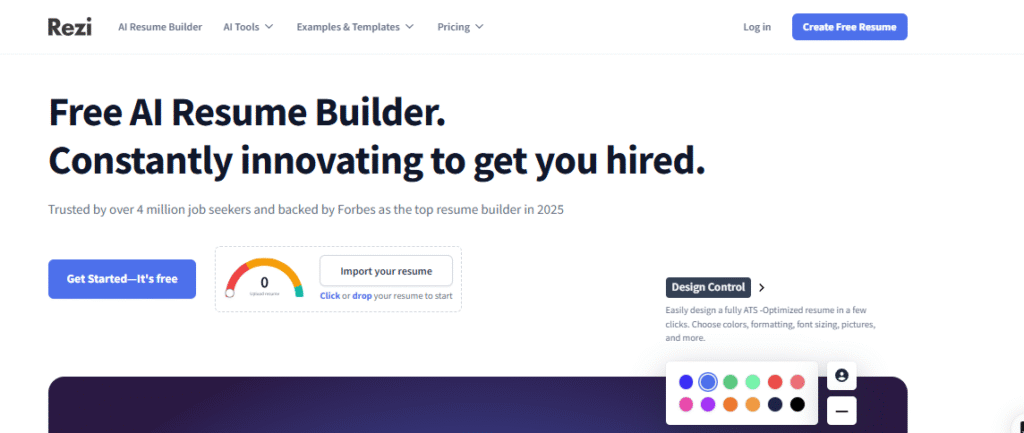
    1. Rezi: ATS-Optimised Resumes Made Easy

    Rezi is one of the most popular AI resume builders right now, and for good reason. It automatically scans your resume to match the job description, helping you include the right keywords and format it for ATS systems.
    You just paste the job title or upload a job post, and Rezi helps you tailor your content in minutes. No fluff, just clear, measurable improvements.

    You can use Rezi’s score system to track how “job-ready” your resume is. It’s beneficial if you’re applying to multiple roles.

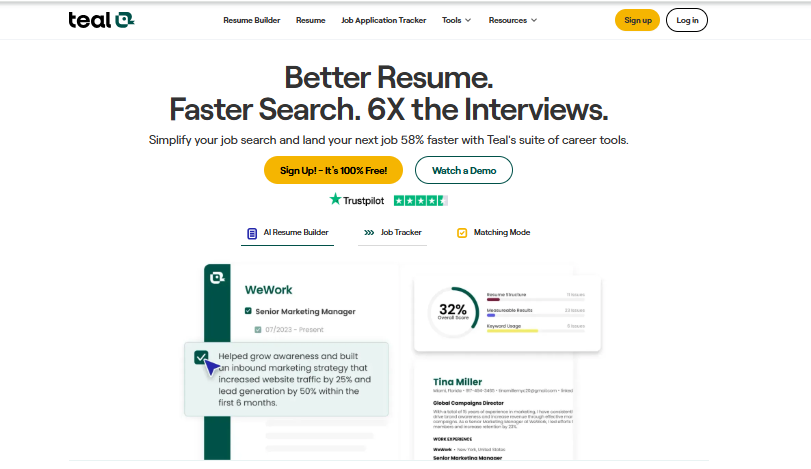
    2. Teal: Your All-in-One Job Search Dashboard

    Teal is like your personal job search assistant. It helps you organise job applications, track progress, and optimise your resume for each job listing.
    What makes it stand out is the browser extension, which allows you to save job listings from LinkedIn, Indeed, or any other online source and then creates a tailored version of your resume for that specific role.

    So, instead of writing one generic CV for everything, Teal makes sure your resume talks directly to the job you’re applying for.

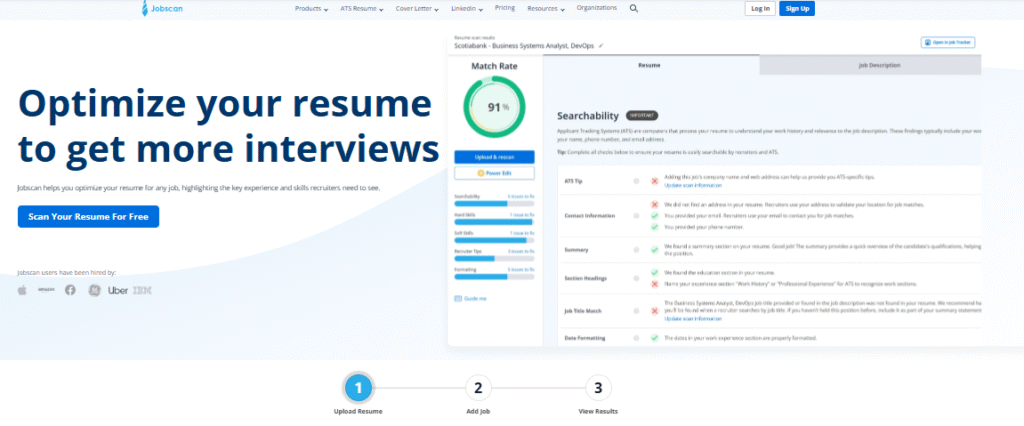
    3. Jobscan: Match Your Resume to the Job Description

    If you’ve ever wondered, “Why am I not getting interviews even after applying to so many jobs?”, Jobscan has the answer.
    It compares your resume against a job description and tells you how well you match, down to the keywords, skills, and phrasing. You’ll get a “match rate” score that shows how to improve instantly.

    It’s like having insider insight into what recruiters are really looking for.

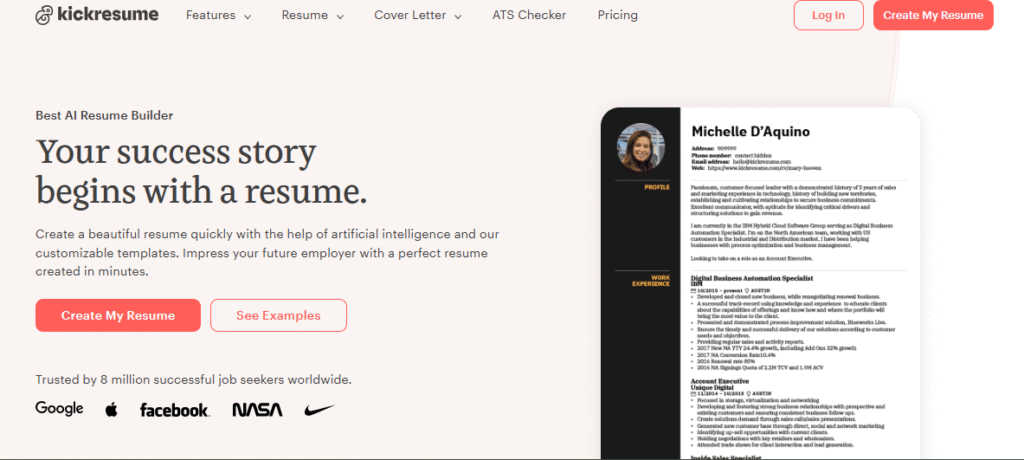
    4. Kickresume

    Kickresume mixes design and AI intelligence perfectly. It’s great for creative professionals who want resumes that stand out visually without losing structure.
    Its AI assistant helps write bullet points, correct grammar, and adjust tone, so your CV reads as confidently as you sound.

    Plus, it comes with a free cover letter generator, which helps you match your tone and job description with ease.

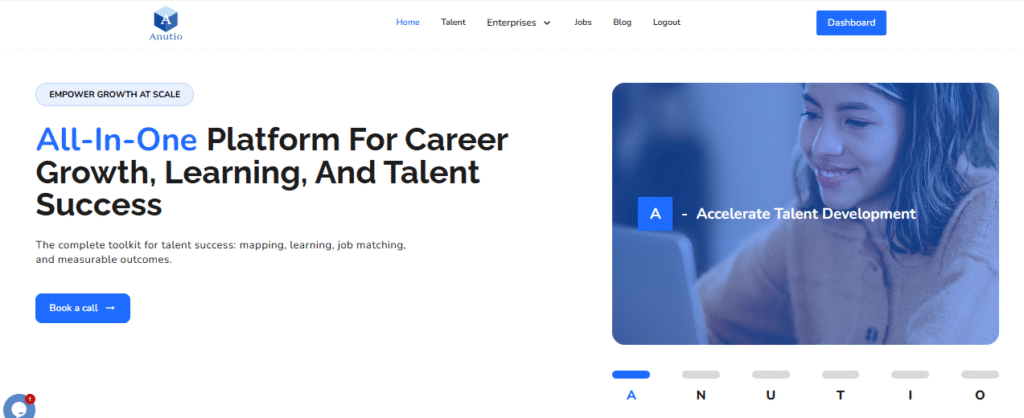
    5. Anutio AI — Smart Career Mapping/Matching and Assistant

    Anutio AI is designed to simplify career growth for students, professionals, and companies. Unlike traditional job portals, Anutio uses AI-driven insights to review your resume and suggest the best career paths to try, as well as show you what is missing in your resume and what to add instead.

    Also, with the information from your resume, Anutio matches you to potential job listings that fit your profile.

    Anutio’s AI-driven job-matching engine connects:

    • Students in Nigeria and Canada to real career development opportunities
    • Professionals looking to transition or relocate
    • Employers seeking verified, ready-to-grow talent

    What makes it unique is that Anutio’s algorithms are trained to understand local skill patterns, education systems, and employer needs, giving users recommendations that actually make sense for where they are.

    Anutio matches you based on potential and context.

    If you’re an international student or an immigrant professional trying to navigate the job market in Canada, Anutio’s local partnerships and career events give you an edge that global AI tools often overlook.

    AI resume tools don’t “write for you”; they coach you. They analyse language patterns, recruiter preferences, and ATS filters to help your resume speak the same language as the job description.
    You’re still in control; the AI just helps you say things more powerfully.

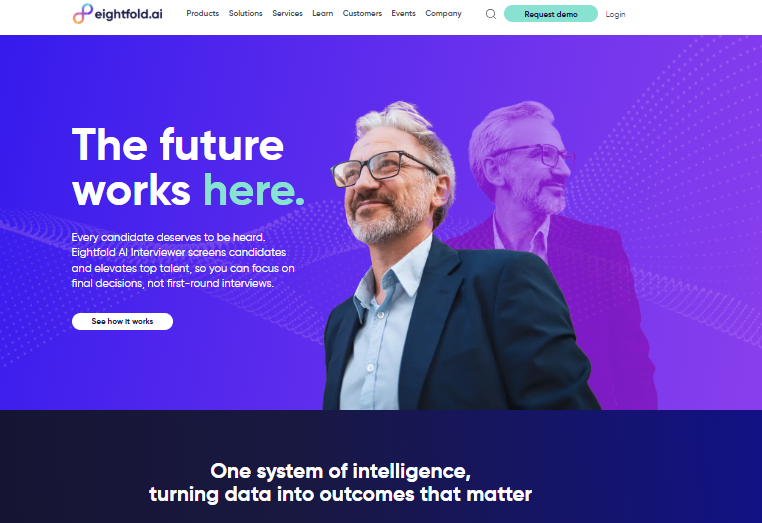
    6. Eightfold.ai: Predicting Your Career Path Before You See It

    Eightfold.ai is one of the most advanced AI talent platforms in the world. It uses deep-learning models trained on billions of career data points to predict which roles align with your experience and which skills you’ll need next.

    So instead of guessing where you “fit,” it helps you see your future roles mapped out. Imagine getting a dashboard that says, “You’re 80% ready for a marketing manager role; learn X and Y to get there.” That’s how smart AI matching can be.

    AI Learning Platforms That Keep You Ahead

    It’s one thing to know where you’re going; it’s another to build the skills that get you there. AI learning platforms personalise the process, ensuring you focus on what truly matters for your field.

    1. Coursera with AI Integration

    Coursera now uses AI to recommend personalised courses, career paths, and even project-based learning. For instance, if you take a data analytics course, Coursera’s AI can suggest “next step” certifications or job-aligned projects.

    2. Udemy AI Learning Hub

    Udemy curates courses with AI-driven recommendations and “learning paths” for career transitions. Whether you’re learning machine learning, marketing automation, or AI ethics, Udemy adjusts to your pace and goals.

    3. LinkedIn Learning

    LinkedIn Learning provides AI-based content suggestions tailored to your skill gaps. The more you engage, the smarter it becomes, connecting you to courses that boost your profile visibility.

    AI Tools for Building Your Professional Brand

    In 2025, your personal brand is your résumé. Whether you’re a student trying to break into tech or a professional pivoting careers, your online presence speaks before you do and AI tools can make sure it speaks the right language.

    1. Personal AI Website Builders

    Tools like Durable and 10Web let you build AI-generated personal websites in minutes. You just describe who you are and what you do, and the AI crafts a professional site that highlights your skills, testimonials, and portfolio.

    2. ChatGPT for Career Storytelling

    ChatGPT is more than a chatbot, it’s a career storytelling companion. You can use it to:

    • Craft personal bios for your résumé or LinkedIn.
    • Generate answers to common interview questions.
    • Draft outreach emails or professional posts.

    3. Canva Magic Write for Portfolio Design

    Canva’s Magic Write feature helps you design personal branding assets like resumes, cover letters, and digital portfolios with built-in AI copy. You can create professional-grade templates for LinkedIn banners, portfolio pages, or pitch decks in minutes.

    The Future of AI in Career Development (2025 & Beyond)

    We’ve explored how AI is transforming every part of career growth, from learning new skills to building your résumé, getting matched with jobs, and polishing your professional brand.
    But what’s next? How will AI reshape the future of work and career development in 2025 and beyond, especially for platforms like Anutio?

    1. AI Mentors and Career Coaches

    Imagine having a mentor who knows your career history, skills, and interests and gives you personalised guidance 24/7. That’s what AI-powered mentors like Replika Pro, CoachVantage AI and Anutio are beginning to offer.

    These digital mentors:

    • Analyse your career goals and learning data.
    • Suggest realistic next steps, like new certifications or soft skills to improve.
    • Offer emotional and motivational support when you hit roadblocks.

    2. Predictive Job Mapping and Skill Forecasting

    AI isn’t just helping us adapt, it’s predicting what’s next.
    Tools like LinkedIn’s Future of Skills and Burning Glass Institute use data to forecast which skills will be most in demand in the next 3–5 years.

    In 2025, expect more platforms to:

    • Predict industry disruptions early.
    • Suggest career pivots before a job market shift happens.
    • Map your current skills against emerging job roles.

    3. AI-Powered Career Communities

    The future of AI career development isn’t just individual, it’s collaborative.
    AI-driven communities like Polywork and Lunchclub are connecting professionals based on shared interests and complementary skills.

    These networks are becoming smarter, using AI to suggest who you should meet, what projects to collaborate on, and how to grow your influence organically.

    4. The Human Edge: Why AI Won’t Replace You

    It’s easy to feel like AI is taking over everything, but really what AI can do is analyse, suggest, and automate, but it can’t dream, empathise, or create like humans do.

    The real winners in the AI-driven future are those who:

    • Learn to work with AI instead of competing with it.
    • Use tools like Anutio, ChatGPT, and Canva to enhance creativity and communication.
    • Build adaptable skills – curiosity, storytelling, empathy, and problem-solving.

    AI doesn’t replace ambition; it amplifies it.
    So as you step into 2025, think of AI not as your competitor but as your career accelerator.

    The AI Career Advantage Starts Now

    AI is no longer a distant future concept; it’s already reshaping how we learn, grow, and work. Whether you’re a student figuring out your path, a professional seeking better opportunities, or a company looking for talent, using the right AI tools can fast-track your success.

    Platforms like Anutio are bridging the gap between technology and opportunity, especially for Africans and immigrants navigating the global workforce.
    The key to starting to experiment is to try out AI tools for learning, resume building, job matching, and personal branding. Find what feels intuitive, and let AI handle the heavy lifting while you focus on what matters most: your growth.

    FAQs

    1. Can AI replace a career counsellor?
    Not really. AI can analyse data and provide recommendations, but career counselling is still human at its core; it involves empathy, emotional support, and intuition. Tools like Anutio or CoachHub work best with human insight, not instead of it.

    2. Free vs. Paid AI Tools: What’s Worth It?
    Free tools like ChatGPT, Teal, or Canva are great for getting started.
    But paid plans unlock personalisation, automation, and integrations, especially if you’re serious about career transitions or portfolio building.
    For instance, Anutio offers AI-powered job matching and career growth recommendations that go beyond what free tools can achieve.

    3. How Safe Is My Data with AI Career Platforms?
    This depends on the platform. Always check privacy policies and data handling practices.
    Reputable services like Gloat, LinkedIn, and Anutio use end-to-end encryption and give you full control over what’s shared.
    If a platform doesn’t clearly explain how your data is used, that’s your red flag.

  • Top AI Career Trends in 2025: Skills, Jobs, and Tools to Watch

    Top AI Career Trends in 2025: Skills, Jobs, and Tools to Watch

    AI has always been a buzzword, but 2025 is not just hype; it’s a turning point. From how companies hire to how we work every day, AI is moving from being a “nice to have” to being part of the foundation of careers worldwide.

    We’re already seeing how AI in the workplace is reshaping job roles, demanding new skills, and even changing the way professionals build their résumés. For students and mid-career professionals, this shift feels both exciting and scary, because nobody wants to get left behind.

    That’s why it’s so important to pay attention to the skills, jobs, and tools driving this change. By knowing what’s hot right now, you can start planning and positioning yourself for the opportunities AI is unlocking.

    High-Impact Skills to Cultivate

    The truth is, AI won’t “take all the jobs,” but it will transform the skills we need. Some careers will fade, but many more will grow for people ready to adapt. Here are the most valuable skills to focus on in 2025:

    1. Prompt Engineering

    Generative AI is everywhere; tools like ChatGPT and Claude depend on prompts to produce useful answers. Knowing how to write clear, structured prompts has become a real job skill. In fact, some companies are already hiring prompt engineers with six-figure salaries.

    2. AI Ethics & Responsible Use

    As AI gets smarter, questions about bias, privacy, and fairness get louder. Governments and organisations are looking for professionals who understand the ethics of AI. This isn’t just a “tech” problem; it’s a human one.
    For example, companies must address bias in AI systems to avoid harmful outcomes. Learning about AI ethics will help you stand out in both business and policy spaces.

    3. Data Literacy

    AI runs on data, and people who know how to read, clean, and use data will always be in demand. You don’t need to be a data scientist, but you do need to feel comfortable using tools like Excel, SQL, or even Tableau to make sense of information.

    4. Human-AI Collaboration

    The future isn’t humans vs. AI, it’s humans with AI. That means you’ll need to learn how to work alongside AI tools, letting them do the heavy lifting while you focus on creativity, strategy, and problem-solving.
    A great example is how designers now use Figma AI for faster prototyping, while marketers use Jasper AI to draft copy. It’s less about replacing you, more about supercharging your workflow.

    Emerging Roles and Job Titles

    One of the most exciting things about AI is how it’s creating jobs we’ve never seen before. Just like the internet gave us “social media managers” and “UX designers,” AI is doing the same in 2025. Here are a few examples:

    1. AI Ethicist

    Companies are realising they can’t just “build AI and hope for the best.” They need people to set guidelines, check for bias, and make sure AI is fair. This is where an AI ethicist comes in, someone who combines tech understanding with a moral compass.

    2. MLOps Specialist

    Think of MLOps (Machine Learning Operations) as the DevOps of AI. It’s about deploying, monitoring, and scaling AI models so they work in real-world businesses. The demand for MLOps specialists is growing fast, especially in tech and finance.

    3. AI Product Manager

    AI tools aren’t just tech projects, they’re products that need strategy, market fit, and user adoption. That’s where AI product managers come in. If you already love product design or management, this is a natural transition.

    4. AI Content Curator

    With generative AI producing endless content, there’s a rising need for people who can filter, fact-check, and humanise AI outputs. Imagine being the editor who polishes AI drafts before they go public. It’s not just copywriting anymore, it’s curating machine-created knowledge.

    Tools & Technologies to Watch

    The AI toolbox is growing so fast that it’s hard to keep up. But in 2025, a few standouts are worth watching:

    • ChatGPT & Claude: Conversational AI tools that help with brainstorming, research, and even coding.
    • MidJourney & Runway: For creatives, these AI tools are changing how we design visuals and edit videos. (Runway is even used in movie production).
    • AutoGPT & Agentic AI: These take things further by acting like “digital assistants” that can chain tasks and make decisions on your behalf.
    • Figma AI & Canva AI: For designers, these tools mean faster prototyping, smarter edits, and less time stuck in revisions.
    • Tableau, Power BI, and BigQuery: Data tools that remain the backbone for AI-driven decision-making.

    If you’re in any career field, picking one or two AI tools to master in 2025 could make you instantly more competitive.

    Industry Use Cases + Sector Shifts

    AI isn’t just for tech bros; it’s reshaping every industry. Here’s how it looks in practice:

    • Healthcare: AI is being used for faster diagnoses and drug discovery. Tools like IBM Watson Health are helping doctors make smarter decisions.
    • Finance: Banks are using AI fraud detection to protect customers and speed up approvals.
    • Education: AI tutors like Khanmigo are helping students learn in personalised ways.
    • Creative Industries: Musicians, writers, and filmmakers now co-create with AI, using platforms like AIVA for music or Runway for video storytelling.

    The big lesson? AI is not replacing entire industries, but it is reshaping how professionals in those industries work.

    How to Position Yourself / Future-Proof Strategy

    Knowing the trends is great, but how do you personally get ready for them? Here’s a simple playbook:

    1. Upskill with AI courses: Platforms like Coursera AI programs or Udemy AI courses make it easy to learn at your own pace.
    2. Build a portfolio: Don’t just say you know AI, show it. Create a project on GitHub, a case study on LinkedIn, or even a blog where you share your learnings.
    3. Stay flexible: Careers are shifting fast. The more you adapt, the easier it is to stay ahead. Think of it as being career-fluid instead of stuck in one lane.
    4. Network with AI communities: Join spaces like AI in Business LinkedIn groups or forums on Reddit’s AI community to learn from others and stay updated.

    Outlook

    2025 proves that AI isn’t just a trend, it’s the new normal. The best way forward is to see AI as a partner in your career: it helps you do more, go faster, and stay relevant.

    If you focus on skills, roles, and tools instead of just worrying about being replaced, you’ll find that AI opens more doors than it closes. And the future? It belongs to those who learn continuously and adapt fearlessly.

  • How AI Helps Identify Transferable Skills You Didn’t Know You Had

    How AI Helps Identify Transferable Skills You Didn’t Know You Had

    If you’ve ever sat down to write your CV or LinkedIn profile, you probably stared at the screen thinking, “What do I even have that counts as experience?” That’s a common feeling for many people, especially immigrants building new careers in Canada, students just starting out, or professionals trying to pivot into a new field.

    You likely have way more transferable skills than you realise. Transferable skills are abilities that move with you from one role to another, no matter the industry. Think about things like communication, problem-solving, teamwork, or even leading small projects. These don’t disappear just because your job title changes.

    The problem is, most of us don’t see those skills clearly because we’re too focused on job descriptions. This is where AI tools step in to shine a light on what’s been hiding in plain sight.

    How AI Tools Identify Hidden Strengths

    AI doesn’t just scan your résumé for keywords. It looks at patterns in your experiences and matches them against thousands of real job roles. Platforms that use natural language processing (NLP) can read between the lines and highlight skills you might have overlooked.

    For example, if you’ve been volunteering to organise events, an AI tool might recognise project management and leadership skills hidden inside those tasks. If you’ve been tutoring or mentoring a friend, it could tag you with teaching and coaching abilities. Even soft skills like empathy or adaptability can surface when AI maps your background against broader industry needs.

    This is powerful for anyone trying to move forward in their career:

    • Immigrants can get skills recognised beyond traditional certificates.
    • Students can showcase experience from side projects or part-time jobs.
    • Career pivoters can see how their old role connects to something entirely new.

    By translating your experiences into recognised skills, AI gives you a language that recruiters and employers already understand and that can completely change the way you tell your story.

    Why This Matters for Immigrants, Students & Career Pivoters

    For immigrants, the toughest part of starting fresh in a new country is that your degrees or work history don’t always transfer smoothly. In Canada, many internationally trained professionals face this challenge (Government of Canada on foreign credential recognition). AI can help bridge that gap by showing how your previous role skills translate into the Canadian job market. For example, if you worked as an engineer abroad, AI might highlight transferable abilities like problem-solving, project coordination, and analytical thinking that fit other industries too.

    For students, the issue isn’t a lack of skills; it’s recognising that part-time jobs, school projects, or even running a small club count for something. AI can take those smaller experiences and map them into broader categories like teamwork, leadership, and digital literacy. This means you don’t leave your résumé looking “empty” just because you’re new.

    And for career pivoters, AI acts like a translator. It shows you how what you did before can fit into a new space. Let’s say you’ve been a teacher and want to move into corporate training. AI can connect the dots between lesson planning and curriculum design with employee learning and development.

    In short, AI helps these groups avoid underselling themselves. It makes your hidden skills visible in ways that employers instantly understand.

    How to Use AI to Surface & Leverage Those Skills

    So, how do you actually put this into practice?

    1. Upload Your Résumé or Profile Into AI Tools
      Career platforms like Rezi or Kickresume use AI to scan your experiences and point out strengths you might miss.
    2. Try Skill-Mapping Assessments
      Some AI platforms, like Eightfold.ai, go beyond your résumé and compare your skills to millions of real job profiles. This gives you a data-backed view of where your strengths sit in the market.
    3. Cross-Check AI Insights With Human Feedback
      AI can give you suggestions, but it’s even stronger when combined with feedback from mentors, peers, or coaches.
    4. Build a Personal Action Plan
      Once you know your transferable skills, you can:
      • Reframe your résumé to highlight them.
      • Use them as keywords in your LinkedIn headline.
      • Map them to career paths that fit your new goals.

    AI is not about replacing your judgment; it’s about giving you clarity and language to better market yourself.

    Challenges, Risks & Ethical Considerations

    Of course, AI isn’t perfect. It can sometimes highlight the wrong skills or miss context. For example, maybe you worked in a family business and wore many hats. AI might not fully capture the depth of those experiences. That’s why you still need to review and refine what the system gives you.

    Another issue is bias in AI models. If the dataset doesn’t fully represent diverse backgrounds, immigrants or career switchers could be disadvantaged. Transparency, accountability, and human oversight are key.

    So the rule here: AI is a mirror, not the final judge. Use it as a tool, but not as your only voice.

    At the end of the day, most of us are sitting on a pile of transferable skills we didn’t know we had. Whether you’re starting over in a new country, preparing to graduate, or making a career pivot, AI can help you see your value more clearly.

    But don’t stop at just “seeing.” Take action:

    • Try a free AI résumé scanner this week.
    • Rewrite your LinkedIn summary with your new list of skills.
    • Ask someone in your network if they see the same strengths AI identified.

    Your skills are already there. AI just gives you the words to describe them and once you can describe them, you can start using them to open the right doors.

  • How Freelancing and Flexible Work Shape the Future of Workforce Strategy

    How Freelancing and Flexible Work Shape the Future of Workforce Strategy

    Just a few year back, it was office work or nothing but now the world of work is no longer dominated by 9-to-5 contracts and fixed office desks. Instead, we’re entering an era defined by adaptability, digital-first thinking, and lean operations.

    Whether you’re an NGO, a startup, or a multinational, the question isn’t “Should we use freelancers?” — it’s “How can we best integrate freelancers into our workforce strategy?”

    In this article, we’ll share the real reasons freelancing and flexible work models are becoming critical to workforce strategy.

    Why the World Is Rethinking Work

    The rise of freelancing isn’t just a trend — it’s a tectonic shift in how we view productivity, value, and talent. Several macro forces are pushing organizations toward more agile workforce strategies:

    1. The Remote Revolution

    COVID-19 was the final nudge many businesses needed. What started as remote work out of necessity evolved into a redefinition of work itself. Businesses realized:

    • Productivity doesn’t rely on office presence.
    • Talent can be global.
    • Flexibility can be a competitive advantage.

    2. The Great Resignation & Quiet Quitting

    In 2021–2023, waves of professionals left traditional employment in search of better work-life balance, autonomy, or meaning. Even those who stayed began setting firmer boundaries around time and purpose. Freelancing offers an attractive alternative: ownership, creativity, and flexibility.

    3. Economic Uncertainty = Smarter Spending

    Inflation, funding droughts, and shifting investor priorities mean companies—especially startups and SMEs—need more value per dollar. Hiring freelancers offers high-impact work without the long-term commitment or overhead of full-time staff.

    4. Platform Power

    Tools like Upwork, Fiverr, Deel, and Anutio have made freelance hiring faster, safer, and more accessible. What once took months of headhunting can now be done in a week—with contracts, timelines, and deliverables built-in.

    5. Generational Change

    Millennials and Gen Z are not just digital natives—they’re flexibility natives. They value freedom, impact, and growth over corner offices.

    Stats:

    • 38% of the U.S. workforce did some form of freelance work in 2023 (Upwork, Freelance Forward Report).
    • A World Bank report indicates that Africa experienced a 130% growth rate in job postings on one of the largest digital labor platforms between 2016 and 2020, the highest among all regions analyzed.

    What Is Freelancing in Today’s Context? (And What It’s Not)

    Let’s bust some myths and get clear on what modern freelancing actually looks like.

    Freelancing is not:

    • Just people on Fiverr charging $5 per logo
    • A stop-gap until someone gets a “real” job
    • Only for creative roles like writing or design
    • Automatically “cheaper” than full-time hires

    Freelancing today is:

    • Project-based or retainer-based work with clear outcomes
    • Found across multiple domains: tech, data, HR, fundraising, curriculum dev, business analysis
    • Often long-term partnerships with flexibility built in
    • A career choice, not a last resort

    Types of Freelancers:

    • Creative: designers, writers, editors
    • Technical: developers, data analysts, IT support
    • Strategic: consultants, business planners, HR specialists
    • Fractional executives: part-time CFOs, CMOs, CTOs
    • Impact-focused: grant writers, program evaluators, curriculum designers

    Freelancers now operate like micro-businesses. They bring their tools, processes, experience — and often work across industries. The best ones are highly specialized, outcomes-driven, and offer deep strategic value.

    Benefits of Freelancing as a Workforce Strategy

    Why are organizations across sectors—from tech startups in Canada to youth NGOs in Nigeria—turning to freelance models? The benefits go far beyond cost savings.

    For Employers

    1. Cost Efficiency

    • No need to cover benefits, pensions, office equipment
    • Pay for output, not presence
    • Scale teams up/down without layoffs

    2. Speed to Execution

    • Onboard in days, not months
    • Get work done across time zones
    • Perfect for time-sensitive grants, app launches, campaigns

    3. Access to Global Talent

    • Find experts not available locally
    • Hire multilingual talent for cross-border programs
    • Bring in niche skills temporarily (e.g., grant audit expert)

    4. Innovation & Fresh Thinking

    • Freelancers bring cross-industry insights
    • No internal politics = more focused output
    • Perfect for creative sprints, MVP builds, rebrands

    For Freelancers

    1. Flexibility and Autonomy

    • Choose clients, working hours, tools
    • Design a work-life rhythm that suits their lifestyle

    2. Multiple Income Streams

    • No reliance on one employer
    • Opportunity to build long-term client retainers

    3. Global Reach

    • Work from Nigeria, serve clients in Canada
    • Digital platforms = borderless business

    4. Personal Brand Growth

    • Build authority through niche expertise
    • Use client wins to grow portfolio, referrals, pricing

    Challenges and Considerations

    While freelancing offers numerous benefits, it’s essential to address potential challenges:

    Compliance and Legal Issues

    Engaging freelancers requires understanding labor laws and tax implications to avoid misclassification and ensure compliance.

    Solutions:

    • Utilize platforms that handle contracts and payments, ensuring legal compliance.
    • Consult legal experts to understand local and international labor laws.

    Quality and Reliability

    Ensuring the quality of freelance work can be challenging without proper vetting and management.

    Strategies:

    • Implement rigorous selection processes, including portfolio reviews and interviews.
    • Set clear expectations, deliverables, and deadlines in contracts.

    Integration with Existing Teams

    Integrating freelancers into existing teams can pose communication and collaboration challenges.

    Approaches:

    • Use collaboration tools to facilitate communication.
    • Assign a point of contact within the team to coordinate with freelancers.

    Building a Freelance-Ready Organization

    To effectively integrate freelancers, organizations should:

    Develop Clear Policies

    Establish guidelines for hiring, onboarding, and managing freelancers, including confidentiality agreements and performance expectations.

    Invest in Technology

    Adopt tools that facilitate remote collaboration, project management, and secure communication.

    Foster an Inclusive Culture

    Encourage team members to embrace freelancers as valuable contributors, promoting collaboration and knowledge sharing.

    Anutio to Aid

    Platforms such as Anutio play a crucial role in connecting organizations with qualified freelancers.

    Benefits:

    • Talent Matching: Advanced algorithms match organizations with freelancers based on skills, experience, and project requirements.
    • Streamlined Processes: Integrated tools for management, and communication simplify the hiring process.
    • Support and Resources: Access to resources and support services to ensure successful collaborations.

    Freelancing and flexible work arrangements are reshaping workforce strategies across sectors. By embracing these models, organizations can access diverse talent, increase agility, and drive innovation.