Tag: Soft Skills

  • Careers for High-EQ (Emotional Intelligence) Professionals: Top Opportunities in 2026

    Careers for High-EQ (Emotional Intelligence) Professionals: Top Opportunities in 2026

    Have you ever been told that you are a great listener? Do you naturally sense when a coworker is stressed before they even say a word, or find yourself effortlessly de-escalating tense situations with angry clients?

    If this sounds like you, you possess one of the most highly sought-after traits in the 2026 job market: Emotional Intelligence (EQ).

    For decades, the corporate world heavily prioritized hard technical skills and raw IQ. However, the landscape has fundamentally shifted. Today, algorithms can write code, generate spreadsheets, and automate workflows in seconds. But what artificial intelligence absolutely cannot do is look a frustrated client in the eye, understand their underlying anxiety, and build genuine, lasting trust.

    As a result, companies are aggressively hunting for people who can navigate complex human emotions. If you are ready to turn your natural empathy into a high-paying profession, this guide breaks down the best careers for high-EQ professionals, how to market your skills, and the exact steps to map your career pivot.

    Why Emotional Intelligence is the Ultimate Future-Proof Skill

    Before we look at specific job titles, it is crucial to understand why EQ is dominating the hiring landscape.

    Emotional intelligence is generally broken down into four core domains: self-awareness, self-management, social awareness, and relationship management.

    According to a landmark study by Harvard Business Review, EQ is responsible for nearly 90% of the difference between average managers and top-performing leaders. Furthermore, the World Economic Forum’s Future of Jobs Report consistently ranks complex problem-solving, leadership, and social influence as the most critical skills needed to survive industry disruption.

    As we explored in our deep dive on EQ vs. IQ, technical skills will get you the interview, but emotional intelligence will get you the promotion. It is the core driver behind the human qualities that AI cannot replace. Consequently, careers that rely heavily on relationship building are shielded from automation.

    Top 5 High-Paying Careers for High-EQ Professionals

    If you are highly empathetic and possess strong interpersonal skills, you do not have to settle for low-paying roles. Here are the top destination careers for high-EQ professionals in 2026.

    1. Customer Success Manager (CSM)

    In the tech and Software as a Service (SaaS) industries, a Customer Success Manager is not a customer service rep; they are a strategic partner. After a company buys software, the CSM guides them on how to use it, ensures they are happy, and prevents them from leaving for a competitor. This role requires immense patience, proactive empathy, and the ability to navigate corporate politics. If you know how to make people feel heard and valued, you will thrive here.

    2. Human Resources (HR) Business Partner

    An HR Business Partner is a senior role that aligns a company’s people strategy with its business goals. Unlike traditional HR admins who handle payroll, HR Business Partners coach executives, mediate deep workplace conflicts, and design healthy workplace cultures. It requires extreme tact and the ability to deliver difficult feedback with grace. If you want to dive deeper into this, check out our insights on how to deal with difficult coworkers.

    3. Change Management Consultant

    When a massive corporation merges with another company or implements a terrifying new AI system, employees usually panic. A Change Management Consultant steps in to guide the workforce through the transition. They listen to employee fears, communicate transparently, and design training programs that ease anxiety. It is a highly lucrative role that relies entirely on understanding human psychology and resistance to change.

    4. Product Manager

    While it sounds technical, Product Management is actually one of the most EQ-heavy roles in tech. A Product Manager sits between the software developers, the marketing team, and the end-users. They have to constantly negotiate competing priorities, say “no” to brilliant engineers without hurting their egos, and deeply empathize with the customer’s pain points.

    5. User Experience (UX) Researcher

    UX Researchers study how people interact with websites and apps. They conduct live interviews, watch users struggle with digital products, and ask probing questions to understand why they are frustrated. If you have high social awareness and a natural curiosity about human behavior, UX research is a highly respected and well-compensated career path.

    How to Prove Your EQ on a Resume

    Identifying the right career is only the first step. The real challenge is proving you have high EQ to a recruiter who has never met you.

    As we discussed in our article comparing soft skills vs. hard skills, simply writing “Highly Empathetic” or “Great Communicator” on your resume will get you automatically rejected by Applicant Tracking Systems (ATS). You must quantify your emotional intelligence.

    Here is how to translate your soft skills into hard metrics:

    • Instead of: Good at resolving team conflicts.
    • Use: Mediated cross-departmental disputes, improving project delivery times by 20% and increasing team retention.
    • Instead of: Excellent client communication skills.
    • Use: Managed relationships with 40+ enterprise accounts, resulting in a 95% client retention rate over two years.

    You must show recruiters the business result of your empathy.

    Mapping Your Transferable Skills for a Career Pivot

    Many of the most emotionally intelligent professionals are currently burning out in high-stress, emotionally demanding jobs, such as teaching, nursing, social work, or retail management.

    If this is you, please understand that you do not need to start from scratch. You already possess the exact transferable skill examples that tech and corporate recruiters are looking for.

    For instance, a nurse who manages the anxieties of patients and their families possesses the exact de-escalation skills required for a Customer Success Manager. A teacher who adapts their lesson plan on the fly because the classroom energy is low is actively practicing the agile methodology needed by a Scrum Master or Product Manager.

    The secret is to create a strategic career map. By identifying your natural EQ strengths and learning the corporate vocabulary to describe them, you can seamlessly transition into a high-growth sector. (We also have a great guide on the opposite end of the spectrum: Careers for Detail-Oriented People).

    Empathy is Your Greatest Asset

    In the past, emotional intelligence was often dismissed as a “soft” skill. Today, it is the hardest skill to find, the hardest to train, and the absolute hardest for AI to replicate.

    Whether you decide to pivot into Customer Success, HR, or Change Management, the market is aggressively expanding its careers for high-EQ professionals. Your ability to connect, empathize, and lead with compassion is no longer just a nice personality trait—it is a highly bankable professional asset.

    Are you ready to stop hiding your EQ and start leveraging it? Do not let a static resume fail to capture your true interpersonal skills. Use the Anutio Digital Profile Builder today to seamlessly translate your emotional intelligence into the exact business metrics corporate recruiters are searching for. Visit Anutio to get started.


  • The Soft Skills Renaissance: Why Empathy Pays More Than Coding in 2026

    The Soft Skills Renaissance: Why Empathy Pays More Than Coding in 2026

    For decades, the career advice was simple: “Learn a hard skill.” Learn to code. Learn accounting. Learn engineering. These were the “Hard Skills”, tangible, measurable, and highly paid. Everything else, communication, listening, empathy, was dismissed as “Soft Skills.” They were seen as the fluff you put at the bottom of a resume when you didn’t have anything else to say.

    That era is over.

    In 2026, the script has flipped completely. Artificial Intelligence (AI) has democratized “Hard Skills,” making human-centric soft skills for 2026 the new gold standard for career growth.

    AI can write code faster than a Junior Developer. It can audit a spreadsheet faster than an Accountant, and it can translate languages faster than a Translator. However, AI cannot negotiate a hostage situation. It cannot calm an angry client, nor can it effectively rally a depressed team. Consequently, we are entering the “Soft Skills Renaissance.” In this new economy, your technical skills get you the interview, but your human skills get you the promotion and the paycheck.

    Here is why human-centric assets are becoming the most lucrative parts of your portfolio, and how to master soft skills for 2026.

    1. The Data: Why “Nice” Guys Finish Rich

    This isn’t just a feel-good theory; it is a measurable economic fact. According to research by Harvard economist David Deming, jobs requiring high social skills have seen the fastest employment and wage growth since 2000. Conversely, jobs that require only high technical skills have largely stagnated or been automated.

    The highest earners in 2026 are not the “Genius Coders” who sit alone in a dark room. Instead, they are the “Technical Communicators.”

    • These individuals know enough code to talk to the AI.
    • Furthermore, they have enough Empathy to talk to the client.

    If you can translate complex data into a human story, you are irreplaceable. (Read more on Irreplaceable Human Qualities). (Read more on Irreplaceable Human Qualities).

    2. Stop Calling Them “Soft.” They Are “Power Skills.”

    The term “Soft Skills” implies they are weak or easy. However, try telling a Project Manager that “conflict resolution” during a deadline crisis is easy.

    Let’s rebrand them. These are Power Skills. Here are the Top 5 Power Skills employers are desperate for in 2026:

    A. Radical Adaptability (AQ)

    IQ is Intelligence Quotient. EQ is Emotional Intelligence. AQ is Adaptability Quotient. The half-life of a learned skill is now only 5 years. What you learned in university is already obsolete.

    • The Skill: The ability to unlearn old methods and relearn new ones without ego.
    • In Action: “Our marketing channel just died? Okay, let’s pivot to this new platform tomorrow.”

    B. High-Friction Communication

    AI handles “Low-Friction” communication (scheduling meetings, summarizing emails). Humans handle “High-Friction” communication.

    • The Skill: Delivering bad news, giving honest feedback, and negotiating high-stakes deals.
    • In Action: Telling a client their project is late without losing the account.

    C. Critical Thinking & Strategy

    As we discussed in our article on AI in Career Guidance, AI is a prediction engine. It gives you the average answer based on past data.

    • The Skill: Knowing when the data is wrong. Spotting the outlier. Asking “Why are we doing this?” instead of just “How do we do this?”

    D. Collaboration & Influence

    You can have the best idea in the room, but if you can’t persuade others to follow you, the idea dies.

    • The Skill: Moving people. Building consensus among people who disagree.

    E. Empathy (The Ultimate API)

    Think of Empathy as the “API” (Application Programming Interface) for humans. It allows you to connect with another person’s operating system.

    • The Skill: Understanding the emotion behind the request. (e.g., Realizing your boss isn’t angry at you; they are stressed about the board meeting).

    3. How to “Prove” Soft Skills on a Resume

    This is where most candidates fail. They write:

    “I am a hard-working team player with good communication skills.”

    Recruiters hate this. It proves nothing. You must treat Soft Skills like Hard Skills: Show the Outcome.

    The “Soft Skill” Rewrite Formula:

    • Don’t say: “Good at conflict resolution.”
    • Say: “Mediated a dispute between Design and Engineering teams regarding product timeline, resulting in a 100% on-time launch.”
    • Don’t say: “Strong leadership skills.”
    • Say: “Mentored 4 junior interns, 3 of whom were hired full-time following the program.”
    • Don’t say: “Great communicator.”
    • Say: “Presented quarterly data insights to non-technical stakeholders (C-Suite), securing $50k in additional budget.”

    (Need help formatting this? Use our 2026 Resume Guide to structure your bullet points).

    4. Can You Learn Empathy? (Yes, You Can)

    There is a myth that you are either born with “people skills” or you aren’t. False. Empathy is a muscle. You can train it at the gym.

    The “Active Listening” Workout: Next time you are in a conversation, try the “2-Second Rule.” When the other person finishes speaking, wait 2 full seconds before you respond.

    • Most people listen to respond.
    • You need to listen to understand. That 2-second pause forces you to process what they actually said, rather than just waiting for your turn to speak.

    The “Steel Man” Workout: When you disagree with a coworker, try to “Steel Man” their argument. (The opposite of “Straw Man”).

    • Say: “Before I disagree, let me check if I understand you. You are worried that if we launch early, we risk bugs. Is that right?”
    • This makes them feel heard, which lowers their defenses and opens them to your idea.

    The Robot-Proof Career

    In the future, there will be two types of workers:

    1. The Task Doers: People who just move data from Column A to Column B. (These jobs are disappearing).
    2. The Relationship Builders: People who use data to solve human problems. (These jobs are exploding).

    If you want a career that is robot-proof, stop obsessing over the latest software update and start obsessing over the latest human update. Learn to listen. Learn to negotiate. Learn to care.

    The code might change next year. People never do.

    Feeling stuck in a career that doesn’t use your strengths? Read our guide on Navigating Career Confusion.

  • No Local Experience: How to Translate Your International CV for Recruiters

    No Local Experience: How to Translate Your International CV for Recruiters

    You moved to a new country. You have 7, 10, maybe 15 years of solid experience. You were a Manager, a Lead, maybe even a Director back home. You know your stuff.

    But here? You are getting rejected for entry-level roles. Or worse, you are getting ghosted completely.

    The feedback is always the same vague, frustrating line: “We are looking for someone with more local experience.”

    In plain English: You have no local experience.

    It feels like a door slamming in your face. It feels like bias. But often, it is a communication gap. When a recruiter says you have no local experience, they aren’t saying you are unskilled. They are saying you are a financial risk.

    It’s not that they don’t value your experience. It’s that they view it as a financial risk.

    According to SHRM, a bad hire can cost a company up to $240,000. Recruiters are terrified of that cost. When they see a foreign company they don’t know, they panic.

    Recruiters are terrified of making that mistake. When they see a company name they don’t recognize, or a job title that doesn’t match their internal dictionary, they panic. They don’t know if “Manager” at your old firm means you led 5 people or 500.

    Your job isn’t to ask for a chance. Your job is to de-risk yourself.

    You need to stop listing your experience and start translating it. Here is the 5-step framework you can use with to turn “Foreign Risks” into “Global Assets.”

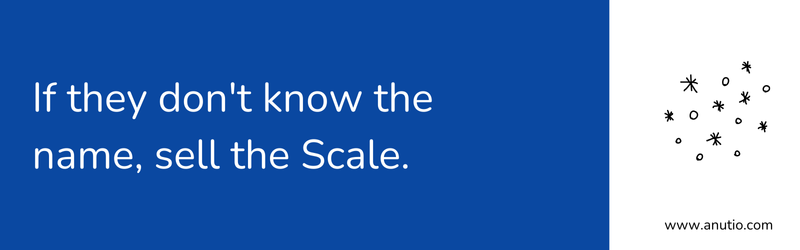
    Contextualize the Company (Sell Scale, Not Brand)

    This is the most common mistake I see. You are banking on your old company’s brand name. But if the hiring manager in London, Toronto, or New York hasn’t heard of “Zenith Bank” or “Jumia,” that brand equity is worth zero.

    You have to provide context to overcome the no local experience bias.

    Don’t just list the name. Use what we call the “Context Parenthesis.” Immediately after the company name, tell them what it is in terms of revenue, size, or market position.

    The Weak Version:

    Marketing Manager Zenith Bank Lagos, Nigeria

    (The recruiter thinks: “Is this a small local bank? A micro-finance firm? I don’t know, so I’ll pass.”)

    The Translated Version:

    Marketing Manager Zenith Bank (Tier-1 Financial Institution | $18B+ Assets | 10,000+ Employees) Lagos, Nigeria

    (The recruiter thinks: “Oh, this is a massive corporate environment. If she can navigate that complexity, she can navigate ours.”)

    Speak the Universal Language (Metrics)

    Job duties change from country to country. “Operations Manager” in Nigeria might mean “Logistics” in Canada. “Project Lead” in India might mean “Scrum Master” in the UK.

    If you want to distract them from your no local experience, focus on numbers.

    Math is the only universal business language. Dollars, percentages, retention rates, and efficiency scores mean the exact same thing in every country on earth.

    The Weak Version:

    • “Responsible for leading the sales team and managing monthly targets.”

    The Translated Version:

    • “Led a sales team of 15 across 3 regions, generating $2.5M in annual revenue (15% above target).”

    See the difference? The first one is a claim. The second one is proof.

    According to the Harvard Business Review, employers are increasingly prioritizing numbers. When you use numbers, you stop being a “foreign applicant” and start being a “high-performer.”

    Translate the Job Title (Function > Label)

    In many markets, job titles are inflated (everyone is a “VP”) or deflated (senior leaders are just “Heads of”). If you use your literal title from home, you might be accidentally disqualifying yourself.

    Use a “Functional Equivalent” in brackets next to your actual title.

    How to do it: Research the target role in your new country. Look at the salary band and the responsibilities. If your previous role matches that level, add the local title in brackets.

    Example:

    Principal Officer [Equivalent to Senior Project Manager] Lagos State Government

    This helps the Applicant Tracking System (ATS) categorize you correctly. If you aren’t sure which title fits, use the Anutio Career Clarity Map to analyze your profile against local standards.

    Reframe “Culture Shock” as “Agility”

    Many international candidates try to hide their background. They try to “blend in.”

    Don’t.

    Your international move is actually a massive soft-skill advantage, but only if you frame it correctly.

    The World Economic Forum’s Future of Jobs Report explicitly lists “Resilience, Flexibility, and Agility” as top critical skills for the next decade.

    You have navigated a new culture, a new regulatory environment, and a new way of working. That isn’t just “travel.” That is High-Level Adaptability.

    How to phrase this in your Cover Letter:

    “While some may see no local experience as a gap, I see my recent international transition as proof of my ability to rapidly upskill and adapt to complex regulatory environments.”

    You are not an outsider trying to fit in. You are an expert in adaptation.

    The Portfolio of Proof (Show, Don’t Just Tell)

    When trust is low, evidence must be high.

    If a local employer doesn’t trust your CV because they don’t know your university or your previous boss, you need to bypass their skepticism with visual proof.

    Create a “Proof of Work” Portfolio. This doesn’t have to be a website. It can be a simple PDF attached to your application containing:

    • Screenshots of projects you launched.
    • Graphs showing the revenue growth you drove.
    • Photos of you speaking at industry events.

    Research shows that ePortfolios can be the deciding factor in hiring decisions, acting as the “hammer that nails down a successful interview” by providing tangible evidence of competence.

    In your cover letter, write: “I know international experience can be hard to gauge on paper. I have attached a 3-page case study of my top project at [Previous Company] to demonstrate my execution style.”

    The Clarity Check

    The “paper ceiling” is collapsing. Companies want talent. They are just afraid of making a mistake.

    When you translate your CV, you aren’t changing who you are. You are simply changing the currency of your value so the local buyer can understand the price.

    Is your CV doing the work, or is it creating confusion?

    If you are sending out applications and getting silence, stop. Upload your current CV to the Anutio Clarity Map.

    We don’t just check for typos. We analyze the Relevance of your experience against local market standards, helping you find the gaps before the recruiter does.

    Start Your Gap Analysis at Anutio.com

  • How to Showcase Soft Skills on Your Resume (Without Sounding Generic)

    How to Showcase Soft Skills on Your Resume (Without Sounding Generic)

    Anyone can say they’re “a great team player” or “have strong communication skills” on a resume. But those phrases are so overused they’ve lost all meaning. You sound just like everyone else in the pile, and that’s a problem.

    Hiring managers today are tired of buzzwords. They want proof. And with automation and AI taking over many technical tasks, what actually makes you stand out is the human stuff, how well you lead, adapt, communicate, and collaborate.

    According to the 2024 LinkedIn Global Talent Trends report, 92% of hiring professionals say soft skills are just as important or more important than hard skills. Companies aren’t just hiring based on what you know; they’re hiring based on how you think, how you show up in teams, and how you handle change.

    Even McKinsey found in their Future of Work report that interpersonal and leadership skills are now critical across almost every industry. Whether you’re applying for a client-facing role, managing remote teams, or pivoting to a brand-new field, you need to show you’ve got what it takes, not just say it.

    So let’s get into how to do that without sounding like a walking LinkedIn cliché.

    The Soft Skills Employers Are Really Looking For (and Why)

    Before you start editing your resume, you’ve got to know which soft skills actually matter to the role you’re aiming for.

    A good place to start is this Indeed guide on soft skills, which breaks down top picks by job category. But to save you the scroll, here are five of the most in-demand soft skills across industries today and why employers care so much about them:

    1. Communication

    Whether you’re writing emails, pitching ideas, or collaborating cross-functionally, communication isn’t optional. But don’t just say you’re “a good communicator”, show it with results. Something like, “Led a weekly team meeting that improved project visibility by 40%” hits different. Harvard Business Review actually did a deep dive on how communication styles impact leadership.

    2. Emotional Intelligence (EQ)

    Especially in remote or hybrid work, EQ is essential. Can you read the room even when it’s on Zoom? Can you handle feedback without taking it personally? According to World Economic Forum’s Future of Jobs Report, emotional intelligence is climbing the priority list for employers across industries.

    3. Critical Thinking & Problem Solving

    Forget the “I think outside the box” line. What employers want is someone who can assess situations, propose solutions, and course-correct quickly. Show this with a line like: “Redesigned an inefficient workflow, reducing delivery time by 25%.” For tech and business roles, this one’s non-negotiable and LinkedIn Learning even has whole modules dedicated to it.

    4. Adaptability

    We’re not in the era of static job roles anymore. Everything changes fast—tools, teams, timelines. If you’ve ever stepped up mid-project or thrived during a company restructure, that’s your cue. Mention it. Think: “Adapted quickly to remote work, coordinating virtual launches across 3 time zones.” A Fast Company piece calls adaptability one of the top traits to future-proof your career.

    5. Collaboration & Teamwork

    No one wants to hire a lone ranger. Even in independent roles, you’ll always need to loop in designers, developers, or managers. But instead of saying you’re “a team player,” reflect that in how you talk about wins. Example: “Collaborated with marketing and product teams to increase campaign reach by 60%.” The Society for Human Resource Management (SHRM) also names collaboration as a key fix for the widening skills gap.

    How to Demonstrate Soft Skills Without Saying Them

    You don’t tell people you have soft skills, you show them. Anyone can write “team player” or “critical thinker,” but employers want proof. The best way to showcase soft skills on your resume is through actions and outcomes. That’s where frameworks like the STAR method come in:

    Situation, Task, Action, Result.

    Instead of saying:
    “Strong problem-solving skills”

    Say this:
    “Identified a bottleneck in onboarding process, implemented a new workflow, and cut average employee ramp-up time by 3 weeks.”

    This approach helps recruiters visualize your capabilities, how you think, how you act, and what changes you’ve driven.

    LiveCareer recommends pairing soft skills with quantifiable impact. For example:

    • “Mediated conflicts between departments, resulting in a 25% boost in inter-team efficiency”
    • “Adapted to sudden software migration, training 15 teammates and maintaining 100% project delivery rate”

    And don’t sleep on skills-based resumes, they’re built around experiences and traits that show value, especially when you’re switching roles or industries.

    Where to Weave in Soft Skills on Your Resume

    Now you know how to talk about your soft skills, let’s talk where to put them.

    Resume Summary or Profile

    This is your 3–4 line elevator pitch. Drop a key soft skill in here—but only if it’s tailored to the job ad. Tools like Jobscan help you match your resume to job descriptions by analyzing the right mix of keywords, skills, and tone.
    Example:

    “Creative project manager with 5+ years leading cross-functional teams and delivering scalable solutions in fast-paced environments.”

    Work Experience Bullet Points

    Don’t list your tasks, list your wins. Turn soft skills into a story of impact.
    Example:

    “Built and led a new content team, boosting quarterly engagement by 80% across social platforms.”

    Key Achievements Section

    Have a space on your resume to shine? Use it. This is the perfect spot to slide in results-driven soft skills.
    Example:

    “Recognized for leadership excellence—mentored 4 interns into full-time roles.”

    Certifications & Volunteering

    Sometimes soft skills show up outside your 9–5. If you’ve led workshops, volunteered, or taken relevant courses on communication, leadership, or conflict resolution, Coursera and edX badges can strengthen your case.

    Final Touches — Avoiding Buzzwords & Clichés

    There are some phrases in your resume that need to retire. Now.

    Overused soft skill phrases to avoid:

    • “Excellent communication skills”
    • “Hard worker”
    • “Team player”
    • “Detail-oriented”
    • “Go-getter”
    • “Fast learner”
    • “Works well under pressure”

    They don’t say much, and everyone uses them.

    Try this instead:

    • “Presented project roadmap to senior stakeholders, securing buy-in for a $50k budget”
    • “Handled high-stress deadlines during product launch, coordinating with 5 vendors and ensuring 100% on-time delivery”
    • “Known for clear, concise copy that improved email open rates by 35%”

    If you’re not sure whether your phrasing hits the mark, run your resume through Resumeworded’s soft skill checker for actionable feedback.

    And don’t forget, your resume doesn’t stand alone. Back up your claims on your LinkedIn profile, portfolio, or even in your cover letter, like this smart example from The Muse.

    Make Your Soft Skills Feel Like Hard Proof

    Your soft skills are not fluff, they’re your X-factor. But to make them work for you, they have to be visible, strategic, and real.

    Here’s the formula:

    • Know what soft skills matter in your target role
    • Show them through results, not buzzwords
    • Place them strategically across your resume
    • Avoid clichés like “great communicator” unless you’re backing it with evidence
    • Sync your story across your resume, cover letter, and LinkedIn

    Think of your resume like a narrative, not a checklist. Every line should say: “Here’s what I bring, and here’s how it moved the needle.”