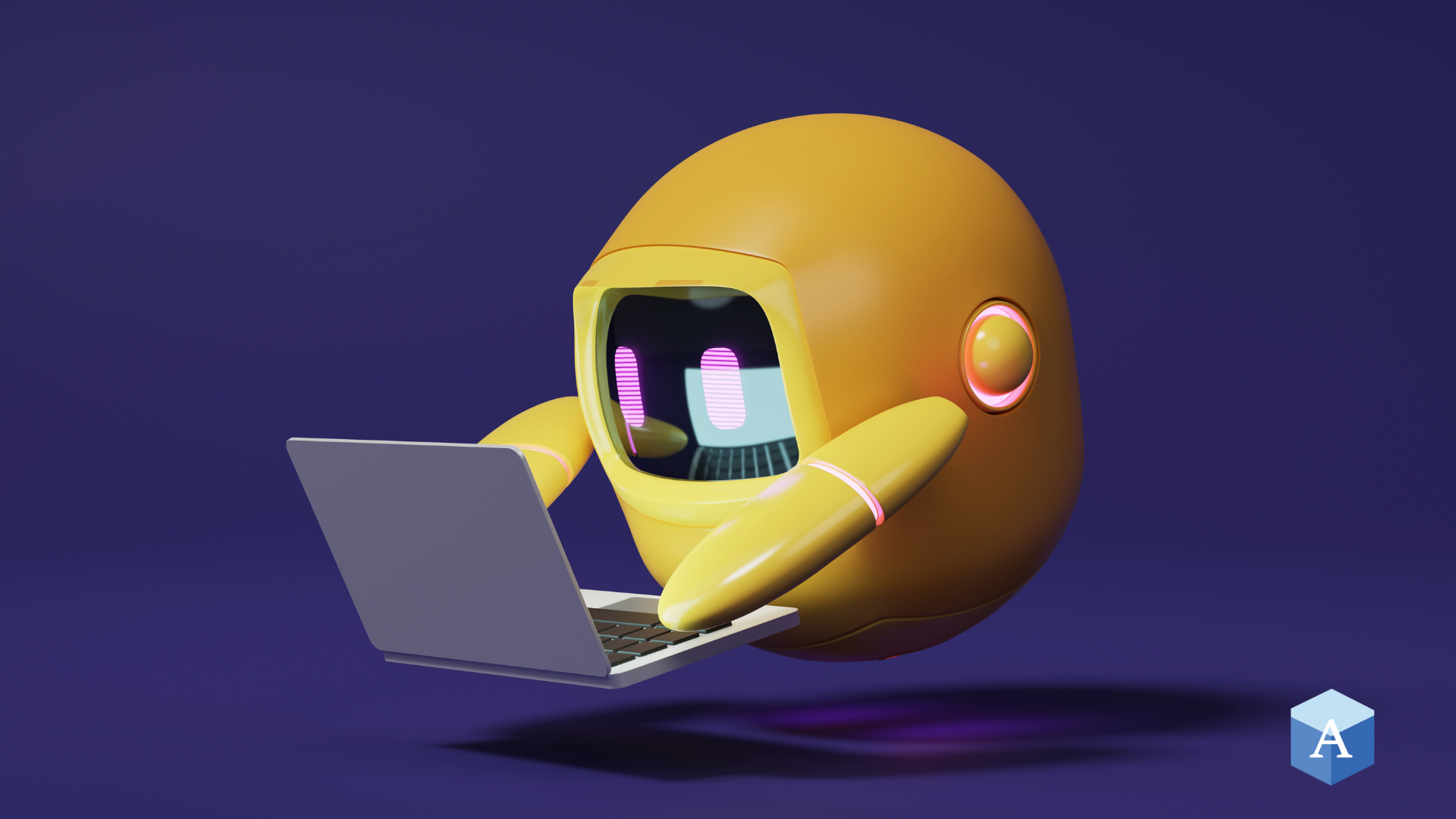
The headlines are terrifying. “AI can now pass the Bar Exam.” “Coders are being replaced by automated scripts.” “Customer service bots are more efficient than humans.”
If you only read the news, it feels like the human workforce is becoming obsolete. But if you look at the data, a different story emerges.
We are not entering an era where humans are useless. We are entering an era where humans are specialized. For the last 20 years, we lived in the Knowledge Economy, where you were paid for what you knew. Now, we are entering the Human Economy, where you are paid for who you are and how you relate to others.
While Artificial Intelligence (AI) and automation are excellent at processing data, recognizing patterns, and executing logic, they lack the messy, complex, and vital traits that build trust and drive innovation.
Here is your guide to the 5 human qualities that automation cannot replace and how to build your career around them.
1. Emotional Intelligence (EQ) and Empathy
AI can simulate a conversation, but it cannot simulate care. In fields like healthcare, education, and leadership, the “product” isn’t just the technical outcome; it is the human connection.
The “Bedside Manner” Factor
Consider a nurse delivering a difficult diagnosis. An AI can read the test results with 100% accuracy. But it cannot hold the patient’s hand, read the fear in their eyes, and adjust its tone to provide comfort. That ability to sense and respond to emotion—Empathy—is the premium skill of the next decade.
As we discussed in our article on The Soft Skills Renaissance, jobs requiring high social skills have seen a wage premium increase of 20% since 2010, while purely technical roles are seeing wage stagnation.
Why It’s Irreplaceable
- Trust: People buy from people. Clients stay with companies because they feel understood, not just because the algorithm got the math right.
- Conflict Resolution: An AI can suggest a compromise, but it takes a human with high EQ to navigate office politics and ego to actually broker the deal.
2. Strategic and Critical Thinking
Generative AI, like ChatGPT, is a prediction engine. It predicts the next likely word based on past data. It is incredibly good at giving you the Average Answer. It is terrible at giving you the Outlier Strategy.
The “Why” vs. The “How”
AI is excellent at the “How.”
- Prompt: “Write a marketing plan for a coffee shop.” -> AI generates a standard plan.
Humans are needed for the “Why.”
- Human Strategy: “Should we even open a coffee shop in this neighborhood? Or is the market oversaturated, and we should pivot to a tea house?”
Critical thinking involves questioning assumptions, evaluating conflicting data from the real world, and making judgment calls with incomplete information. AI struggles with ambiguity; humans thrive in it.
Related:How to leverage AI in career guidance— Learn how to use AI as a tool for strategy, not a replacement for it.
3. Creativity and Complex Innovation
“But AI can paint pictures and write poems!” Yes, but AI creates by remixing existing data. It creates variations of what has already happened. True human creativity often comes from the irrational, the accidental, and the purely novel connection of unrelated ideas.
The “Zero to One” Problem
In his book Zero to One, Peter Thiel distinguishes between doing something better (1 to n) and doing something new (0 to 1).
- Automation is 1 to n: Making existing processes faster.
- Human Innovation is 0 to 1: Inventing the process that never existed.
Employers in 2026 aren’t just looking for people who can follow instructions. They are looking for Careers That Did Not Exist Ten Years Ago and people who can invent the solutions for tomorrow.
4. Leadership and People Management
You can manage a server farm with code. You cannot manage a team of human beings with code. Humans are irrational. We get stressed and burned out. We have good days and bad days. We need motivation that goes beyond a paycheck.
The Coach vs. The Commander
In the age of automation, the role of a “Manager” shifts from “Assigning Tasks” (which software does better) to “Coaching Talent.”
- Mentorship: identifying potential in a junior employee that data doesn’t show yet.
- Culture Building: Creating an environment where people feel safe to fail and innovate.
- Inspiration: rallying a team around a mission when the numbers look bleak.
According to the World Economic Forum’s Future of Jobs Report, “Leadership and Social Influence” ranks among the top growing skills globally.
5. Adaptability and Ethical Judgment
If the last few years taught us anything, it’s that the world changes fast. Algorithms are rigid. If the inputs change drastically, the model breaks. Humans are antifragile. When things break, we adapt.
The Ethics of Automation
As AI becomes more powerful, we need humans to ask: “Just because we CAN do this, SHOULD we?”
- Should we use AI to screen resumes? (See: What recruiters really think of AI-created resumes)
- How do we handle data privacy in a transparent way?
Ethical judgment requires a moral compass, cultural context, and accountability—qualities that code simply does not possess.
How to “Future-Proof” Your Career
So, how do you put this on a resume? You don’t list “I am human.” You demonstrate these qualities through your actions and your portfolio.
- Stop Competing with Robots: Do not build a career on rote memorization or data entry. Those tasks are gone.
- Double Down on “Soft” Skills: Take courses on negotiation, public speaking, and psychology.
- Become a “Centaur”: The most valuable employees in 2026 are those who combine Human Qualities with AI proficiency. Be the empathetic nurse who understands data analytics. Be the creative marketer who knows Prompt Engineering.
What should your new questions be?
The question isn’t “Will robots replace us?” The question is “Which parts of us are replaceable?”
The parts that are repetitive, transactional, and solitary? Yes, those are going away. But the parts that are creative, empathetic, strategic, and collaborative? Those are becoming the gold standard.
Automation is not the end of the human workforce. It is the beginning of a more human one.
Feeling unsure about your career path in this changing world? Read our guide on Navigating Career Confusion in Your 20s.