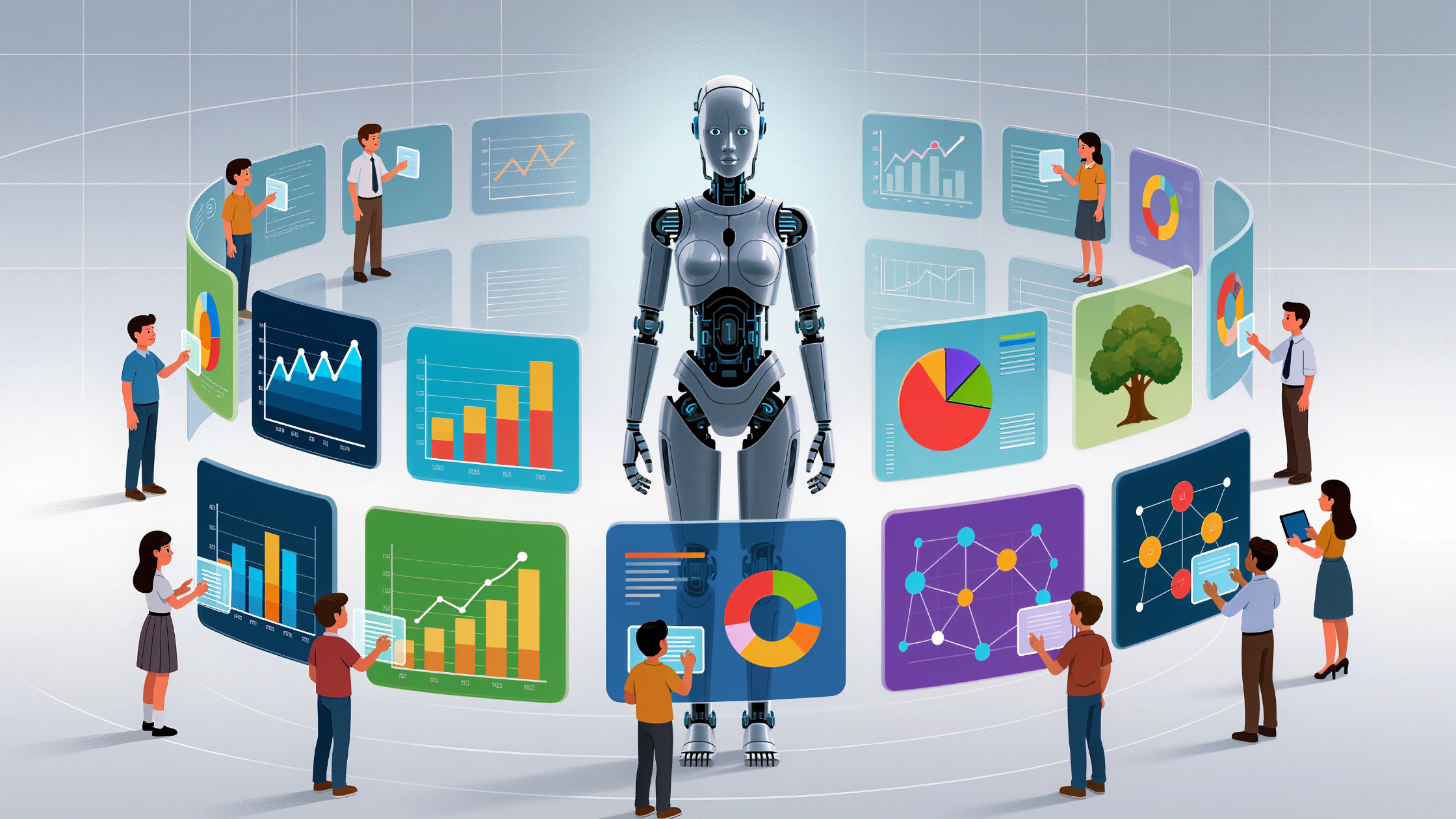
Can the algorithm decide whether you get hired or not?
Across industries, Artificial Intelligence (AI) is quietly reshaping how organisations hire, promote, and even assess talent potential. From résumé scanners to video-interview analytics, AI is now deeply woven into recruitment and career management.
While this sounds futuristic and efficient, it also raises a bigger question, is it fair?
Platforms like HireVue, Pymetrics, and Hiretual analyse facial expressions, tone of voice, and skill compatibility to predict a candidate’s success.
But as Harvard Business Review notes, AI can easily amplify human biases rather than eliminate them. If the data fed into a model is biased, its decisions will also be biased and that means someone could be unfairly filtered out long before a human recruiter even sees their name.
This is where the ethics of AI become important. As AI continues to guide how people find jobs or move forward in their careers, we must ask:
Who ensures fairness?
How transparent are these systems?
And how can job seekers protect themselves?
In this article, we’ll unpack how AI is changing the world of hiring and career choices, the ethical challenges behind it, and how platforms like Anutio are working to make career decisions smarter and fairer for everyone.
Why AI Is Becoming Central to Hiring and Career Pathways
In today’s job market, companies face a constant challenge, sorting through hundreds or even thousands of applications for every role. This has made AI an essential part of modern hiring.
AI tools don’t just scan résumés; they learn patterns. They can predict which candidates might stay longer, which applicants fit company culture, or which skills align with future roles. A report from IBM highlights how AI helps organisations make data-driven hiring decisions, improving both efficiency and accuracy.
For job seekers, this can mean faster responses and better job matches, when done right. Platforms such as LinkedIn’s AI job matching and Anutio’s smart-matching system use algorithms to connect professionals with roles suited to their career goals and transferable skills.
However, as convenient as this is, it also introduces a subtle risk: automation without accountability. If you’ve ever been “auto-rejected” after applying for a job within seconds, chances are it wasn’t a recruiter, it was an algorithm making that decision.
AI in hiring is not inherently bad. In fact, according to SHRM, when designed responsibly, it helps eliminate repetitive bias, reduce hiring time, and increase diversity. But when it operates in secrecy, it can unfairly disadvantage candidates, especially immigrants, students, or those whose experiences don’t fit traditional patterns.
That’s why understanding AI ethics in recruitment is no longer optional, it’s essential.
Ethical Challenges — Bias, Transparency, and Human Dignity
The most serious concern with AI in hiring is bias, not the obvious kind we can easily see, but algorithmic bias. This happens when AI systems learn from historical hiring data that already contains inequality.
For example, Reuters once reported that Amazon had to scrap its internal AI recruiting tool because it learned to prefer male candidates over female ones, simply because most of the company’s previous hires were men. The algorithm didn’t “mean” to discriminate, it just copied the patterns it was fed.
Transparency is another issue. Most candidates don’t know when they’re being evaluated by AI, what criteria are being used, or how their data is stored. A World Economic Forum study warns that without clear disclosure and accountability, trust in AI-driven hiring could erode quickly.
And beyond the data and code, there’s a deeper concern, human dignity.
Hiring decisions are not just technical choices; they’re life-changing. Every rejection impacts a person’s confidence, finances, and future. That’s why ethics in AI must go beyond compliance, it’s about compassion.
At Anutio, we believe AI should augment human decision-making, not replace it. Our approach focuses on building transparent, bias-checked systems that combine human expertise with AI insights. We want both recruiters and candidates to understand how decisions are made, and why.
As Focus People notes, ethical recruitment practices should include diverse data sets, independent audits, and human-in-the-loop models to ensure fairness at every step.
The conversation around AI and ethics isn’t just for tech companies, it’s for every professional navigating a digital-first world.
Legal and Practical Implications for Organisations and Individuals
The use of AI in hiring doesn’t just raise ethical concerns, it also touches on legal accountability and data protection. As more countries develop policies around algorithmic transparency and fair recruitment, companies must ensure their systems comply with local and international standards.
In places like the European Union, the AI Act classifies AI used in hiring as a high-risk application. This means companies must document how their algorithms make decisions, provide human oversight, and prove that they aren’t discriminating. Similarly, Canada’s Artificial Intelligence and Data Act (AIDA) aims to ensure accountability for any AI used in employment or career management.
For organisations, that means more than just compliance, it means building trust. A report from PwC points out that employees and job seekers are more likely to engage with companies that are open about their AI practices. This includes explaining what data is collected, how it’s used, and how human judgment fits into the process.
For individuals, understanding your rights is key. If you’re applying for jobs in countries like Canada, the Office of the Privacy Commissioner of Canada offers guidelines to help job seekers understand how AI impacts their privacy. Always read company data policies, and ask how your information is being processed.
At Anutio, we take a transparent approach by combining AI analytics with human validation, ensuring that ethical hiring isn’t just a buzzword, but a built-in standard. Our goal is to help organisations adopt AI responsibly while helping professionals make smarter, fairer career decisions.
Best Practices for Building Ethical AI Hiring Systems
So how do we move forward in a world where AI can both empower and endanger fairness? The answer lies in responsible design and human collaboration.
Here are key principles that ethical AI hiring systems should follow:
- Transparency first: Candidates should know when and how AI is used in their application. Tools like AI Transparency Guidelines by OECD recommend clear communication about algorithms’ purpose and data use.
- Diverse training data: Avoid bias by training models on inclusive, multicultural datasets. A study by World Economic Forum highlights how diverse data reduces gender and racial bias in automated hiring.
- Human oversight: Always keep people in the loop. AI should assist, not replace, human recruiters. As Harvard Business Review suggests, AI performs best when balanced with empathy and context from real decision-makers.
- Regular audits: Algorithms evolve and so should the ethics behind them. Regular third-party audits, as recommended by Focus People, can identify bias, misclassifications, and compliance issues early.
- Career empowerment tools: Platforms like Anutio go a step further by ensuring fairness and accessibility in career decisions. We prioritise human judgment while using AI to match talent ethically across regions like Nigeria and Canada, giving both employers and professionals a transparent, trustworthy system.
The Future of Fair AI in Careers
AI will continue to play a bigger role in hiring and career decisions, but ethics will determine whether it becomes a tool of empowerment or exclusion. The goal isn’t to eliminate AI; it’s to make it human-centred.
As we move into the future of work, let’s ensure our technologies serve fairness, not replace it. Whether you’re a company integrating AI into your hiring process or a job seeker navigating digital platforms, remember: ethical AI is everyone’s responsibility.
At Anutio, we’re not just building AI-powered career tools, we’re building trust. Join us as we make career development smarter, fairer, and truly human.