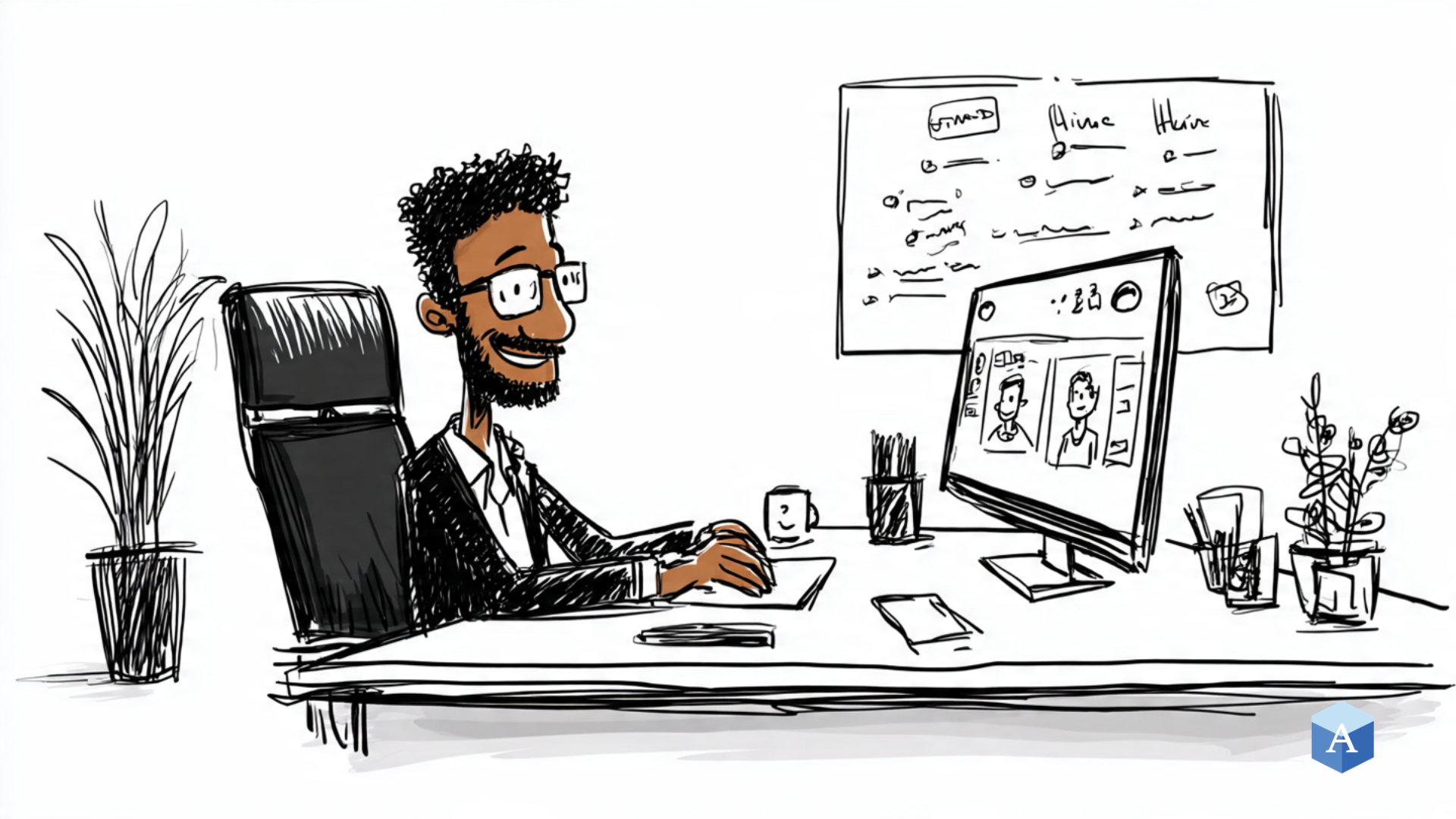
Tag: skills-based hiring platform

  • Why Your Next Corporate Hire Should Come from a Skills-Based Hiring Platform

    Why Your Next Corporate Hire Should Come from a Skills-Based Hiring Platform

    You have just posted a new job opening for a mid-level project manager. Within 48 hours, your inbox is flooded with 500 applications. Your Applicant Tracking System (ATS) aggressively filters out anyone who doesn’t have a specific bachelor’s degree or the exact chronological job titles you listed. You are left with a handful of candidates who look perfect on paper.

    You hire the best one. Six months later, they lack the emotional intelligence to manage team conflicts, their adaptability is zero, and they resign, forcing you to start the incredibly expensive process all over again.

    If this cycle sounds painfully familiar, you are not alone. The modern corporate recruitment model is fundamentally broken because it relies on an outdated metric: the traditional paper resume.

    In a rapidly shifting economy where artificial intelligence is fundamentally changing how we work, businesses can no longer afford to hire based on pedigree. To build a resilient, high-performing workforce, forward-thinking companies are abandoning the chronological resume and turning to a skills-based hiring platform.

    Here is exactly why your next corporate hire needs to come from a verified skills ecosystem, and how making the switch will dramatically improve your bottom line.

    The Broken Promise of the Traditional Resume

    For decades, the corporate world used college degrees and previous job titles as a proxy for competence. We assumed that if someone held a “Director” title at a recognizable company, they naturally possessed the leadership and problem-solving skills required to succeed elsewhere.

    This assumption is costing companies millions.

    As we highlighted in our article on the application spam crisis, generative AI has made it incredibly easy for candidates to mass-produce perfectly tailored, keyword-stuffed resumes that easily bypass ATS filters. A flawless resume no longer proves that a candidate has the skills to do the job; it only proves they know how to write a good resume.

    When you hire based on a piece of paper, you aren’t hiring the most capable person. You are hiring the best marketer.

    What Exactly is a Skills-Based Hiring Platform?

    A skills-based hiring platform completely flips the traditional recruitment model. Instead of looking at where someone went to school or what their last job title was, the platform focuses entirely on what they can actually do.

    Instead of submitting a static PDF, candidates utilize dynamic, living profiles to showcase verified competencies. The platform maps their raw, underlying abilities—such as data analysis, crisis de-escalation, or agile project management—directly to the core requirements of your open role.

    This approach shifts the focus away from industry jargon and centers it on measurable, cross-functional capabilities.

    Top 3 Reasons to Switch to Skills-Based Hiring in 2026

    If you are a hiring manager or an executive looking to justify the transition away from traditional recruitment, the data is overwhelmingly in your favor. Here are the top three reasons you need to make the switch today.

    1. You Eliminate the “Paper Tiger” Problem

    A “paper tiger” is a candidate who looks terrifyingly impressive on a resume but completely folds under real-world pressure. They often possess all the required “hard skills” but completely lack the critical soft skills required to survive in a modern corporate environment.

    According to a landmark study by McKinsey & Company, hiring for skills is five times more predictive of job performance than hiring for education, and more than two times more predictive than hiring for work experience.

    When you use a skills-based hiring platform, you can actively filter for the human qualities AI cannot replace, like empathy, strategic vision, and complex problem-solving. You hire people who actually perform, not just people who interview well.

    2. You Unlock Massive, Untapped Talent Pools

    When you require a specific degree or ten years of continuous experience in one specific industry, you are artificially shrinking your talent pool. You are screening out brilliant, highly capable candidates simply because their career path was non-linear.

    As we explored in our deep dive into the career switch from teaching to corporate, educators possess incredible data analysis, presentation, and crisis management skills. However, a traditional ATS will automatically reject a teacher applying for a Corporate L&D role because they don’t have the exact corporate jargon on their resume.

    A skills-based platform translates these transferable skill examples automatically. It allows you to discover highly adaptable people and diverse, neurodivergent talent that your competitors are completely ignoring.

    3. You Dramatically Reduce Time-to-Hire and Turnover

    Bad hires are incredibly expensive. The Society for Human Resource Management (SHRM) consistently notes that the cost of replacing an employee can be up to two times their annual salary.

    Skills-based hiring drastically increases your retention rates because it ensures a genuine match between the demands of the job and the natural “brain wiring” of the candidate. When you use a platform that focuses deeply on why every assessment needs to evaluate transferable skills, you stop putting square pegs into round holes. Candidates hired for their verified skills ramp up faster, perform better, and stay with the company significantly longer.

    How to Transition Your Recruitment Strategy

    You cannot shift to a skills-based model overnight, but you can start taking immediate, actionable steps to modernize your hiring pipeline.

    1. Rewrite Your Job Descriptions: Stop listing “Must have a Bachelor’s Degree in Communications” or “5 years of exact industry experience.” Instead, list the specific competencies required to succeed in the first 90 days.
    2. Prioritize Soft Skills Over Hard Technical Knowledge: Software can be taught in two weeks. Emotional intelligence, resilience, and curiosity cannot. As we discussed in our breakdown of soft skills vs. hard skills, focus your interviews on how a candidate navigates ambiguity.
    3. Adopt a Dynamic Talent Ecosystem: Stop asking candidates to upload a PDF. Partner with platforms that allow candidates to submit living portfolios of their work, verified credentials, and AI-mapped skill profiles.

    Stop Guessing, Start Verifying

    The 2026 labor market is simply moving too fast for traditional, static resumes to keep up. If you continue to rely on a candidate’s past job titles to predict their future success, you will continue to suffer from high turnover, long hiring cycles, and missed opportunities.

    By integrating a skills-based hiring platform into your recruitment strategy, you strip away the bias and the marketing fluff. You connect directly with verified, capable professionals who possess the exact transferable skills your business needs to scale.

    It is time to stop reading resumes and start hiring for reality.

    Anutio provides AI-powered skill roadmaps that completely replace the traditional paper resume.

    We equip educational institutions with the software to boost student placement, while helping businesses and individual professionals successfully pivot into high-paying, verified careers.

    Stop relying on outdated strategies.

    Explore Anutio at https://anutio.com/ or Book a Demo today at https://cal.com/emhirse/anutio-demo to modernize your future.

  • Why Every Career Assessment for Colleges Needs to Focus on Transferable Skills

    Why Every Career Assessment for Colleges Needs to Focus on Transferable Skills

    Walk into almost any university career center today, and you will likely find the same scene that existed twenty years ago. A stressed student sits down, takes a 50-question multiple-choice personality quiz, and receives a printed report suggesting they become an Accountant or a Teacher based on a rigid set of preferences.

    While this approach was fine in the past, the global economy has completely transformed. Today, graduates aren’t prepared for the realities of the modern workforce.

    In 2026, job titles are evolving faster than university curriculums can adapt. Artificial intelligence is automating routine tasks, and major global employers are abandoning degree requirements in favor of a new metric: transferable skills.

    Therefore, if higher education institutions want to maintain their value and improve student outcomes, the tools they use must evolve. Here is a deep dive into why every career assessment for colleges needs to ditch the outdated “personality box” and focus entirely on measuring and mapping transferable skills.

    The Problem with Traditional Career Assessments for Colleges

    Before we can look forward, we have to understand what is currently broken in higher education career services.

    The Personality Quiz Trap

    For decades, universities have relied on tools like the Myers-Briggs Type Indicator (MBTI) or Holland Codes (RIASEC). While these tools are fantastic for self-reflection, they are terrible for actual job placement.

    Why? Because they categorize students into static boxes. If a student scores high as an “Investigator,” the assessment simply spits out a list of research jobs. However, this ignores the dynamic nature of work. It fails to tell the student how to apply their specific problem-solving abilities to a marketing campaign or a tech startup.

    The Disconnect Between Degrees and the Job Market

    According to recent data from the National Association of Colleges and Employers (NACE), there is a massive gap between how proficient students think they are and how proficient employers rate them.

    Students believe their degree is enough. Employers, on the other hand, are desperately looking for evidence of communication, teamwork, and critical thinking. When a career assessment for colleges only focuses on matching a student’s major to a specific industry, it completely ignores the human qualities AI can’t replace. Consequently, students graduate with theoretical knowledge but zero understanding of how their skills translate to the real world.

    Why Transferable Skills Are the Currency of the 2026 Economy

    If a degree is no longer the ultimate golden ticket, what is? The answer lies in skills that can cross industry lines.

    The Rise of the Skills-Based Hiring Platform

    We are living in the era of skills-based hiring. Corporate giants like Google, IBM, and Accenture have publicly removed bachelor’s degree requirements for many of their roles. Instead, they are utilizing the skills-based hiring platform to filter candidates based on what they can actually do.

    According to a major report by McKinsey & Company, hiring for skills rather than pedigree opens up talent pools and creates more resilient workforces. If your university’s career assessment does not help a student identify their transferable skills, you are effectively locking them out of the modern hiring process.

    Future-Proofing Against Automation

    Technical skills expire quickly. The coding language a freshman learns today might be obsolete by the time they are a senior. However, transferable skill examples like active listening, complex conflict resolution, and adaptability never expire.

    The World Economic Forum’s Future of Jobs Report consistently highlights analytical thinking and creative thinking as the most in-demand skills globally. A modern career assessment must measure these exact traits, proving to the student that they are adaptable enough to survive industry disruptions.

    What a Modern Career Assessment for Colleges Looks Like

    So, what should Deans and Career Center Directors look for when evaluating new career services software for universities?

    1. Moving from Static Reports to Dynamic Student Profiles

    A test result should not live in a PDF folder on a counselor’s hard drive. Instead, the assessment should be the foundation of a living, breathing digital portfolio.

    As we explored in our guide to Dynamic Student Profiles, modern tools allow students to constantly update their profiles. When they complete a difficult group project or lead a campus organization, the software should help them tag that experience with specific transferable skills, like “Project Management” or “Stakeholder Communication.”

    2. Translating Academic Jargon into Corporate Language

    Students often struggle to explain their academic work to recruiters. A great assessment tool acts as a translator. If an English major writes a 50-page thesis, the platform should help them map that achievement to corporate terms like “Long-form Content Strategy,” “Deep Research,” and “Data Synthesis.”

    3. Tracking Experiential and Work-Based Learning

    Real career readiness happens outside the lecture hall. Therefore, your student career planning tools must track experiential learning. When a student completes an internship, the assessment platform should allow the employer to provide feedback directly on the student’s soft skills, providing verified proof of their abilities.

    The ROI of Upgrading Your Career Services Software

    Investing in a new framework is not just good for the students; it is critical for the survival of the institution.

    Boosting Alumni Employment Rates

    When students know exactly what their transferable skills are, they interview better. They stop applying randomly and start using the “Sniper Strategy” we discuss in our career readiness programs. This directly leads to faster hiring times and higher starting salaries, which dramatically boosts your alumni employment metrics.

    Proving Institutional Value

    Higher education is under intense scrutiny regarding its cost. Parents and policymakers want proof of ROI. By conducting an EdTech impact measurement program evaluation, universities can definitively show that their students are graduating with the exact competencies local employers are demanding.

    How to Implement a Skills-Based Framework on Campus

    Transitioning your university from old-school quizzes to modern skill-mapping does not have to be an administrative nightmare. Here is a simple framework to get started.

    Step 1: Audit Your Current Tools Look at the software your career center currently pays for. If it only matches students to job titles and does not break down the underlying skills required for those jobs, it is time to cancel the subscription.

    Step 2: Bridge the Gap Between Faculty and Career Centers Career readiness is not just the career center’s job. Encourage faculty to explicitly state the transferable skills being taught in their syllabi. This helps students connect the dots between their homework and their future careers.

    Step 3: Invest in the Right EdTech Ecosystem You need software that scales. Instead of hiring ten more counselors to manually review resumes, utilize smart platforms that guide students through the skill-discovery process automatically.

    Stop Testing Personalities and Start Building Careers

    The days of handing a college sophomore a personality test and wishing them luck are officially over. The modern job market is chaotic, automated, and fiercely competitive.

    To help students succeed, every career assessment for colleges must pivot to focus entirely on transferable skills. By teaching students how to identify, articulate, and leverage these skills, universities empower their graduates to navigate any industry shift, economic downturn, or technological advancement.

    Is your university still relying on outdated career assessments? It is time to modernize your campus. Explore the Anutio today to discover how our dynamic Student Profiles and skills-mapping tools can dramatically improve your alumni placement rates and secure your institution’s future.