
Tag: Career Readiness

  • Student Career Planning Tools That Actually Engage Students (And Don’t Feel Like Homework)

    Student Career Planning Tools That Actually Engage Students (And Don’t Feel Like Homework)

    It is a Tuesday afternoon, and a high school counselor asks a room full of juniors to log into the district’s career portal. Immediately, a collective groan fills the room. The students know exactly what is coming next: a 100-question, multiple-choice personality quiz that feels exactly like a standardized test.

    For decades, career exploration has been treated as an academic chore. We force students to read dry descriptions of job titles and fill out static PDF worksheets. Consequently, students click through the exercises as fast as possible just to get a completion grade. They absorb absolutely nothing.

    If we want to prepare the next generation for the rapidly changing 2026 economy, we have to change our approach. Student career planning tools must stop feeling like mandatory homework and start feeling like a dynamic, personalized roadmap to financial independence.

    Here is why traditional EdTech is failing to capture student attention, and how forward-thinking districts are utilizing modern platforms to make career readiness genuinely engaging.

    The Problem with Legacy Tech: The Worksheet Mentality

    Before we can improve student engagement, we must understand why the current system is failing.

    Today’s students are digital natives. They consume highly personalized, algorithm-driven content every single day. However, when they log into legacy career platforms, they are met with clunky interfaces that look like they were built in 1998.

    As we discussed in our recent article on How Student Career Planning Tools Are Replacing the Outdated “Guidance Class”, traditional software relies heavily on text-heavy assessments. When a platform asks a 15-year-old to read a three-page article on “How to Become an Accountant,” it triggers instant boredom. It feels like an assignment rather than a journey of self-discovery.

    Furthermore, this outdated approach leads directly to EdTech fatigue. When software fails to engage the end-user, adoption rates plummet, and the district’s investment goes entirely to waste.

    What Gen Z Actually Wants from Career Readiness

    To build a program that students actually want to use, administrators must design with the student in mind. According to a recent study by Gallup on Gen Z and the workplace, this generation cares deeply about purpose, skill-building, and immediate relevance.

    Therefore, your student career planning tools must deliver on three specific fronts:

    A. Dynamic, Living Portfolios (Not Static Resumes)

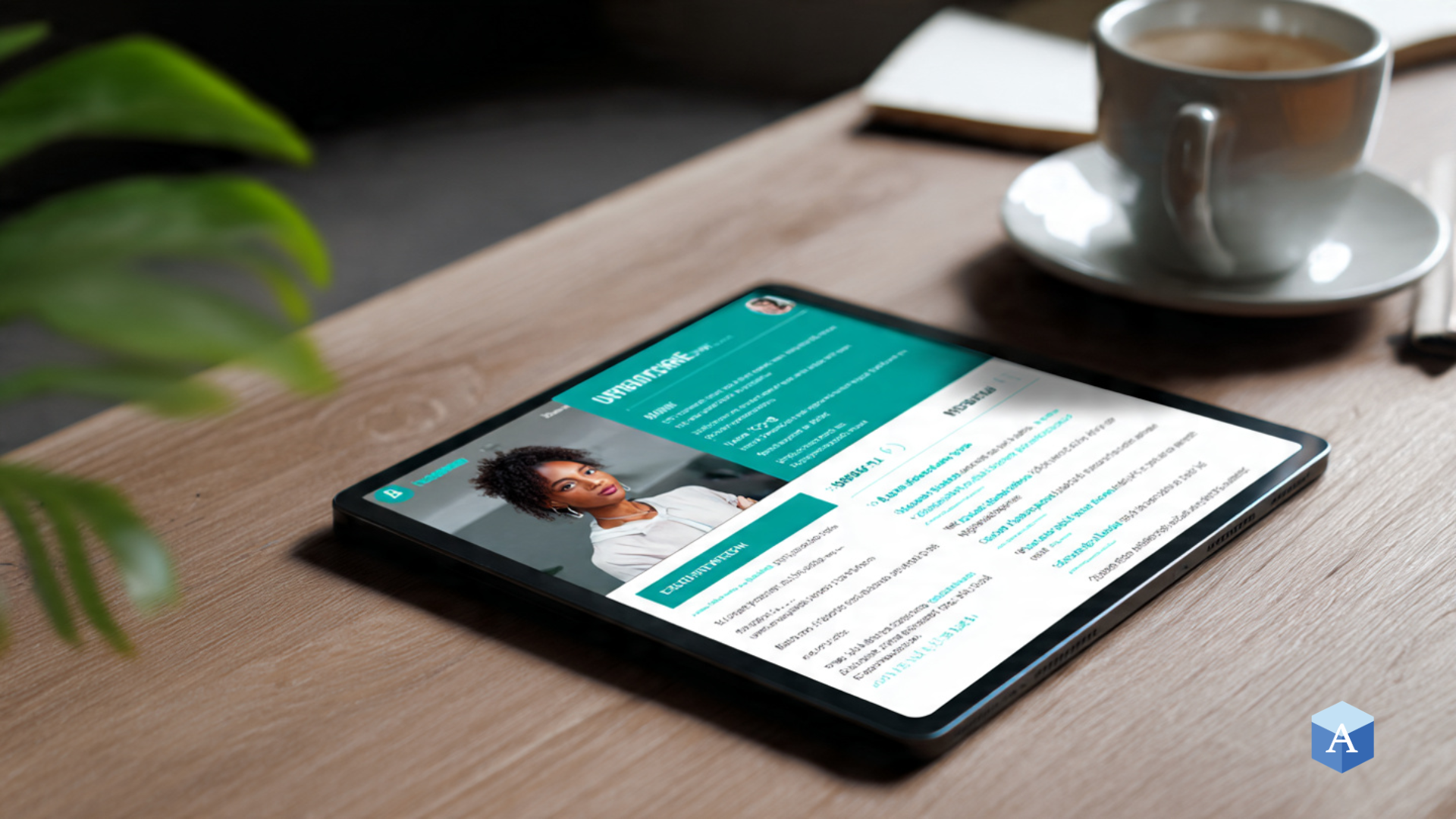
    Teenagers generally do not have enough work experience to fill out a traditional one-page resume, making the process highly intimidating. Instead of forcing them to write a resume, modern tools help them build Dynamic Student Profiles.

    When a student can upload a video of a robotics project, link to a creative writing portfolio, or showcase a digital badge they earned in an extracurricular club, career prep suddenly becomes a highly engaging exercise in personal branding.

    B. Instant Translation of Hidden Skills

    Students often do not realize how capable they already are. A student who manages a 50-person guild in an online video game is actively practicing leadership and resource management.

    Highly engaging student career planning tools act as a translator. They show students how their everyday hobbies and school projects map directly to highly sought-after transferable skills, instantly boosting their confidence.

    Three Ways to Make Career Planning Highly Engaging

    If you are a district superintendent or a counseling director looking to revamp your EdTech stack, look for platforms that incorporate these three engaging elements.

    1. Shift from Job Titles to Skill Playlists

    Asking a 16-year-old to pick a lifelong job title is terrifying. It induces anxiety. Instead of focusing on titles like “Mechanical Engineer” or “Marketing Manager,” modern platforms focus on building skill sets. By using an interactive career map, students can explore different industries based on what they naturally enjoy doing, making the exploration process feel fluid and low-pressure.

    2. Connect Them Directly to the Real World

    Nothing kills engagement faster than theoretical advice. If you want a student to care about their future, get them out of the building.

    The best technology seamlessly integrates with Work-Based Learning (WBL) programs. When a career platform allows a student to click a button and immediately apply for a local micro-internship, a job shadow, or a virtual mentorship with a real CEO, the stakes become real. It is no longer homework; it is an actual job hunt.

    3. Automate the “Boring” Stuff for Counselors

    When students are engaged with a self-guided, intuitive platform, counselors no longer have to act as tech support. By streamlining case management, counselors can spend their time having deep, meaningful conversations with students about their fears and aspirations, utilizing the human qualities that AI cannot replace.

    The ROI of High Student Engagement

    Why does student engagement matter to the district’s bottom line? Because data relies on participation.

    If students are blindly clicking through their career assessments, your district is collecting garbage data. Consequently, when it is time to conduct your annual EdTech impact measurement and program evaluation, you will have no real proof that your career and technical education (CTE) programs are actually working.

    However, when students genuinely enjoy using their student career planning tools, they log in frequently. They update their skills, interact with local employers, and map their progress. This provides administrators with crystal-clear, accurate data to secure future state and federal funding.

    Career Prep Should Spark Excitement, Not Dread

    Your students are brilliant, adaptable, and eager to succeed. If they are disengaged during guidance sessions, the problem is not the students, it is the software.

    It is time to eliminate the 100-question personality quizzes and the static paper worksheets. By investing in modern, dynamic platforms that prioritize transferable skills and real-world employer connections, you can transform career readiness from a mandatory chore into the most exciting part of a student’s educational journey.

    Are you ready to see a career platform that students actually want to use? Stop paying for EdTech that feels like homework. Visit Anutio.com to explore, and book a demo with our team today to see how our dynamic Student Profiles and Work-Based Learning tools can instantly boost engagement across your entire district.

  • How Student Career Planning Tools Are Replacing the Outdated Guidance Class

    How Student Career Planning Tools Are Replacing the Outdated Guidance Class

    If you walked into a high school career guidance class twenty years ago, you knew exactly what to expect. A counselor would hand out a stack of paper worksheets. Next, students would take a generic multiple-choice personality quiz. Finally, they would receive a printed list of ten jobs that loosely matched their answers, file the paper in a folder, and never look at it again.

    For decades, this one-size-fits-all guidance class was the standard. However, in 2026, this model is completely broken.

    The global economy is shifting faster than traditional curriculums can adapt. Today’s high school students are entering an unpredictable labor market where skills matter more than degrees. Consequently, administrators are realizing that a once-a-semester paper worksheet is not enough to secure a student’s future.

    To bridge this gap, forward-thinking districts are abandoning the old guidance model entirely. Instead, they are adopting dynamic student career planning tools. Here is a comprehensive look at why the traditional guidance class is obsolete and how modern EdTech is scaling student success without burning out your staff.

    The Crisis in the Counseling Office

    Before we can look at the technological solution, we must address the operational reality of modern high schools. The primary reason the old guidance class model fails today is simple mathematics.

    The 372-to-1 Problem

    According to the latest 2024–2025 data released by the American School Counselor Association (ASCA), the national student-to-school-counselor ratio currently sits at an overwhelming 372-to-1. While this is a slight improvement from previous years, it is still drastically higher than the ASCA’s recommended ratio of 250-to-1.

    When one professional is responsible for the mental health, graduation tracking, and career readiness of nearly 400 teenagers, deep personalization is impossible. If counselors rely on manual spreadsheets and paper files, they simply do not have the hours in the day to offer meaningful, one-on-one career advice. (We explored this administrative nightmare deeply in our guide on Streamlining Case Management for School Counselors).

    The Rise of Student Anxiety

    Furthermore, students are feeling the pressure. Researchers currently refer to the modern job market as the “BANI” era—Brittle, Anxious, Nonlinear, and Incomprehensible. Students know that the traditional path of “go to college and figure it out later” is incredibly expensive and risky. They are demanding clear, actionable pathways, but a static personality quiz cannot provide them.

    What Are Modern Student Career Planning Tools?

    So, if the paper worksheet is dead, what is replacing it?

    Modern student career planning tools are not just digital versions of a multiple-choice test. They are comprehensive, cloud-based ecosystems designed to track a student’s holistic development from freshman year to graduation.

    Here is how these platforms are actively replacing the outdated guidance class:

    A. From Static Quizzes to Living Career Maps

    The old guidance model treated career planning as a one-time event. Conversely, modern tools treat it as a continuous journey. Through digital platforms, students can build a living career map that evolves as their interests change. If a student decides they no longer want to be an engineer and want to explore digital marketing, the software instantly recalculates the courses, skills, and certifications they need to pivot.

    B. Building Dynamic Student Profiles

    Instead of a standard resume, which most high schoolers struggle to fill, these tools help students build Dynamic Student Profiles. Every time a student completes a coding bootcamp, leads a debate team, or finishes a volunteer project, the software translates those experiences into verified transferable skills.

    C. AI-Powered Skill Roadmaps

    Administrators can now leverage AI to create personalized skill roadmaps. If a student expresses interest in healthcare, the AI can immediately suggest local job shadowing opportunities, relevant elective courses, and necessary soft skills—acting as a digital co-pilot for the overworked counselor.

    Scaling Work-Based Learning (WBL) Automatically

    One of the most critical components of modern career readiness is getting students out of the classroom and into the real world. As detailed in our Work-Based Learning Guide, hands-on experience is the ultimate differentiator for graduation success.

    However, in the old guidance model, organizing internships meant a counselor had to manually email local businesses, collect permission slips, and track hours on a spreadsheet. It was an administrative bottleneck.

    Today, student career planning tools automate the entire WBL logistics process.

    • Students can browse a localized, district-approved database of micro-internships and apprenticeships.
    • Employers can directly input feedback on a student’s performance.
    • The software automatically logs the compliance hours.

    By removing the friction, districts can finally scale experiential learning to every single student, rather than just the top 10% who proactively seek it out.

    The ROI for Districts and School Boards

    For district superintendents and principals, purchasing new EdTech software is a major decision. However, investing in a robust career exploration platform provides immediate, measurable returns.

    Grant Readiness and Compliance

    If your district receives federal Perkins V funding for Career and Technical Education (CTE), you must prove your programs are working. Modern platforms provide automated EdTech impact measurement. Instead of scrambling for data at the end of the year, administrators can generate compliance reports with one click, proving exactly how many students earned industry credentials or completed apprenticeships.

    Driving Educational Equity

    Perhaps the most important benefit of adopting comprehensive student career planning tools is equity. In the old model, the students who received the most career guidance were usually the ones with highly involved parents who scheduled counselor meetings.

    A centralized digital platform ensures that every single student—regardless of their socioeconomic background or their parents’ social capital, receives baseline career exposure, skill mapping, and access to local employers.

    Empower Your Counselors, Prepare Your Students

    The era of the “guidance class” worksheet is over, and we should be glad it is gone.

    As we look toward the future of education, school districts must stop asking counselors to do the impossible manual labor of tracking 400 distinct career paths on paper. By integrating modern technology, we can automate the administrative paperwork, allowing counselors to focus on what they do best: providing deep, empathetic, human connection to the students who need it most.

    Are you ready to modernize your district’s approach to career readiness? It is time to ditch the spreadsheets. Reach out today to see a demo of Anutio. Discover how our Portrait of a Graduate Dashboard and Internship & WBL Manager can transform your counseling department and guarantee every student graduates with a plan.

  • Beyond the GPA: Why Dynamic Student Profiles Are the Future of Hiring

    Beyond the GPA: Why Dynamic Student Profiles Are the Future of Hiring

    For decades, the path to a successful career was supposedly simple: study hard, get perfect grades, and put a shiny GPA at the top of your resume.

    However, in 2026, the hiring landscape has completely shifted. Employers at major tech companies, financial firms, and innovative startups are increasingly deleting the “education requirement” from their job descriptions. They have realized that a student who can ace a multiple-choice test cannot necessarily solve a complex, real-world problem.

    As a result, the traditional one-page resume is dying. In its place, the hiring world is embracing dynamic student profiles.

    If you are a student, recent graduate, or educator trying to bridge the gap between the classroom and the economy, you must understand this shift. Here is why your grades are no longer the most important part of your application, and how comprehensive student profiles are leveling the playing field.

    The Limitation of Academic Honors

    Let us be clear: academic excellence is a fantastic achievement. Dedicating four years to mastering a subject requires intense discipline.

    Historically, securing academic honors like Magna Cum Laude vs. Summa Cum Laude was the ultimate signal to employers that you were a top-tier candidate. It meant you outworked your peers and mastered the curriculum.

    However, today’s employers are facing challenges that no curriculum has prepared you for. A high GPA proves you can follow instructions, but it does not prove you have the Human Qualities AI Can’t Replace, such as adaptability, conflict resolution, or creative problem-solving.

    Consequently, recruiters are experiencing GPA fatigue. When every applicant has a 3.8, the number loses its value. They need a better way to assess actual competence.

    What Are Dynamic Student Profiles?

    A traditional resume is a static document. It is a historical record of what you were. Conversely, dynamic student profiles are living portfolios that showcase what you can do.

    A robust student profile moves beyond the transcript to include:

    • Verified Skills: Instead of simply writing “Leadership,” a dynamic profile links to a specific project where you successfully led a team.
    • Work-Based Learning: It tracks every hour of your internships, job shadowing, and apprenticeships, turning theoretical knowledge into practical proof.
    • Micro-Credentials: It highlights short-term, high-impact certifications (like a Google UX Design Certificate or a coding bootcamp) that prove your skills are current.
    • Multimedia Evidence: It includes links to your GitHub, your published articles, or video pitches of your business ideas.

    By utilizing comprehensive student profiles, schools can finally conduct accurate program evaluations to see if their curriculum is actually preparing students for the real world.

    The Global Advantage: Mobility and Freelancing

    Dynamic student profiles are especially critical because the 2026 workforce is entirely borderless.

    You are no longer just competing with graduates from your local university; you are competing with talent from across the globe. Many ambitious students and newcomers are completely bypassing traditional corporate entry-level roles by building global freelance careers.

    For instance, an international student might leverage their digital portfolio to secure remote contracts, which is a powerful way to build local experience. If you are an immigrant looking to establish yourself, understanding the nuances of work permits and freelancing in Canada is just as important as your degree. Your student profile allows you to showcase cross-border projects, remote collaboration skills, and international adaptability, traits that a standard resume simply cannot capture.

    How to Transition from a Resume to a Profile

    If you want to survive the automated Applicant Tracking Systems (ATS) and impress a human hiring manager, you must build your profile today. Here is a simple three-step strategy:

    1. Document the Hidden Work

    You have likely completed massive projects in your capstone classes, community outreach programs, or university clubs. Do not let that work vanish when the semester ends. Upload your presentations, code snippets, and campaign strategies directly to your profile.

    2. Translate Academic Jargon to Industry Terms

    A hiring manager does not care that you took “Sociology 301.” They care that you know how to conduct “Qualitative User Research.” Use a targeted career change cover letter mindset to translate your academic coursework into the exact keywords found in modern job descriptions.

    3. Continuously Update Your Living Document

    A resume is something you update only when you are desperate for a job. A student profile is something you update weekly. Every time you complete a new certification, attend a major networking event, or finish a freelance gig, log it.

    Show, Don’t Tell

    The phrase “Show, don’t tell” used to be advice for novelists. Today, it is the golden rule for job seekers.

    You can tell an employer that you are a hardworking, Magna Cum Laude graduate. But it is infinitely more powerful to show them your dynamic student profile, complete with verified skills, global freelance projects, and real-world impact.

    Do not let a flat piece of paper define your entire future.

    Are you ready to build a digital presence that actually gets you hired? Use the Anutio Digital Profile Builder today to transform your grades, projects, and experiences into a dynamic portfolio that recruiters cannot ignore.

  • EdTech Impact Measurement: How to Prove Your Software Actually Helps Students

    EdTech Impact Measurement: How to Prove Your Software Actually Helps Students

    Over the last five years, schools have invested billions of dollars into educational technology. District leaders purchased apps for everything from reading comprehension to career planning. However, when the school board asks, “Did this software actually improve student outcomes?” most administrators freeze.

    Why? Because measuring the true return on investment (ROI) in education is incredibly difficult. Most districts rely on basic login data. Unfortunately, a student simply logging into a platform does not mean they are learning.

    The era of buying software just because it looks flashy is officially over. Today, effective planning for schools requires hard, verifiable data. Funding bodies, state grants, and local communities demand proof that these digital tools are closing the achievement gap.

    This is where EdTech impact measurement becomes essential. Here is the definitive guide on how to evaluate your district’s digital ecosystem and prove that your software actually helps students succeed.

    Why Usage Metrics Do Not Equal Impact

    Many software vendors will send you a monthly report celebrating “high adoption rates.” They will proudly highlight that 90% of your students clicked on their app this month.

    However, adoption is not the same as adaptation. If a student downloads a tool but stares at it confused for twenty minutes, their “time on task” looks great on a spreadsheet. In reality, their learning outcome is zero.

    To accurately conduct an EdTech program evaluation, you must shift your focus from lagging indicators to leading indicators.

    • Lagging Indicators: State test scores or graduation rates. (These take years to measure).
    • Leading Indicators: Real-time skill application, time saved by teachers, and increased student engagement.

    If you want to know if a tool works, you must measure the skills a student retains, not just the buttons they click.

    The ESSA Framework: The Gold Standard for Evidence

    If you want to secure federal or state funding for your technology, your impact measurement strategy must align with established frameworks. In the United States, the Every Student Succeeds Act (ESSA) sets the ultimate standard.

    The ESSA framework categorizes educational evidence into four distinct tiers:

    1. Tier 1 (Strong Evidence): Backed by well-designed randomized controlled trials.
    2. Tier 2 (Moderate Evidence): Backed by quasi-experimental studies.
    3. Tier 3 (Promising Evidence): Backed by correlational studies with statistical controls.
    4. Tier 4 (Demonstrates a Rationale): Backed by a clear logic model showing how the tool should work, with ongoing evaluation.

    When you are planning your district budget, you must ask EdTech vendors which ESSA tier their product satisfies. If they cannot answer, they are a risky investment.

    Steps to Build a Bulletproof Program Evaluation Strategy

    You do not need to be a data scientist to measure EdTech effectiveness. You simply need a structured process. Here is how to evaluate your current tech stack.

    Step 1: Define the Ideal Student Profile

    Before you measure the tool, you must define the goal. What does a successful graduate look like in your district? Are you trying to boost standardized test scores, or are you trying to build comprehensive student profiles that showcase career readiness? If your goal is to develop human qualities that AI cannot replace, your software must track soft skills like collaboration, empathy, and problem-solving.

    Step 2: Combine Quantitative and Qualitative Data

    Numbers only tell half the story. A student might fail a digital assessment because the software’s interface is confusing, not because they misunderstand the math. Therefore, robust EdTech impact measurement requires qualitative feedback. You must survey your teachers. Ask them directly: “Does this tool save you time, or does it create more administrative work?” If the tool causes teacher burnout, you should cancel the license immediately. (Read our guide on curing EdTech fatigue for more on auditing your tools).

    Step 3: Track Long-Term Career Outcomes

    The ultimate test of any educational software is whether it prepares a student for the real world. Does your technology stack help students secure internships? Does it connect them to local employers? If your district is investing heavily in Work-Based Learning, your program evaluation must track employer feedback and post-graduation placement rates.

    How Anutio Automates EdTech Impact Measurement

    Gathering all this data from a dozen different disconnected platforms is exhausting. Consequently, most schools skip the evaluation process entirely.

    This is exactly why Anutio built a centralized B2B ecosystem. We help districts move from guessing to knowing. Instead of manually crunching numbers, administrators can rely on our integrated tools to measure true impact:

    • Portrait of a Graduate Dashboard: Stop focusing solely on GPAs. Our system aggregates data to measure the holistic development of student profiles. We track resilience, critical thinking, and technical skills in one easily exportable dashboard.
    • Internship & WBL Manager: Stop using messy spreadsheets. Our platform tracks every hour of Work-Based Learning and employer engagement, providing immediate data for your next grant application.
    • Equity Dashboard: True impact means helping all students. This tool instantly identifies demographic gaps in networking and career readiness, ensuring your EdTech investments are promoting genuine equity.

    From Software Buyers to Impact Investors

    The days of buying software and hoping for the best are over. In 2026, district leaders must act like impact investors.

    You must demand evidence. You must conduct rigorous program evaluations. Most importantly, you must ensure that every dollar spent directly enhances the student profiles in your district, preparing them for the realities of the future workforce.

    Are you ready to stop guessing and start measuring? Reach out to our team today to discover how the Anutio District Dashboard can streamline your impact measurement and definitively prove the success of your career readiness programs.

  • Funding & Planning for Schools: Aligning Your EdTech Budget with Career Readiness Goals

    Funding & Planning for Schools: Aligning Your EdTech Budget with Career Readiness Goals

    Walk into any district administrative office today, and you will likely hear the same frustrated question: “Why are we spending so much on software, yet our students still feel unprepared for the workforce?”

    Over the last few years, districts went on an unprecedented buying spree. Schools purchased endless subscriptions to learning management systems, quizzing apps, and communication portals. However, as the dust has settled, many administrators are waking up to a harsh reality. They have built an “app graveyard” full of disconnected tools that drain the budget but offer zero measurable impact on a student’s future.

    If we want to fix this, we have to change the way we approach planning for schools.

    In 2026, educational leadership is no longer just about passing standardized tests; it is about guaranteeing employability. Therefore, your technology budget must serve as a bridge between the classroom and the economy.

    Here is the comprehensive guide on how to align your EdTech budget with actual career readiness goals, ensuring every dollar spent helps students secure their future.

    The App Graveyard and the Cost of EdTech Fatigue

    Before you can align your budget, you must understand where it is currently leaking.

    As we discussed in our article on Streamlining Platform Usage in Schools, the average district uses hundreds of different digital tools every month. Consequently, this creates massive “EdTech Fatigue” for teachers and students.

    When planning for schools, buying more software is rarely the answer. In fact, disjointed software creates data silos. The math department does not know what the career counselor is doing, and the local employers have no idea what skills the students are actually learning.

    According to a recent analysis by LearnPlatform on EdTech usage, the vast majority of purchased licenses are either underutilized or completely ignored. This is not just a waste of money; it is a missed opportunity to invest in tools that actually drive impact measurement and career outcomes.

    What Does Strategic Planning for Schools Look Like Today?

    Strategic planning for schools used to focus heavily on facility upgrades and textbook renewals. Today, the focus must shift to Workforce Alignment.

    To make this shift, administrators must move from “buying tools” to “buying outcomes.” Instead of asking, “Does this app have cool features?” you should be asking, “Does this platform help us build dynamic student profiles that employers actually care about?”

    The “Portrait of a Graduate” Framework

    Everything starts with the end goal in mind. What should a graduate from your district look like? They should possess critical thinking, adaptability, and tangible industry skills. If your current EdTech budget is only funding multiple-choice test prep, it is deeply misaligned with your overarching mission.

    Three Steps to Align EdTech Funding with Career Readiness

    Ready to restructure your budget? Follow this three-step methodology to ensure your funding directly supports your career readiness goals.

    Step 1: Conduct a Ruthless Technology Audit

    You cannot fund the future if you are paying for the past. First, survey your staff to find out which platforms are actually being used. If an app does not integrate with your core systems or directly support student career discovery, cancel it. Reallocate those recovered funds toward platforms that offer comprehensive program evaluation and real-world skill tracking.

    Step 2: Invest heavily in Work-Based Learning (WBL) Infrastructure

    Career readiness does not happen in a vacuum. As we outlined in our Ultimate Guide to Work-Based Learning, students need apprenticeships, internships, and job shadowing.

    However, managing these programs on Excel spreadsheets is a nightmare for counselors. Therefore, your EdTech budget should prioritize tools that streamline WBL logistics. You need software that tracks employer relationships, monitors student hours, and logs compliance paperwork automatically.

    Step 3: Prioritize Equity and Access

    A common pitfall in educational funding is spending heavily on programs that only benefit the top 10% of students. True career readiness must be equitable.

    When evaluating new software, ask yourself: Does this tool help our most vulnerable students build social capital? Your budget should support platforms that democratize access to networking and mentorship, rather than relying on a student’s existing family connections.

    The Role of Impact Measurement in Securing Future Funding

    Here is a critical reality for superintendents and grant writers: Funding bodies, whether state governments or private foundations, no longer write blank checks. They demand proof of ROI.

    If you apply for a career-technical education (CTE) grant, you cannot simply say, “We bought new laptops.” You must provide hard data. This is where impact measurement becomes the most important part of planning for schools.

    You need to be able to show that because of your interventions, a specific percentage of students secured internships, earned industry credentials, or successfully mapped their transferable skills using career online assessments.

    How Anutio Transforms District Planning

    This is exactly why we built the B2B side of the Anutio platform. We realize that schools do not need another siloed learning app; they need a Career Intelligence Platform that connects the dots.

    By reallocating a fraction of your legacy software budget to Anutio, you unlock a suite of tools designed specifically for modern school administration:

    • The “Portrait of a Graduate” Dashboard: Stop measuring just GPAs. Our dashboard pulls data to track the development of critical soft skills and holistic student growth over time.
    • The Internship & WBL Manager: Ditch the spreadsheets. Our platform handles the logistics, compliance, and tracking of student placements with local employers, scaling your WBL programs effortlessly.
    • The Equity Dashboard: Ensure no student falls through the cracks. This tool allows administrators to identify which demographic groups are falling behind in career readiness milestones, enabling early and targeted interventions.

    Fund the Future, Not the Status Quo

    Effective planning for schools requires courage. It requires the courage to cancel comfortable (but ineffective) legacy software, and the vision to invest in platforms that actually prepare students for the 2026 economy.

    Your EdTech budget is a reflection of your district’s values. By aligning your funding with career readiness, work-based learning, and robust impact measurement, you are telling your students that their future employability is your number one priority.

    Are you ready to audit your career readiness tech stack? Reach out to our team today to see how Anutio’s B2B District Tools can streamline your case management, improve your program evaluation, and finally align your budget with your overarching mission.